German NovoCrete technology used on a road in Lviv for the first time
A major overhaul of 2.3 km of Ozerna Street in Volia-Homuletska is underway at a cost of UAH 53.3 million using the German mixture NovoCrete; the work is being carried out by the company Onur, and the project was partly funded by German partners.
By Oleg Bazylewicz
December 11, 2025 · 2 min read
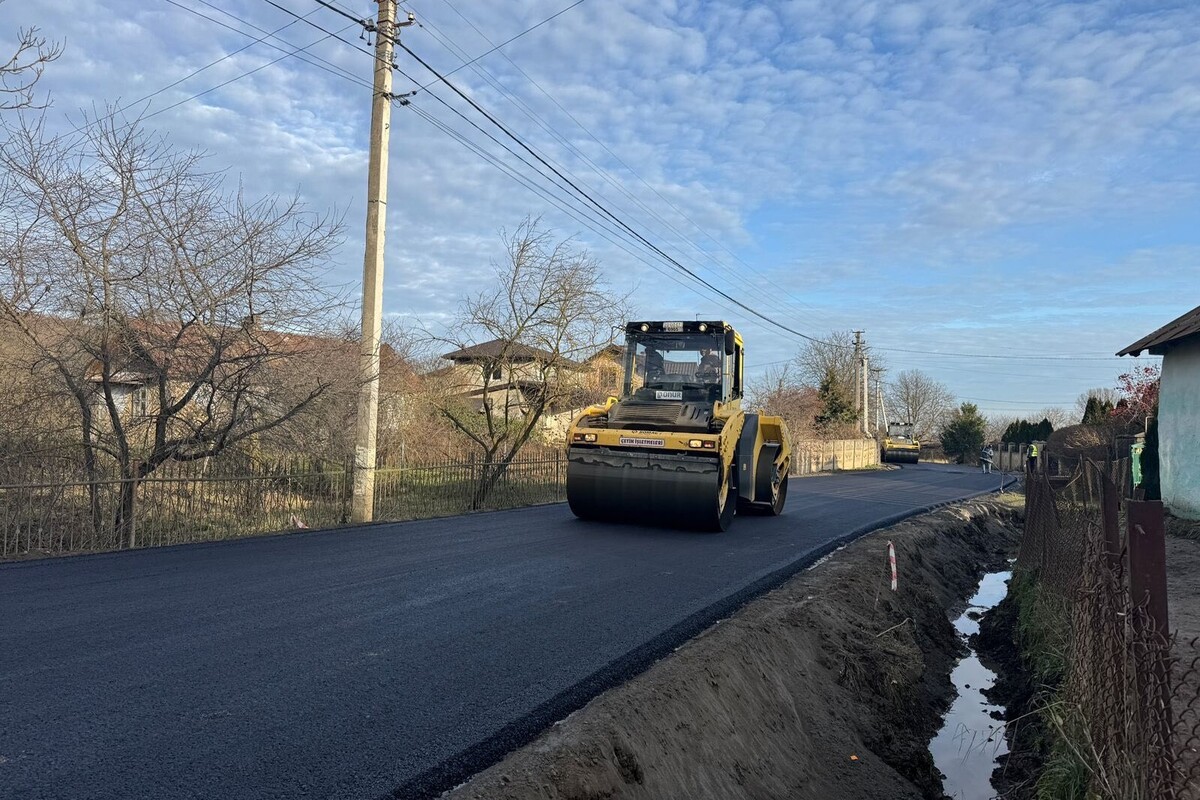
In the village of Volia-Homuletska of the Lviv city community, a major overhaul of Ozerna Street has begun using the German NovoCrete technology — the first application of this method in Ukraine.
Work and technical measures
The repair began in November and includes the installation of a new road surface, the replacement of four culverts 800 mm in diameter and two 500 mm pipes, the restoration of sidewalks and the installation of two public transport stops. The total cost of the works, carried out by the company Onur, is UAH 53.3 million.
The German mixture is planned to be used to reinforce 2.3 km of the road connecting Bryukhovychi and Volia-Homuletska. As of December 11, a base made from this mixture has already been laid along the entire length and the lower layer of asphalt is being installed.
Plans for transport
After completion of the works, a new route connection is planned to be launched, which will significantly ease the exit from Lviv near the Halytske intersection and improve the link between Bryukhovychi, Volia-Homuletska and Hriada
– Oleh Zabarilo, director of the Department of Urban Mobility and Street Infrastructure
Technology and financing
The project uses the NovoCrete mixture to strengthen the base. According to the method, soil or the old pavement is excavated to a depth of up to 50 cm, the material is crushed with specialized equipment, cement and the NovoCrete mixture are added. The result is a strong, water-resistant base on which asphalt is then laid.
The manufacturer deploys the technology in Europe, the Americas, Asia and Africa; IBS GmbH has implemented more than 1,500 projects on four continents. The city council estimates that using NovoCrete can reduce repair costs by 30–50%, and the warranty period for the works is 10 years.
The project was made possible thanks to co-financing from German partners — IBS GmbH and GIZ, which provided €200,000. It was also noted that in May 2025 the State Agency for Restoration signed a memorandum with the South Korean company SG on the use in Ukraine of the environmental asphalt technology EcoSteel Ascon.



