Rada proposes reinstating the Ministry of Transport — what it would mean for logistics and security
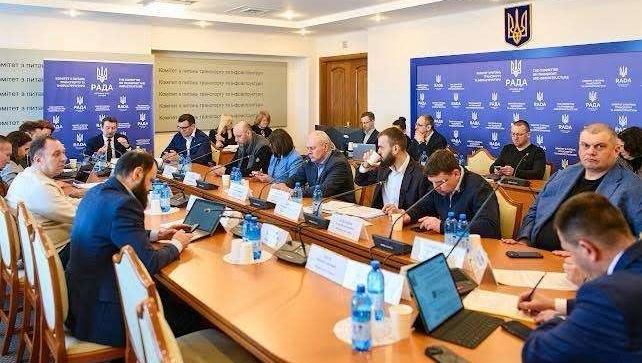
The Transport Committee will appeal to the government with an initiative to separate the transport portfolio from the Ministry for Communities and Territories Development. We explain why this issue is important right now and what practical consequences it will have for the economy and the frontline.

By Tetiana Suchkova-Ladik
March 13, 2026 · 2 min read
Brief — the essence of the initiative
The Parliamentary Committee on Transport and Infrastructure has decided to support the idea of splitting the Ministry for Development of Communities and Territories and carving out a separate central executive authority for transport and infrastructure. According to the committee's decision, the proposal will be forwarded to Prime Minister Yuliia Svyrydenko for consideration at a Cabinet of Ministers meeting; the final decision rests with the government.
Why this is being proposed now
The initiative is not accidental: the war has elevated transport infrastructure to the level of critical resources. Logistics for humanitarian and military cargo, the operation of ports and border crossing points have become matters of national security, not just administrative management. The committee notes that a separate ministerial-level body enables faster decision-making and better coordination of the restoration and operation of key arteries.
"Transport is a key element of the country's economy and security, requiring a specialized central governing body",
— Press Service of the Office of the Verkhovna Rada
Practical consequences for citizens and businesses
Separating the transport bloc could affect several concrete areas: faster restoration of roads and bridges, accelerated recovery of rail routes, more transparent management of seaports and more effective coordination with European partners on border crossing points. For business, this means reduced logistical risks and a quicker return of export and domestic trade opportunities.
History of reorganizations — briefly
A Ministry of Transport existed in Ukraine from 1992; in 2004 it was transformed into the Ministry of Transport and Communications. In 2010–2011, during administrative reform, the separate transport authority was abolished and the Ministry of Infrastructure was created. In 2019 the Ministry for Development of Communities and Territories was established with a focus on decentralization, and after 2022 its functions were temporarily combined in various configurations — particularly in the context of territorial recovery. On 6 September 2024 the Cabinet adopted resolution No. 1028, renaming the ministry the Ministry for Development of Communities and Territories — effectively separating out the infrastructure block.
What experts say and the international context
The committee refers to the practice of many European countries where transport is coordinated through separate ministries. Experts note that during the war and the post-war recovery period a specialized body allows better balancing of defense needs, humanitarian logistics and economic recovery.
What comes next
The committee's decision is only the beginning of the procedural path. Now the initiative must be considered by the Cabinet of Ministers; if supported, a technical reorganization, redistribution of powers and approval of a new structure will follow. The matter is not only administrative: the speed at which the country can restore critical infrastructure and integrate into European logistics routes will depend on the establishment of the new ministry.
Conclusion. The initiative to restore the Ministry of Transport is a response to new realities: a combination of security challenges, reconstruction needs and the drive for European compatibility. Now the ball is in the government's court: will declarations be turned into concrete managerial decisions and funding?



