Warsaw plans autonomous metro line without drivers
The M4 line will become the first fully driverless line in the Polish capital.

By Oleg Bazylewicz
November 27, 2025 · 1 min read
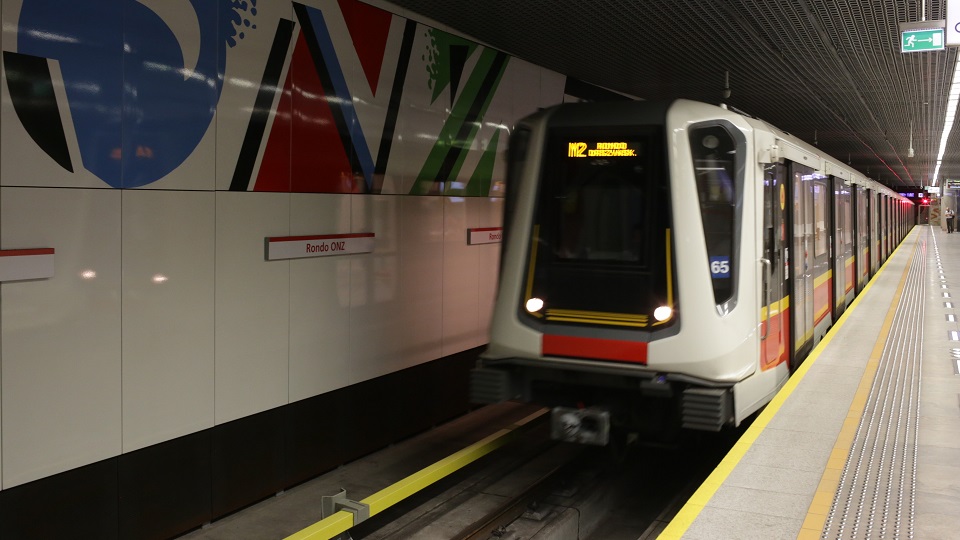
Warsaw announced a project for a new fourth metro line, said Mayor Rafał Trzaskowski. The next steps will be geological surveys and the development of detailed plans for the stations.
"Line M4 will become the first fully autonomous in Warsaw — trains will run without drivers," he said.
Currently the Warsaw Metro uses a GoA2 system, which combines automatic control with a driver.
"We plan to implement a GoA4 system on line M4, where all critically important aspects of safe operation will be automated," clarified the general director of the Warsaw Metro, Jerzy Lejk.
The new 26 km line will cover nine districts and will include 23 stations. Completion of preparatory work is planned for November 2027.
Regarding the start of construction, Trzaskowski noted that there are no exact dates yet, but work will likely start "in the 2030s".
At present the Warsaw Metro, which is the only metro in Poland, consists of two lines; the third and fourth are currently at the design stage.
Line M4 is an important element in the development of the Warsaw metro, as it is expected to provide high passenger flows and become an alternative to the overloaded first line (M1).
The mayor of Warsaw stressed that construction of new metro lines depends on funding.
"If there is no funding from the European Union or the government does not take it on, the city budget will not be able to finance the construction of the third, fourth and fifth metro lines on its own. There is no local government in the world capable of carrying out such projects independently," said Trzaskowski.
- Unmanned metro systems (automated, driverless systems, GoA3–GoA4) have already been implemented in many countries. The most advanced projects are located in Asia and Western Europe.



