Strike on oil pipeline after ceasefire: someone is destroying the very route that saves the world from Hormuz
A drone struck a pumping station on Saudi Arabia's East-West oil pipeline—the only serious alternative to the Strait of Hormuz—hours after the US-Iran ceasefire was announced. Coincidence or a message?

By Tetiana Suchkova-Ladik
April 8, 2026 · 3 min read
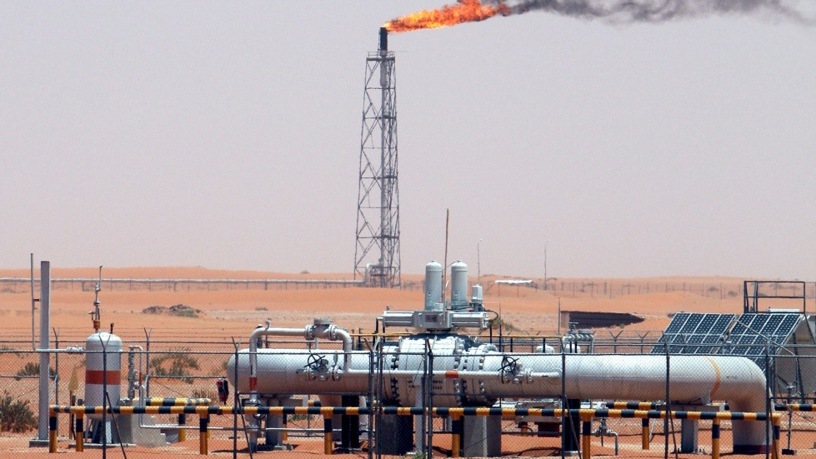
When the Strait of Hormuz effectively closed to commercial shipping in May 2025, Saudi Arabia played a card it had been holding since the 1980s: the East-West Pipeline, known as Petroline. 1,200 kilometers of pipes through the desert — from the Persian Gulf oil fields to the port of Yanbu on the Red Sea coast. This infrastructure was hit by a drone on Wednesday.
What was attacked and why it matters
Petroline is not a backup artery, but the main relief valve. The kingdom has increased pumping through the pipeline to full capacity: approximately 5 million barrels per day — roughly 70% of pre-war export volumes. According to Energy News Beat, Aramco has redirected large volumes of Arab Light and Extra Light from the Abqaiq fields through 1,200 kilometers of desert to Yanbu, and CEO Amin Nasser confirmed that the pipeline will reach its mechanical limit "in the coming days."
According to Financial Times, the strike on the pumping station occurred at approximately 1:00 p.m. local time on Wednesday. The extent of the damage is currently being assessed. However, according to shipping agents and traders, loading at the port of Yanbu continued without interruption on Wednesday.
The geometry of vulnerability
The pipeline solves the "Saudi problem" — but only that. Saudi Arabia's maximum bypass capacity — approximately 5 million barrels per day — compensates for roughly 25% of the total pre-war flow through the strait. The remaining 75%, including Iraqi, Kuwaiti, and Emirati volumes, have no alternative route.
But even these 5 million barrels have an Achilles heel: oil arriving in Yanbu must travel through the Red Sea. And the Red Sea is in the operational zone of the Houthis.
"We are in full combat readiness with all options available. Details regarding the timing remain with the leadership,"
— Houthi representative to Reuters, following the announcement of a US-Iran ceasefire
The probable role of the Houthis is twofold and the stakes are extremely high: resumption of attacks on shipping through the Bab el-Mandeb Strait would directly threaten the very same bypass route on which Saudi Arabia now relies.
The timing of the strike is no coincidence
The attack occurred hours after the announcement of a two-week ceasefire between the United States and Iran. The strikes also reached the Red Sea coast: a drone hit the SAMREF refinery in Yanbu. Who is behind the strike on Petroline has not been officially confirmed. But the Houthis attacked these same pumping stations in 2019: then the strikes forced the temporary closure of the pipeline built specifically to bypass the Strait of Hormuz.
The idea of striking during a ceasefire is not a new tactic. It is a way to entrench a position without officially escalating: damage infrastructure while diplomats pose for photos against the backdrop of handshakes.
What comes next
If the damage to the pumping station turns out to be minimal — markets will accept it. But if a series of attacks on Petroline continues, and the Houthis simultaneously block the Bab el-Mandeb, the world will face a scenario where both exits from the Persian Gulf are simultaneously closed — and there will be no backup route for 15 million barrels per day.
The real question is not who delivered the strike on Wednesday. But whether the two-week ceasefire will withstand the pressure from those who are interested in Petroline never becoming a reliable alternative to the Strait of Hormuz.



