Strike on the "SICH" terminal in Zaporizhzhia: how the attack affects logistics and security
A morning missile strike on March 17 damaged a major Nova Poshta sorting hub. It's not just material damage — it's a test of the resilience of delivery chains and the safety of employees.

By Tetiana Suchkova-Ladik
March 17, 2026 · 2 min read
Briefly
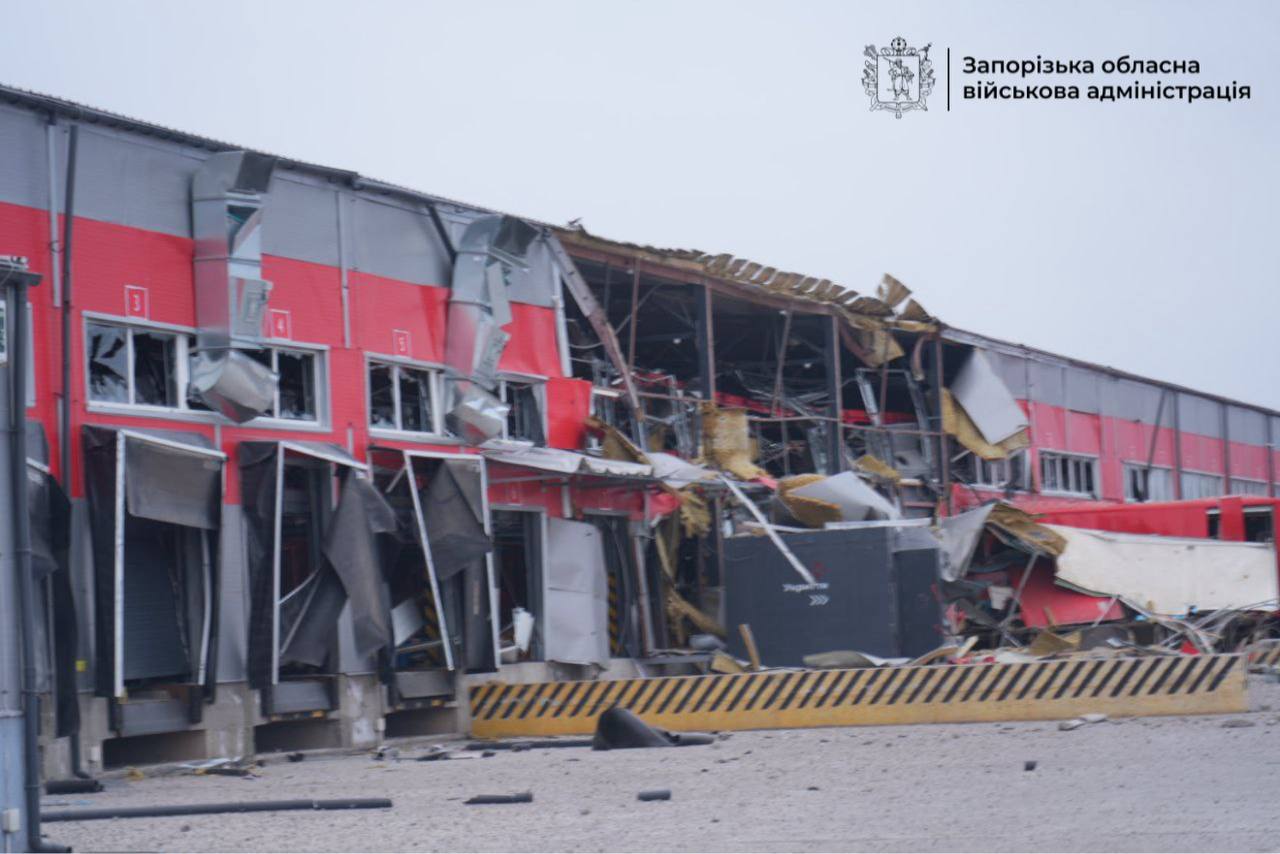
On 17 March, Zaporizhzhia was hit by a missile strike, partially destroying the "SICH" terminal of the company "Nova Poshta". According to regional authorities and the company's press service, five employees sustained concussions, one was wounded. The company has shifted operations to backup logistics capacities, while planning to restore the terminal's operation.
What the photos and statements show
The published photos show damage near the shelter where terminal employees were at the time of the attack. This is confirmed by both the company's services and regional authorities.
"Five terminal employees sustained concussions, one was wounded."
— Nova Poshta press service
"The strike occurred near a shelter where people were present."
— Zaporizhzhia regional authorities
What this means for deliveries
The "SICH" terminal covers over 8,200 sq. m and, according to the company, has a throughput of up to 16,000 shipments per hour (approximately 384,000 per day). For consumers, the consequence is a potential slowdown in parcel processing in the region, but the company says it is mobilising reserves to maintain delivery stability.
Nova Poshta's national network comprises tens of thousands of branches and parcel lockers, making it critical infrastructure for civilian and volunteer supply. In a January interview with LIGA.net, the company's new management also spoke of plans for large-scale automation and the opening of new sorting centres in 2026 — factors that help withstand such strikes.
Context and consequences
Strikes on logistics infrastructure often have a double effect: the destruction of property and the temporary disruption of deliveries of humanitarian and consumer goods. Logistics experts note that quick switching to backup routes and automated sorting reduce the risk of systemic failures, but do not eliminate short-term interruptions.
For employees and the local community, not only compensation for material losses is important, but also guarantees of workplace safety — shelters, evacuation plans, medical assistance. It is precisely such a practical set of measures that will determine how quickly the hub's full operation is restored.
What's next
Nova Poshta plans to restore the terminal's operation, but the key now is assessing the scale of the damage, staff safety, and restoring delivery chains. This is an example of how civilian infrastructure finds itself at the epicentre of military strategy — and how the speed of response will determine how painful the consequences are for citizens.
Whether the logistics network can withstand new challenges depends on a combination of companies' operational work, support from local authorities and international partners. We will follow updates from the press service and regional authorities.



