Ukrzaliznytsia publishes evacuation rules — what will change during air-raid alerts
Passengers will be removed from trains only when there is an immediate threat. We examine the new rules, cases of their application, and why this issue has become so sensitive for the railways and the country.

By Tetiana Suchkova-Ladik
March 24, 2026 · 2 min read
Briefly
Ukrzaliznytsia has published updated rules for evacuating passengers from carriages in the event of an attack on a train. This is not a universal "just in case" instruction, but a clear algorithm of actions that will be applied only in the presence of an immediate threat on a specific route.
Why it matters
Military practice shows: railways are a strategic target. When it comes to passenger safety, decisions must combine speed, technical capabilities, and the risk to people. The new rules are an attempt to systematize the approach after a series of incidents and to make evacuations less chaotic and safer.
"The enemy is increasingly deliberately hunting the railway. Dozens of specialists monitor threats to each service in real time around the clock and do everything possible to minimize those threats"
— Ukrzaliznytsia (official statement)
"However, in the event of an attack on a train, a carriage must not become a trap — that is why evacuation is needed"
— Ukrzaliznytsia (official statement)
What the rules cover
The key idea is evacuation in situations of real threat, not during every air raid alert. The decision to evacuate passengers is made by staff in coordination with security services and dispatchers, based on operational information about conditions along the route.
Examples of application: success and tragedy
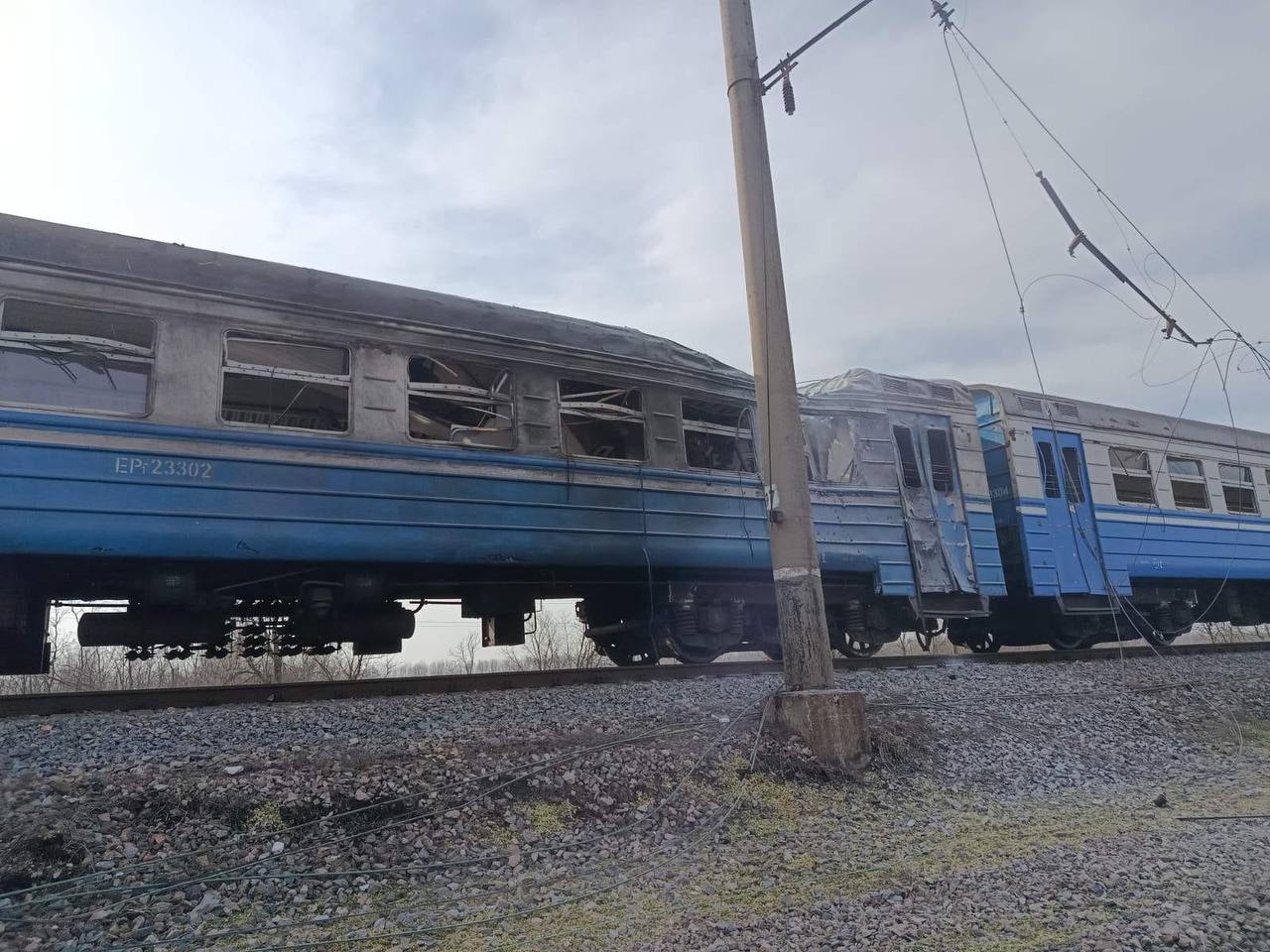
On the night of Sunday, March 22, drones attacked the locomotive of a suburban train on the Prydniprovska Railway. The timely evacuation, Ukrzaliznytsia reported, prevented injuries among passengers and the locomotive crew — an example of how coordinated actions save lives.
At the same time, on the Odesa Railway an evacuation ended tragically: a conductor was killed and another passenger was injured. Ukrzaliznytsia's chairman Oleksandr Pertsovskyi reported that the 19-year-old conductor Ilona Vovk, who was helping passengers during the evacuation, died. This is a reminder that even correct procedures do not eliminate risk — especially when accompanying conditions are difficult or when the enemy targets critical infrastructure.
Wider context
According to the company, as of October 2025, since the start of Russia's full-scale invasion, 947 Ukrzaliznytsia employees have died. Most of them served in the Armed Forces; 37 Ukrzaliznytsia employees were killed at their workplaces due to enemy shelling. These figures underscore that railway security is not only about passengers but also about the staff who risk their lives daily.
What it means for passengers
In short — do not panic, follow official instructions from staff, carry a minimal set of documents and necessary medications, and remember: evacuation is conducted only when it is safer than staying on the train. Ukrzaliznytsia, for its part, is strengthening threat monitoring and formalizing procedures, which should reduce the number of improvisations in dangerous situations.
Conclusion
These rules are part of systematic work that rarely makes headlines but is tangible on the front lines of logistics and safety. The question remains: how quickly and effectively will the state and infrastructure partners be able to turn declarations into additional means of protection for passengers and staff? The answer affects not only comfort but also people’s lives.



