"Uran on the Brink of Bankruptcy: Why the Cabinet is Transforming SkhidGZK into a Joint-Stock Company Right Now"
Ukraine's only uranium concentrate producer has been staving off bankruptcy through a series of moratoriums for years. Corporatization is an attempt to restart the enterprise through integration with Energoatom, but the mechanism for attracting investments has not yet been defined.

By Tetiana Suchkova-Ladik
May 14, 2026 · 2 min read
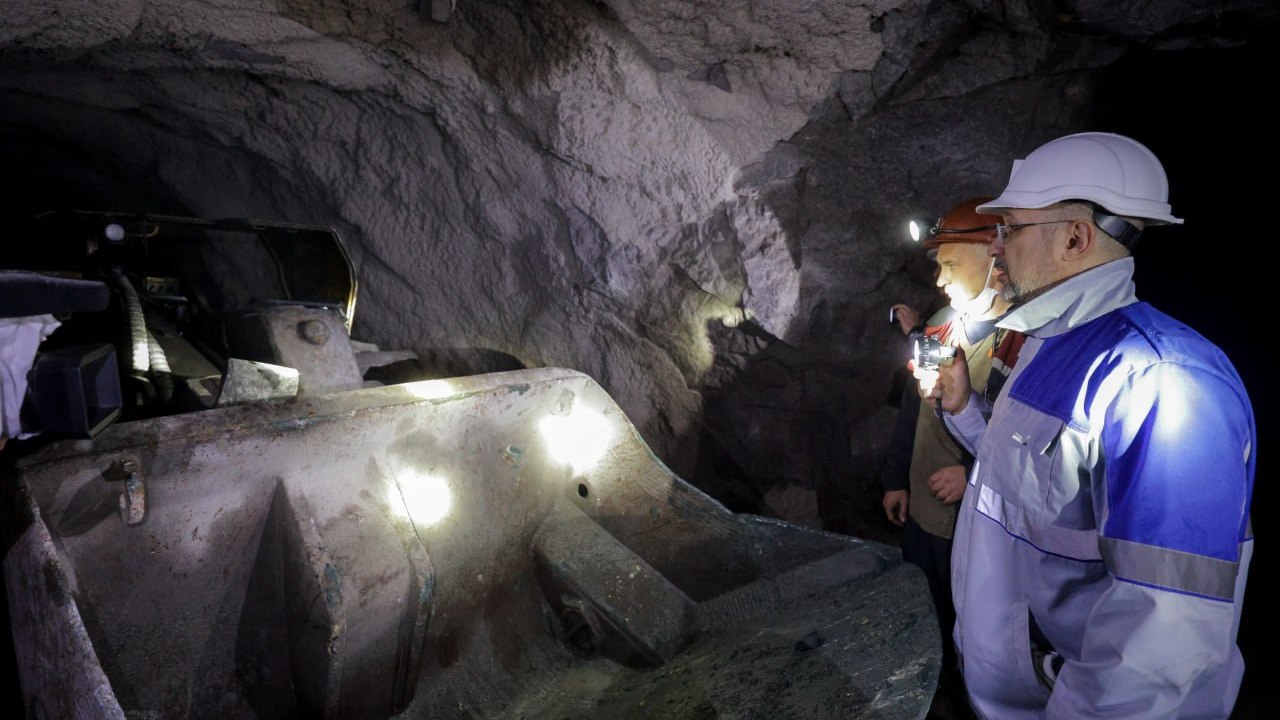
On May 13, the Cabinet of Ministers approved a protocol decision on stabilizing the state enterprise "SkhidGZK". But behind the technical wording lies a real picture of an enterprise that provides up to 40% of Ukrainian nuclear power plants' uranium needs and at the same time has been teetering on the brink of insolvency for years.
From State Enterprise to Joint-Stock Company
The first step is corporatization: SkhidGZK will be transformed into a joint-stock company with 100% state ownership. The Cabinet of Ministers approved the corresponding bill and sent it to the Verkhovna Rada.
The second step is integration. According to Energy Minister Herman Halushchenko, the next stage could be the incorporation of SkhidGZK into NAEK "Energoatom" in the format of a vertically integrated holding — from uranium mining to electricity generation at nuclear power plants.
"This is a strategic enterprise, whose functioning is necessary for the future of our nuclear energy. Its preservation, investment attraction and modernization will make the state energy-resilient"
Prime Minister Denys Shmyhal
Why the Reform is Happening Under Pressure
SkhidGZK is not simply a "strategic asset" that was decided to be modernized out of prosperity. The enterprise has been under a bankruptcy moratorium for years — a protective mechanism that prohibits forced debt collection and asset seizure. The Verkhovna Rada extended this moratorium several times: first until January 1, 2025, then until January 1, 2026, and finally on February 10, 2026 — once again, with 247 votes in favor.
In parallel, the new corporatization bill itself also introduces a moratorium on bankruptcy and forced execution of decisions regarding enterprise property for the transition period. In other words, restructuring is occurring under legal protection from creditors — not after recovery, but instead of it as a prerequisite.
What Does Entry Into a Holding With Energoatom Mean
Energoatom has already undergone its own corporatization — it was transformed into a joint-stock company at the end of 2023. Merging with SkhidGZK into a single nuclear energy holding makes sense from the perspective of vertical integration: Ukraine would become one of few countries where the entire chain from uranium mining to electricity production at nuclear power plants is under unified management.
The practical benefit is the possibility of cross-subsidization and attracting investments through a more capitalized parent structure. The risk is that SkhidGZK's debts could become a burden for Energoatom, which itself is restoring capacity after infrastructure attacks.
The Scale of Stakes
SkhidGZK is among the world's top ten uranium producers. In conditions where Ukraine is actively increasing its independence from Russian nuclear fuel — transitioning to Westinghouse fuel assemblies and diversifying supplies — domestic mining gains not only economic but also security dimensions. Shutting down the plant would mean complete dependence on imported uranium concentrate.
If the corporatization bill passes the Verkhovna Rada, the key question will be not the form of ownership, but a concrete debt restructuring plan: without it, changing status from "state enterprise" to "joint-stock company" is merely a legal operation that does not solve the enterprise's financial crisis.



