Government creates equipment reserve for CHPs and thermal power plants — how it will speed up recovery after strikes
Because of production delays and widespread damage, the government is proposing to take compatible units from Soviet-era power plants in Eastern Europe — what this will mean for cities and why the decision matters right now.

By Tetiana Suchkova-Ladik
February 13, 2026 · 2 min read
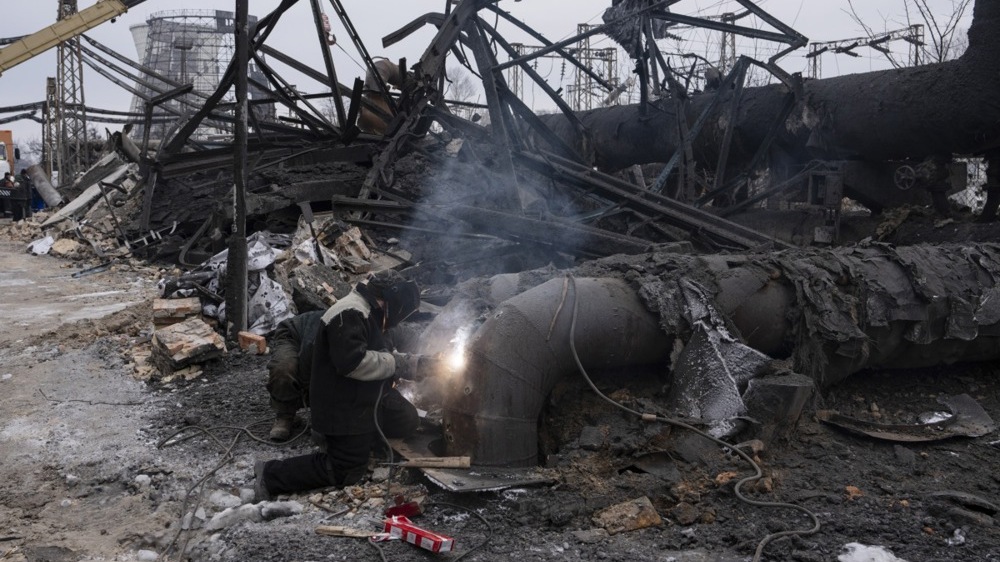
In brief: what happened and why it matters
First Vice Prime Minister and Minister of Energy Denys Shmyhal announced the creation of a reserve of equipment for the restoration of thermal power plants (TPPs) and combined heat and power plants (CHPs). The initiative combines two elements: stockpiling critical spare parts and dismantling compatible Soviet‑type facilities in Eastern Europe to take away entire units for rapid replacement.
Why the government is choosing this approach
Supply chain realities. According to Shmyhal, manufacturing and delivering new equipment takes four to six months. In wartime conditions and during a cold snap, such a wait means thousands of people without heating or electricity.
Compatibility and speed. Soviet TPPs/CHPs in Eastern Europe share many compatible components — they can be dismantled in blocks and transported to minimize downtime at Ukrainian stations.
"An important point is that purchasing and waiting for equipment to be manufactured takes from four to six months, so now we have proposed a new approach: to form a reserve of all necessary equipment that can be damaged by Russian terrorists so that it can be replaced operationally"
— Denys Shmyhal, First Vice Prime Minister, Minister of Energy
What this means for cities and residents
The project is intended to directly affect the time it takes to restore heat supply. If replacing individual units becomes possible in weeks rather than months, the risk of mass outages during cold weather is reduced. This is especially important for large systems designed around centralized CHPs that cannot quickly switch to local heat sources.
"It is impossible to completely re-equip Kyiv's centralized heating system to local heat sources or cogeneration units, because it was designed for large CHPs"
— Vitaliy Klitschko, Mayor of Kyiv
Context: the facts
- Since 14 January, a state of emergency in the energy sector has been in effect in Ukraine due to massive shelling and the cold snap.
- On 24 January, CHP‑6 in Kyiv ceased operations.
- On 3 February, Darnytska CHP‑4 received critical damage; estimates indicate its restoration will take at least two months.
Risks and logistics
The idea is technically viable, but not automatically effective. Approvals from donor countries are required, legal support (dismantling, transportation, customs clearance), as well as funding and heavy‑haul logistics. In addition, parts must be adapted and tested before commissioning — this also takes time and resources.
What’s next
An equipment reserve could substantially shorten the time to restore critical infrastructure and protect cities from prolonged outages. But implementation will depend on how quickly partners turn intentions into contracts and allocate resources for dismantling and delivery. This decision is an example of pragmatic adaptation of the energy sector to wartime realities: instead of ideological debates — technical steps that deliver concrete results.
Brief forecast: if the process is set up in the coming weeks, some repairs can be shortened from months to weeks; if there are delays in coordination with partners, the initiative’s effect will be limited.



