Wagons of Resilience: more than 30 mobile hubs head to the regions — 14 will go to frontline communities
Mobile hubs are expected to start operating in the coming days: heating, charging, Starlink — in locations without permanent points. Where exactly, and why this is important for people's safety.

By Tetiana Suchkova-Ladik
January 19, 2026 · 2 min read
Brief
Ukrainian Railways and the Ministry for Development of Communities and Territories reported that over 30 resilience wagons are being dispatched to the regions, of which 14 are headed to frontline regions. In the coming days mobile hubs will begin operating in communities of Kharkiv, Sumy and Poltava oblasts, as well as at several stations in the Kyiv region and in major cities, where they will serve as additional heating and charging points.
Where and why
The wagons will be placed at stations that lack stationary resilience points and independent heating. In the Kyiv region some wagons will be stationed in Borodianka, Irpin and Bucha. In Zaporizhzhia, Dnipro and Pavlohrad they will serve as additional warming points in case of prolonged power outages. Decisions on specific locations are made jointly by the Ministry and Ukrainian Railways, taking into account risks of energy vulnerability and accessibility for people.
What's inside the wagon
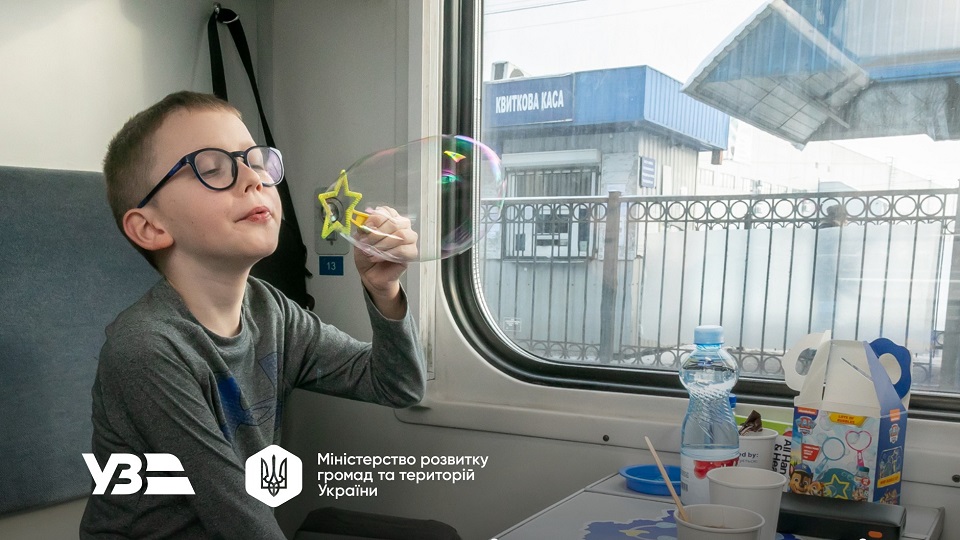
Each wagon is equipped to quickly provide basic services in crisis conditions: heating, charging stations powered by a generator and portable power sources, a microwave and a refrigerator, a Starlink kit for stable communications, a children's compartment with games and books, and a pet-friendly compartment for pet owners. The project is implemented using cars from the non-operational fleet that are not involved in passenger transport.
"A resilience wagon is an operational resource for people's safety and comfort during prolonged outages. We coordinate delivery and placement taking into account the real needs of communities,"
— Ukrainian Railways, press service
Context and scale
After the massive attack at the beginning of the year on January 10, the first wagons were delivered to stations in Brovary, Boryspil, Vasylkiv and Fastiv. According to Ukrainian Railways, more than 4,000 people used them during a week of prolonged power outages. At the end of December, Ukrainian Railways together with partners — All Hands and Hearts, World Central Kitchen, Hachiko Foundation and White Stork — prepared 100 resilience wagons, some of which are currently being deployed across the regions.
"Mobile hubs are a tool for increasing communities' energy resilience: they quickly arrive where infrastructure is insufficient or temporarily out of service,"
— Ministry for Development of Communities and Territories
What next
The practical effect of this initiative will depend on two things: accurate placement — so the wagons are accessible to those who need them — and coordination with local authorities and volunteers for logistics and public information. It is an example of how technical solutions and cross-sector coordination bolster community resilience in real time. Now the ball is in the partners' and local communities' court — to ensure declarations quickly turn into working services where they are most needed.



