From the Assembly Line to the Front: Why Rasmussen Proposes Repurposing European Car Plants — Implications for Security and the Economy
The former NATO secretary-general, in an interview with El País, warned of possible Russian aggression and suggested using the excess capacity of car plants to produce weapons. Why does this concern Europe's security and what are the benefits and risks for Ukraine?

By Tetiana Suchkova-Ladik
February 12, 2026 · 2 min read
Briefly
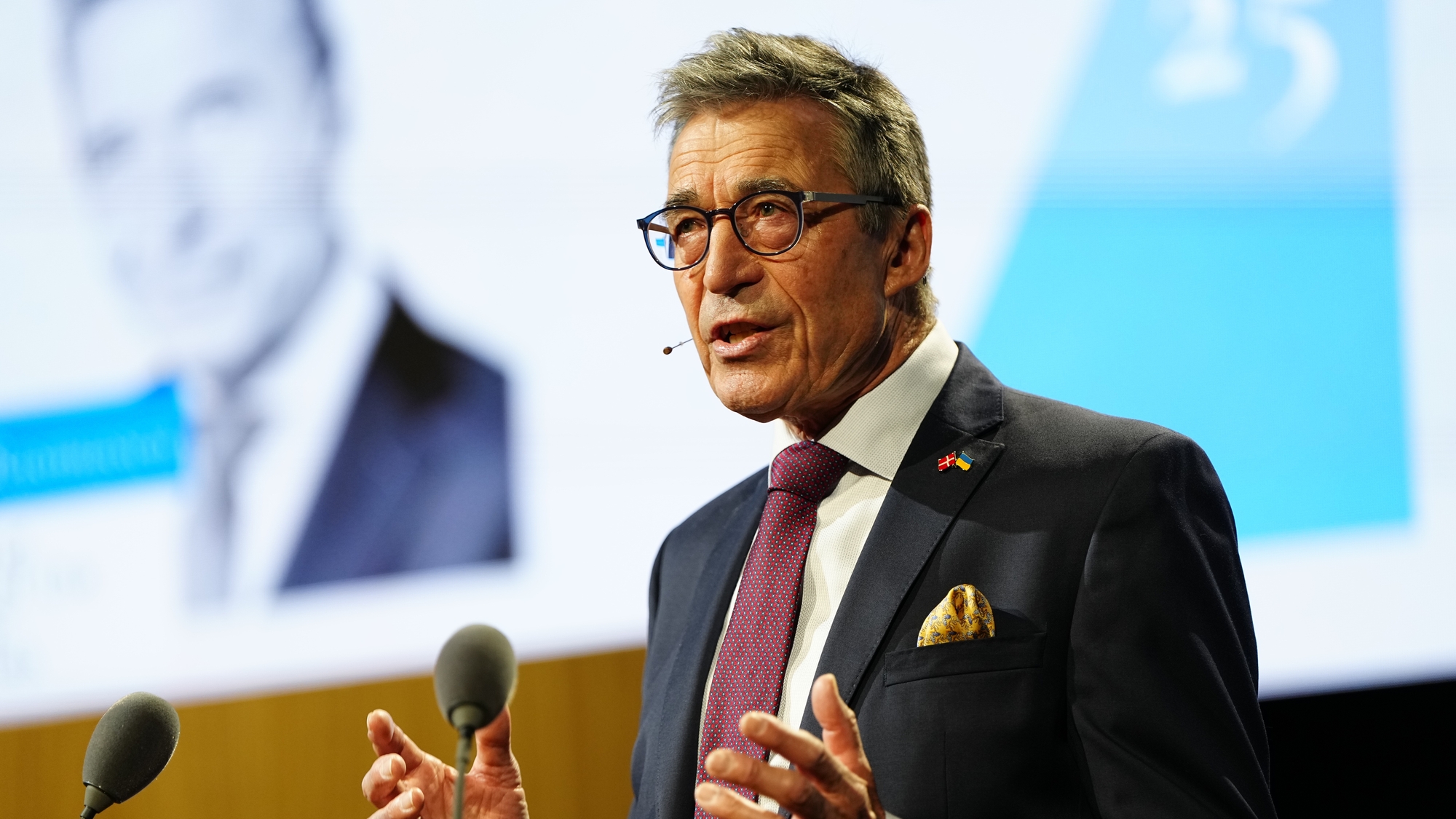
Anders Fogh Rasmussen said in an interview with El Pais that part of Europe’s industrial base could become a strategic reserve in case of escalation with Russia. His message is not only about fear, but about a practical resource: **excess capacity in the automotive industry** could be redirected to produce military equipment.
What Rasmussen actually said
"Our intelligence says that Putin could attack a NATO country by the end of this decade. I believe it could happen even sooner"
— Anders Fogh Rasmussen, former NATO Secretary General (interview with El Pais)
"There are car manufacturers in Europe with excess capacity. They can be directed to produce military equipment, like the USA in 1941. They turned the economy into a war economy in a matter of months"
— Anders Fogh Rasmussen, interview with El Pais
Rasmussen also cited a war-game scenario that considered actions against Kaliningrad via Lithuania and the possible refusal of the US to intervene in some variants — the conclusion: Europe cannot rely exclusively on automatic external assistance.
Why this matters for Ukraine
First, stronger European defence capabilities are a direct buffer for Ukraine: the faster and more effectively the EU builds up capacity, the lower the risk of a large-scale escalation that would affect Ukraine. Second, repurposing factories creates demand for adjacent supply chains, which could include Ukrainian enterprises, engineers and components.
Numbers and market reality
Facts Rasmussen cited: in October 2025 there were about 8 'surplus' car plants in Europe. A car plant is considered profitable at a production level of around ~250,000 cars per year; if imports from China grow to about 2 million cars per year by 2030, part of the capacity will remain unused — creating the possibility to redirect it to other needs.
How this could work in practice
Repurposing is not instant magic. It is a question of three coordinates: technical retooling of lines, securing critical components, and financing models (state aid, government orders, private investment). The US mobilization in 1941 shows that with political will and clear government directives rapid production mobilization is possible. But today one must additionally consider more complex supply chains and EU environmental regulations.
Advantages and risks
Advantages: accelerated provision of ammunition, armored vehicles and logistics; preservation of jobs; strengthening the EU’s industrial autonomy, which also benefits Ukraine.
Risks: high upfront investments, time needed for retooling, legal issues related to market rules and aid, and the risk of political resistance from companies focused on the civilian market.
What experts say
Defence industry analysts note that the idea is not new, but has gained additional weight due to changes in car trade and geopolitical tension. Some experts agree: for rapid response planning must be done "in peacetime" — lists of priority lines, contracts for components, and workforce training.
Conclusion
Rasmussen’s proposal is not a call to panic, but a rational policy suggestion for industrial mobilization: **reformat excess capacity in favor of defence**. For Ukraine, it is a chance to strengthen regional security and gain additional industrial links. The question now for European governments and businesses is whether there will be enough political will and technical resources to turn industrial excess into a real shield without prolonged delay.



