Warszawa Zachodnia station reopens after five-year renovation
In Warsaw, the renovated Warszawa Zachodnia railway station was officially opened: the modernization lasted five years, about PLN 2.5 billion was invested, an underground tunnel was built and solar panels were installed on the roof.

By Oleg Bazylewicz
November 28, 2025 · 1 min read
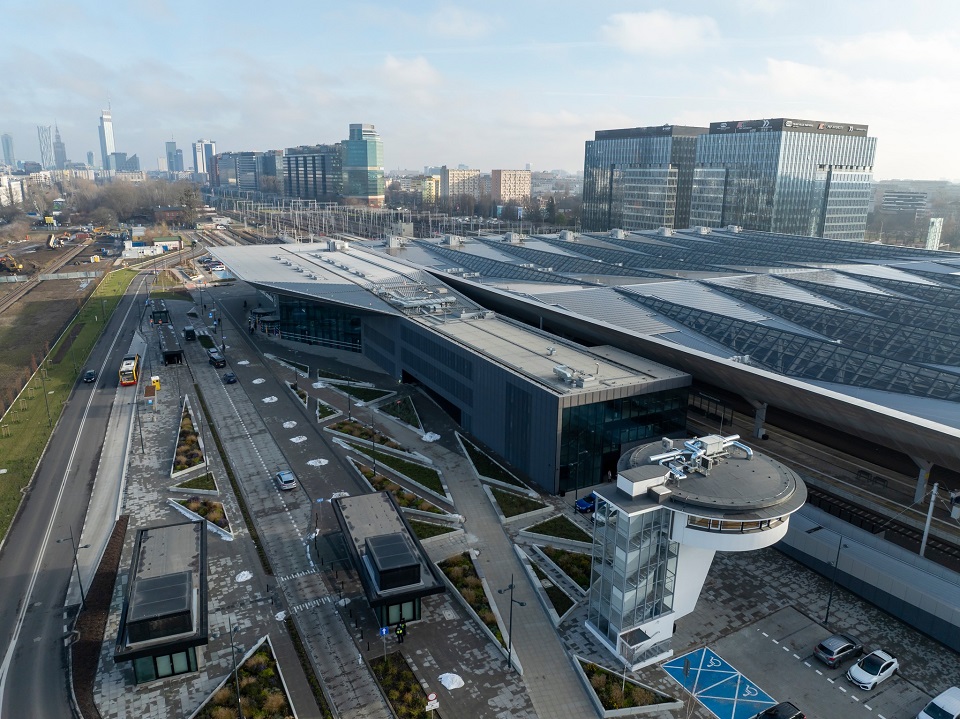
On Friday, 28 November, the renovated Warszawa Zachodnia station was officially opened after a five-year reconstruction. The work concluded with the opening of a new underground passage and a number of infrastructure upgrades.
Underground tunnel and platforms
The five-year renovation ended with the commissioning of an underground passage about 500 metres long, which connects the station with the Ochota and Wola districts. This tunnel has become the longest passenger passage on the Polish railway.
As part of the works, platforms 1–7 were refurbished, a new platform numbered 8 was built, and the former platform 8 was renumbered 9. Three new railway overpasses were also constructed, around 36 km of track were restored and 137 track switches were installed.
Infrastructure and energy efficiency
To improve passenger comfort, lifts and escalators were installed and a new pedestrian bridge was built to provide easier access to the platforms. Cyclists were provided with ramps and a spiral descent to the platform level.
A roof covering about 2.5 hectares was placed over the main rail complex, almost half of which is covered with solar panels. This is one of the largest installations of its kind in Europe; the solar panels cover up to 30% of the station's energy consumption.
Train services and outlook
Total investment in the project reached approximately 2.5 billion zlotys (nearly €600 million). Financing involved funds from the European Union.
Poland's Prime Minister Donald Tusk visited the renovated station on the day of the opening.
Look. Impressive, isn't it?
– Donald Tusk, Prime Minister of Poland
Warszawa Zachodnia handles up to a thousand services a day, exceeding the traffic volumes at Warsaw Central Station. The station receives a large flow of commuter, regional and intercity trains: one in five trains in Poland stops here.
- In 2026, reconstruction of the Warszawa Wschodnia station is planned to begin; it is the station that most often handles trains to and from Ukraine.



