Tishchenko's 179-Meter Wind Turbines: Who is Building and How Much Will the Wind Farm Produce Near Berdychiv
LLC "Berdychiv Wind Park," founded by the Tyshchenko family in 2024, has launched an environmental assessment procedure for a 57 MW project—which could generate up to 180 million kWh annually for the forest-steppe region of Zhytomyr Oblast.

By Oleg Bazylewicz
May 25, 2026 · 2 min read
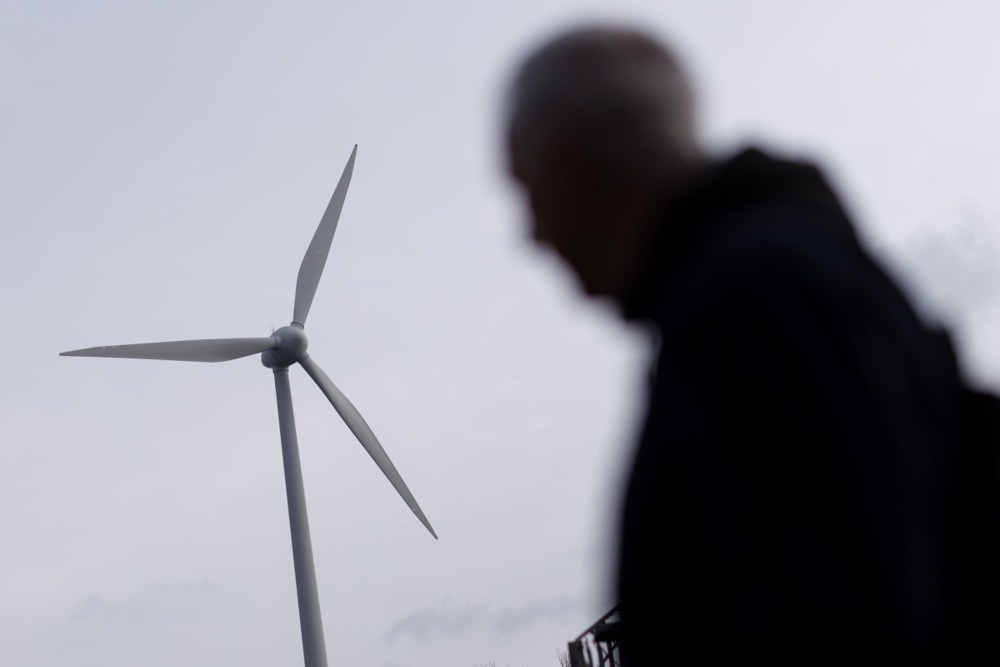
An official environmental impact assessment procedure has begun in Berdychiv District of Zhytomyr Region for a new wind power plant with a capacity of 57 MW. The company LLC "Berdychiv Wind Park" launched it on May 14, 2025.
Who is behind the project
According to Ekonomichna Pravda, the company founders are Kostiantyn and Vsevolod Tyshchenko — each owns 50% of the charter capital. The legal address is the village of Polovetske in Berdychiv District. The company was registered in June 2024, meaning exactly one year passed from registration to launching the environmental impact assessment.
What they plan to build
The project involves 10 Nordex wind turbines with tower heights ranging from 120 to 180 meters and rotor diameters up to 180 meters. The maximum height to the blade tip is 179 meters, which is taller than most skyscrapers in Ukraine. For comparison, Ukraine's tallest building in Kyiv — "Parus" — reaches 152 meters.
The plant will occupy 11 land plots with a total area of 16.3 hectares on the territory of Hryshkovets Territorial Community outside populated areas. The final turbine models will be determined during the detailed design stage — individual unit capacity ranges from 4.5 to 8 MW.
Annual electricity generation of the wind power plant will be approximately 140–180 thousand MWh.
Project documentation of LLC "Berdychiv Wind Park"
Electricity transmission will be carried out via 35 kV cable lines to 35/110 kV substations in the community.
Context: Wind blows north
Zhytomyr Region is not a traditional region for wind energy: most Ukrainian wind power plants are concentrated in the south and west. However, that is precisely where investors are now looking with increased interest — as noted by the industry portal ua-energy.org, southern Ukraine is already experiencing problems with grid connection due to excess capacity.
As of mid-2024, Ukraine had 58 wind power plant projects at various development stages with a total capacity exceeding 7 GW, according to Wikipedia citing industry sources. Berdychiv is one of the smaller projects, but a telling one: a private company created a year ago, without public subsidies, is moving through a standard environmental impact assessment procedure.
What comes next
After completing the environmental impact assessment procedure, the project must receive a conclusion from the Ministry of Environmental Protection. Only then is it possible to proceed to detailed design and selection of specific turbine models. In wartime, this path — from the conclusion to the first laid foundation — in Ukraine takes from two to five years even under favorable conditions.
If Hryshkovets Community supports the project at public hearings and the Ministry of Environmental Protection does not impose significant conditions, then Berdychiv District will receive a wind power plant capable of meeting the annual consumption of approximately 50–60 thousand households. The question is different: whether the 35/110 kV grid infrastructure in the region will be sufficient to accept these capacities without modernizing substations — and who will finance this, the developer or the regional power company?



