War with Iran upends LNG market — shortfall of up to 35 million tonnes and risks to Ukraine's energy security
Surging prices and damage to Qatari facilities are reshaping global LNG supply chains. We explain who stands to lose the most, why the United States won’t fill the gap, and how this will affect Ukraine.

By Tetiana Suchkova-Ladik
March 26, 2026 · 3 min read
Why this matters
Reuters and leading energy analysts warn: the war around Iran has changed the trajectory of the global liquefied natural gas (LNG) market. This is not just statistics — it affects prices, industrial production in Asia and the energy security of import-dependent countries. For Ukraine, higher energy prices mean pressure on logistics, fertilizer production and higher costs for businesses and households.
What happened: key nodes were affected
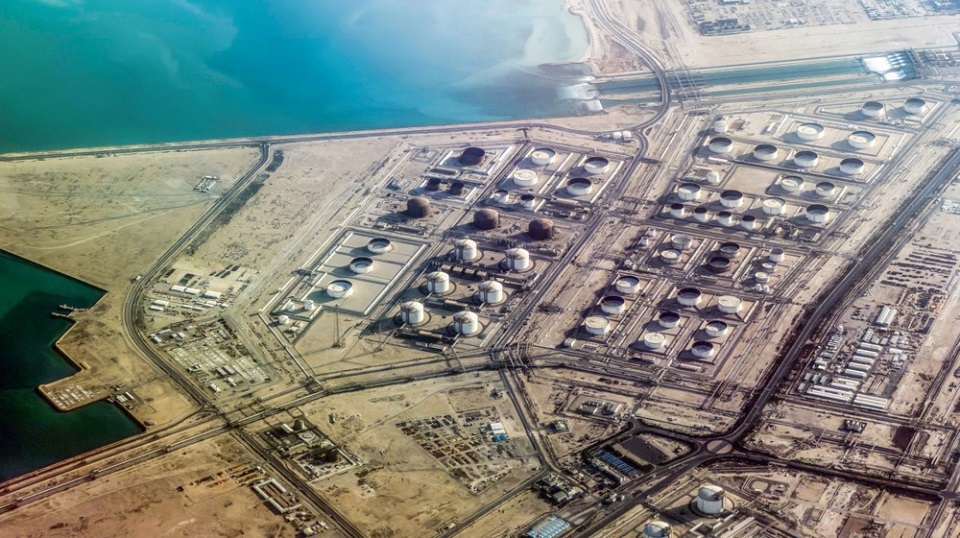
According to Reuters, fighting and strikes on infrastructure have affected supplies from Qatar — one of the main LNG exporters. At the same time, the blockade of the Strait of Hormuz (through which about 20% of global LNG exports pass, by some estimates) and technical damage have created risks for shipping and exports.
Before the war, expected global supply growth was about 10% — to 460–484 million tonnes per year. Now some projects are delayed or taken offline: in Qatar, roughly 12.8 million tonnes per year could remain unavailable for 3–5 years.
Forecasts: adjustment in volumes up to 35 million tonnes
Analytical agencies S&P Global Energy, ICIS, Kpler and Rystad Energy have cut supply forecasts — by a total of up to 35 million tonnes in 2026. S&P expects exports from Qatar and the UAE to fall by about 33 million tonnes in 2024 and additional adjustments of 19 million tonnes annually in 2027–2029 due to delays in the North Field expansion and Ruwais LNG (ADNOC) projects.
"We expect this gas price crisis will force some countries to revise down the demand growth rates for gas that we had previously forecast, and therefore LNG demand growth will be lower than pre-war expectations."
— Lucien Mühlberger, analyst, S&P Global Energy
Prices and market reaction
Prices in Asia have jumped by 143% since the start of the conflict and exceeded $25.30 per mmBtu — the highest level in more than three years. Rabobank and UBS have already adjusted their forecasts: Rabobank expects an average price of $16.62 per mmBtu this year (and $13.60 in 2027), while UBS has raised its forecast to $23.60 for the current year.
"In the short term, the market will balance mainly through higher prices and reduced demand in South Asia."
— Laura Page, Kpler
Who will be hit hardest
The markets most sensitive to prices — Bangladesh, India, Pakistan — are already seeking alternatives (switching to coal, domestic gas) or implementing energy-saving measures. Pakistan has introduced energy-saving measures; in India, output in energy-intensive sectors — from fertilizers to ceramics — is falling. Analysts at Kpler and IEEFA note a process of "demand destruction" that could become permanent.
Why the US will not close the gap
Although the US is the largest LNG exporter, its terminals are operating near full capacity and large volumes are contracted on a long-term basis. That means it is not possible to quickly offset the deficit because of physical and contractual constraints.
"It is not possible to easily replace the lost volumes, and no portfolio optimization or cargo swaps will cover the gap between lost supply and current demand... this is a serious blow to the energy security of countries that depend on these supplies."
— Seb Kennedy, analyst
What this means for Ukraine
For Ukraine, direct LNG imports are not a critical element of the energy balance compared with Asian countries, but secondary effects — a global price shock, more expensive fertilizers, higher logistics costs — are tangible. LIGA.net has already explained why fuel prices in the country have risen sharply and how this has affected business and households. In a high-price environment, diversification of supplies, maintaining strategic reserves and adapting contract policy become important.
Short-term conclusion and what to do next
Analysts agree: prices may remain elevated at least until 2027. That means two things for Ukraine and its partners — first, they need to prepare for higher costs in upcoming seasons; second, they should accelerate work on energy resilience: energy efficiency, import diversification, and local sources.
Whether Ukraine and its partners can use this shock as an impetus for real strategic change is a matter of practical decisions, not rhetoric.



