America Wins, Europe Pays: How the Middle East Conflict Is Driving Up LNG Exporters' Profits and Complicating Support for Ukraine
Euractiv has calculated: amid escalating tensions in the region, American liquefied natural gas exporters are posting record profits, while Europe faces a new energy vulnerability — what does this mean for our security and the budgets of our partners?

By Tetiana Suchkova-Ladik
March 10, 2026 · 2 min read
Briefly: money is shifting geopolitics
The conflict in the Middle East already has a direct impact on energy and finance. According to an analysis by Euractiv, the biggest gains are going to US LNG exporters, while European economies face pressure from rising prices and the risk of supply shortfalls.
What happened and who benefited
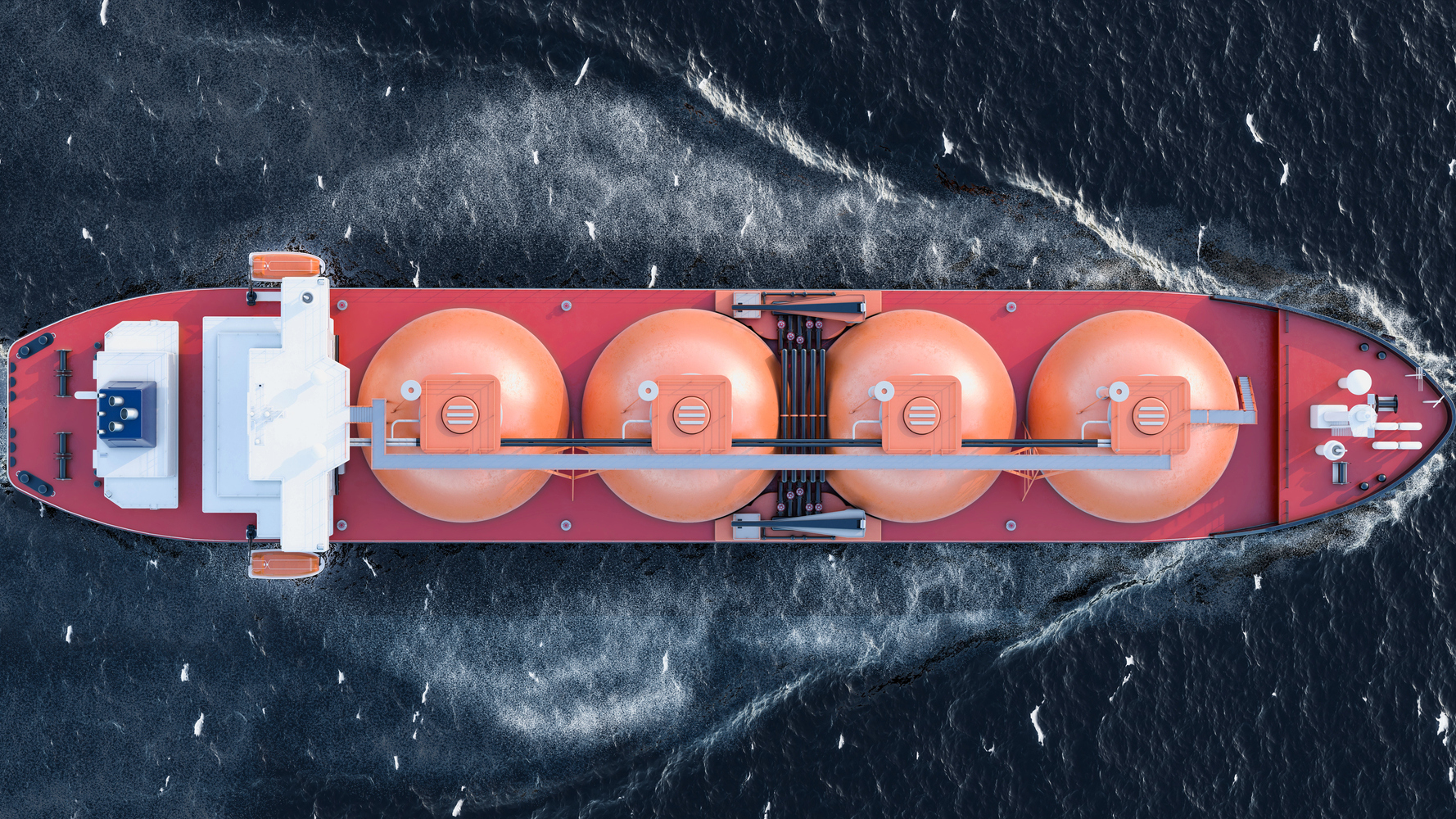
Over the past week, shares of companies connected to US LNG exports have jumped sharply: Venture Global — about +30% for the week, Cheniere Energy — roughly +7%. Analysts report that the profitability of a single vessel delivering to Europe has effectively doubled amid rising global energy prices.
This is no coincidence: over recent years the US has transformed into the world's largest supplier of liquefied gas — from the first shipments a decade ago to today's position as a leading exporter. When tensions rise in the Middle East, restrictions on flows through the Strait of Hormuz and damage to infrastructure push prices up — and, accordingly, exporters' margins.
Authoritative assessments
"The eurozone is now 'the most vulnerable of the major economies' to energy shocks"
— Karsten Brzeski, economist, ING
The International Energy Agency and the IMF also warn: supply disruptions and price spikes can increase inflationary pressure, unsettle financial markets and change the trading dynamics for limited volumes of LNG.
"The EU may have to directly compete with other regions for limited volumes of liquefied natural gas"
— Fatih Birol, Executive Director, International Energy Agency (IEA)
Consequences for Europe and for Ukraine
On 9 March 2026 global oil prices jumped above $100 a barrel after attacks on oil and gas infrastructure and a drop in shipping traffic through the Strait of Hormuz. This has already shown up in the EU gas market: the price increase is the strongest since 2022.
This has a twofold effect for Ukraine. First, more expensive energy amplifies inflation and budgetary pressure on European countries — complicating their financial capacity and political space for long-term support of Ukraine's defense. Second, competition for limited LNG cargoes may alter supply routes and delay the diversification Europe relies on to become less dependent on the aggressor.
Analysts at Oxford Economics note that Europe's chemical industry is particularly vulnerable — a sector heavily reliant on imported energy and feedstocks, and therefore exposed to price swings and resource availability.
What to do and what to expect
The IMF and energy agencies recommend preparing for a prolonged period of volatility: increasing reserves, policies targeting support to vulnerable sectors, and accelerating investments in diversifying supplies. For Ukraine it is important to monitor these processes: the stability of European partners directly affects the Western world's ability to finance and support our defense.
Summary: US LNG exporters are reaping tangible benefits from the crisis, Europe faces real risks. Now the question is not only about fuel prices, but whether partners will turn declarations of support into stable contracts and mechanisms that can withstand new shocks.
Whether the EU can quickly adapt and maintain its ability to assist Ukraine is a question whose answer will shape the coming months of geopolitics and security.



