Winhub launches network of Class A parks: $1 billion and 1 million sq m along Ukraine–EU corridor
The first land plot, 7 km from Kyiv on the E40 highway, is not just an investment in real estate. It is a bet on reviving logistics, reducing costs, and strengthening Ukraine’s transit role in Europe.

By Tetiana Suchkova-Ladik
March 12, 2026 · 2 min read
What happened
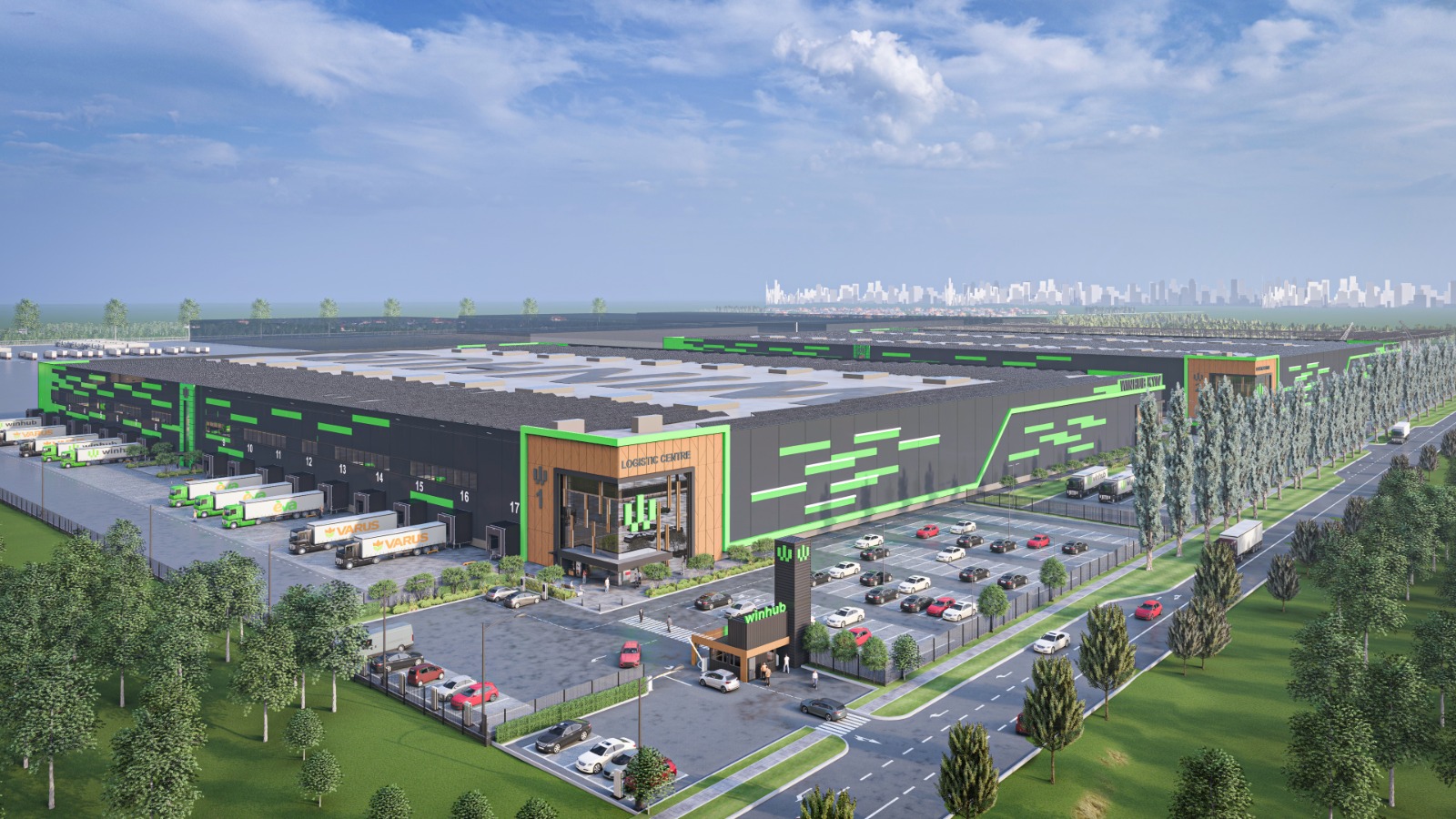
Ruslan Shostak’s company Winhub acquired an 18-hectare plot of land in the village of Mriya in Bucha Raion, Kyiv region, and presented the project for the first Class "A" logistics park at the MIPIM exhibition in Cannes. According to LIGA.net, construction is scheduled to start in Q2 2026.
Project details
The first site is located 7 km from Kyiv on the international E40 highway — a corridor that connects Ukraine with EU countries and beyond. On this plot they plan to create about 100,000 sq. m of modern warehouse capacity (it is stated that by 2030 the volume on this site will reach ~116,000 sq. m).
Winhub is announcing a network of ten such parks in Kyiv, Odesa, Lviv, Dnipro and along key transport routes. The total area of the project is 1 mln sq. m, with planned investment volume of $1 bn. The project was presented at the Ukrainian stand at MIPIM — the main annual international real estate exhibition.
"Constructing just the first of the ten parks gives us the opportunity to offer the market 116,000 sq. m of modern warehouse capacity at this site by 2030"
— Ruslan Shostak, founder and co-owner of Winhub, president of Terwin
Why it matters
This project is not just new warehouses. Location on the E40 gives tenants a direct road corridor to EU countries and provides connections to the southern and eastern regions of Ukraine. This means shorter logistics chains, lower delivery costs and faster integration with European markets.
LEED certification and Class "A" signal European standards of operations and energy efficiency — a factor that attracts foreign investors and international logistics companies. Presentation at MIPIM also serves as social proof: the project attracted the attention of the global community of investors and developers.
Risks and uncertainties
The plan is ambitious, but requires confirmation on three fronts: financing, permits and corridor security. The distance to the western border (550–650 km) makes the project logistically attractive, however its success will depend on the stability of routes and the ability to provide timely connections to railways, ports and customs procedures.
Conclusion
Winhub is offering a large-scale infrastructure response to market needs: 1 mln sq. m and $1 bn in investments could change Ukraine’s logistics map if the project is delivered on time and to European standards. Now the question is not only the idea, but how quickly the declarations made at MIPIM will turn into construction schedules, tenant contracts and jobs in the regions.
Sources: LIGA.net, Winhub presentation at MIPIM.



