Japanese aid to Ukrzaliznytsia: 2,000 tonnes of rails from Nippon Steel and another 1,000 by the end of January — why it matters
The delivery of rails from JICA is more than just a shipment. It is a step toward restoring key routes and reducing dependence on imports after the loss of the domestic manufacturer.

By Tetiana Suchkova-Ladik
January 22, 2026 · 2 min read
What was delivered and when
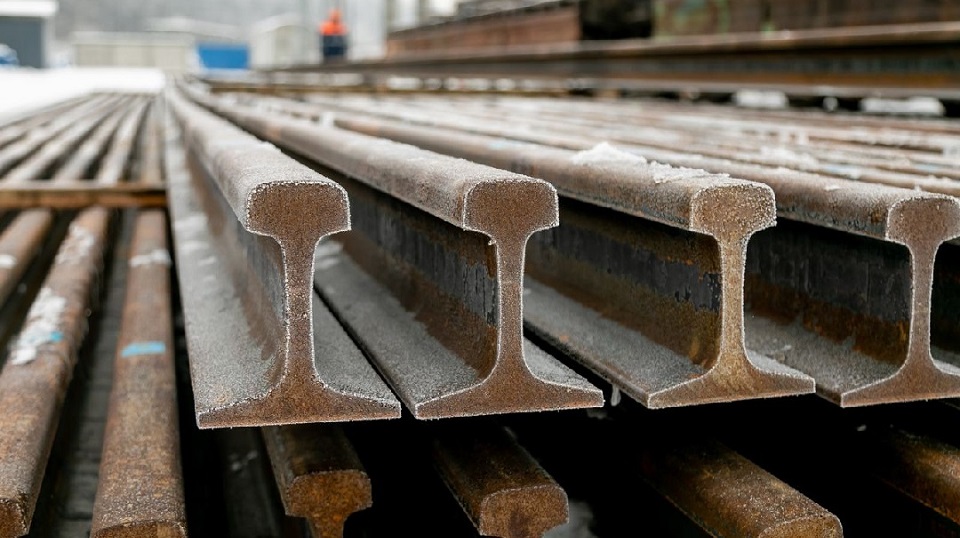
Ukrzaliznytsia received 2,000 tonnes of R-65 rails from Nippon Steel. According to the Ministry of Communities and Territories Development, a further 1,000 tonnes will arrive in Ukraine by the end of January. The total value of this shipment is around $4 mln. The delivery was carried out through the Japan International Cooperation Agency (JICA) under the Japanese government's emergency recovery program.
Technology and operational effect
At the acceptance ceremony, equipment for processing and fastening rails was demonstrated — in particular the operation of mobile welding complexes and the process of thermal joint bonding. Such solutions allow the creation of the so‑called "velvet track" without joints: it lasts longer and ensures smoother movement of trains, which is critical for the rapid restoration of logistics during combat operations.
"Thanks to Japan's support, we are covering the need for materials whose production in Ukraine is currently halted. Our agreements with partners guarantee that despite all challenges, the railway remains a reliable foundation of Ukrainian logistics"
— Oleksii Balesta, Deputy Minister of Communities and Territories Development
Scale of aid and infrastructural context
This shipment is part of broader support: since the start of the full-scale invasion, nearly 25,000 tonnes of rails have already been delivered to Ukraine, which has allowed the renewal of more than 193 km of track on strategic lines of the Lviv, South‑Western, Prydniprovska, Southern and Odesa railways. Railway crews also received 24 units of construction and loading-unloading equipment (including 22 units of track machinery), which have logged over 13,000 machine-hours; the total value of previous deliveries exceeds $42 mln.
After the occupation of Mariupol and the destruction of the Azovstal plant, Ukraine was forced to turn to international markets for rails that had previously been produced domestically. At the same time, at the beginning of 2025 Ukrzaliznytsia announced the start of manufacturing R-65 fishplates at its own facilities, and the chairman of the board said he was ready to sign a long-term contract with a plant that will begin producing rails in Ukraine.
What this means going forward
In the short term, such deliveries reduce the risk of service disruptions on critical routes and make it possible to restore damaged infrastructure more quickly. In the medium and long term, it remains important to transform temporary imports into stable supply chains — by scaling up domestic production and concluding long-term contracts with partners. The delivery from JICA and Nippon Steel is a signal of bilateral trust, but the issue is broader: will international aid be converted into a systemic industrial reconstruction of Ukraine's railway network?



