Japanese Auto Giants Retreat: Nissan Cuts European Staff as Honda Freezes $11 Billion Investment in Canada
# Translation Nissan is cutting approximately 900 office workers in Europe and consolidating production lines at Sunderland — while Honda has indefinitely halted construction of an EV factory in Ontario. Two decisions made almost simultaneously demonstrate that Japan's model of "catching up with China through electric vehicles" has failed.

By Tetiana Suchkova-Ladik
May 6, 2026 · 2 min read
In May 2025, Honda announced a "two-year pause" in construction of a $15 billion CAD EV complex in Ontario. Now the pause has become indefinite. The company does not rule out complete cancellation of the project depending on how electric vehicle policy develops in North America.
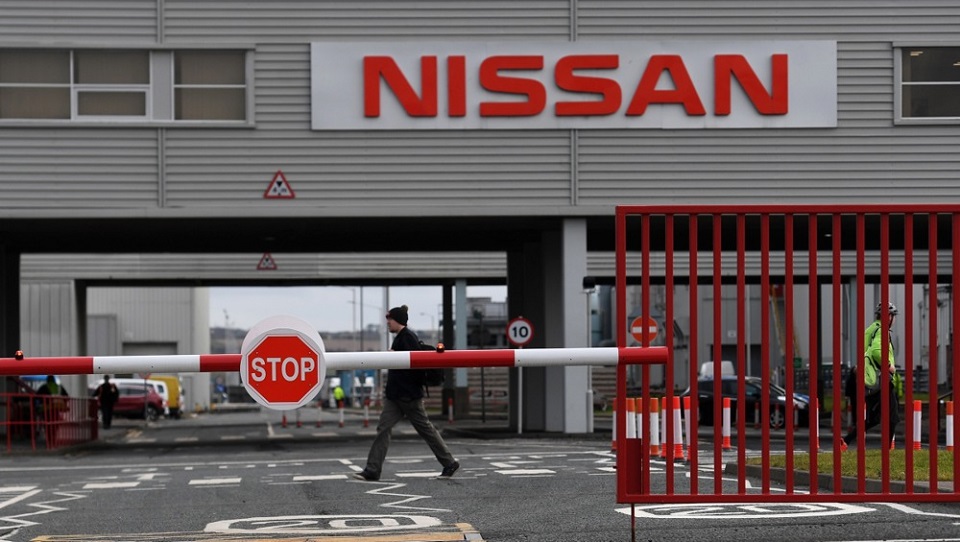
Almost simultaneously, Nissan launched its Re:Nissan plan — a restructuring that involves cutting approximately 10% of European staff, or about 900 office workers in France, Spain, and the United Kingdom. At the Sunderland plant, which employs over 6,000 people and is the region's largest employer, two production lines are being merged. In parallel, the company is negotiating with Chinese Chery on using the freed-up capacity.
"Under the Re:Nissan recovery plan, we are taking decisive measures to improve efficiency and profitability,"
— Nissan press service
One symptom, two diagnoses
At first glance, the reasons seem similar: slowing EV demand in the US and pressure from Chinese manufacturers. But the details differ. Honda bet on a complete transition to electric vehicles and lost the race: in the fourth quarter of 2025, EV sales in the US fell 36%, the company wrote off $15.7 billion and recorded its first annual loss in nearly seven decades. According to Electrek, over 12 months Honda went from "historic investments" to freezing its entire new EV lineup for the American market.
Nissan faces a different problem: the Sunderland plant recently invested in new Leaf production — 137 new dies, 78 robots, 475 automated transport vehicles. That is, the infrastructure for EV exists, but there's nothing to fill it with. Hence the negotiations with Chery: the Chinese partner could manufacture its vehicles on British facilities while Nissan recovers demand.
What's happening in Ontario — broader context
Honda's decision is not isolated. According to Global News, Stellantis has halted an assembly plant in Windsor, GM cut a third shift in Oshawa, Ford and Stellantis closed plants in Oakville and Brampton for extended retooling. Trump's 25% tariffs on imported vehicles are hitting Ontario's entire auto industry, which Canadian federal and provincial governments were still pumping billions in subsidies into just a year ago specifically for EV projects. Canada has already scrapped the mandatory 100% zero-emission sales target by 2035, replacing it with a "target" of 75%.
- Honda froze its Ontario plant; negotiations with Canada's government are ongoing, cancellation is not ruled out
- Nissan is cutting ~900 office positions in Europe; production jobs at Sunderland are formally not at risk
- Chery views the British plant as a foothold — which would be an ironic conclusion to the Brexit argument about preserving Sunderland "for our own"
- Both companies are turning toward hybrids as an intermediate strategy
Ontario Premier Doug Ford previously promised to "hold manufacturers accountable" for abandoning EV investments. So far, no mechanism for recovering subsidies has been announced.
If Honda officially cancels the Ontario project by the end of 2025, it will set a precedent for reviewing the terms of government subsidies in all countries where governments paid upfront for a green transition that never materialized.



