Japanese Want to Turn 1.5 Billion Tons of Ukrainian Military Waste into Road Pavement
IKEE Group launches pilot program for recycling concrete, brick and asphalt from ruins into secondary raw materials for roads. The scale of the problem makes the technology not an exotic solution, but a logistical necessity.

By Tetiana Suchkova-Ladik
April 7, 2026 · 2 min read
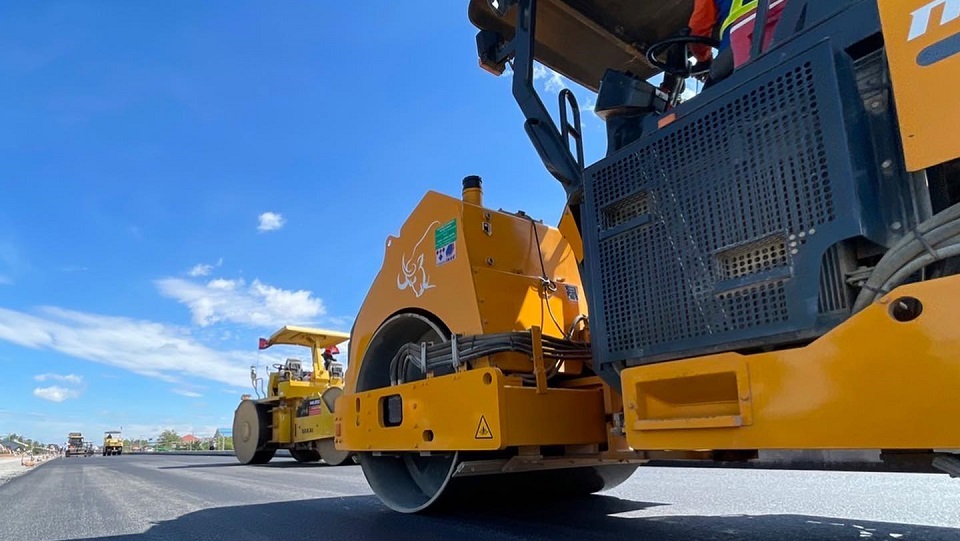
Japanese corporation IKEE Group Ltd has reached an agreement with Ukraine's Ministry of Economy to launch a pilot project that will collect concrete, bricks, and asphalt from destroyed buildings, sort them, and recycle them into secondary raw materials for road repairs. The details were discussed at a meeting between Deputy Minister of Economy Oleksandr Krasnolutskyi with the leadership of IKEE Group and representatives of the Japan International Cooperation Agency (JICA).
Why this is more than another memorandum of intent
The scale of the problem that the technology is intended to solve is truly unprecedented. According to expert estimates, Russian aggression has generated more than 1.5 billion tons of construction debris — the largest volume of war waste in Europe since World War II. The traditional approach — hauling it to a landfill — simply doesn't work: there simply aren't enough landfills for such a volume.
This is where the practical logic of the Japanese approach comes in. Instead of endless transportation — a closed-loop cycle: ruins become gravel, gravel becomes the foundation of a road, the road leads to the next reconstruction. Japan refined this model over decades after earthquakes; now it's being adapted to the specifics of artillery and missile destruction.
What the pilot specifically provides for
- Collection of demolition waste — concrete, bricks, asphalt — from designated areas
- Sorting and processing on mobile or stationary installations
- Use of recycled material as secondary raw material in road repair and construction
The geography and timeline of the pilot have not been publicly announced — this is one of the key gaps in what is currently known.
Where it's already been tried
Ukraine is not starting from scratch. According to Yale Environment 360, since 2024, local and international initiatives in some de-occupied communities have been sorting debris and preparing it for reuse. In particular, in Ruska Lozova — a village that was occupied in 2022 — residents have already received restored materials. However, these are scattered local cases without scaling.
"Russian aggression has resulted in the generation of billions of tons of demolition waste — according to expert estimates, more than 1.5 billion tons of construction debris alone. This is the largest volume of war waste in Europe since World War II."
— Analytical report of People's Deputies of Ukraine on waste management during wartime
Where the thin ice is
Japanese technology requires quality sorting at the input — separation of rebar, hazardous materials, and asbestos. In conditions of active combat and a shortage of qualified personnel, this is not a technical detail but a systemic prerequisite. If sorting is poor quality, the recycled material will not meet road standards — and the pilot will remain just a pilot.
The second risk is the financial model. It's still unclear who finances the recycling: the Japanese side, JICA grants, or Ukrainian road funds. The answer to this question will determine whether the technology becomes part of the reconstruction system or gets lost in bureaucratic approvals.
If IKEE Group announces the specific location and timeline of the pilot by the end of 2025 — this will be the first test of whether the Japanese post-earthquake recycling model works in conditions of active war.



