EBRD Sold Giurgiulești Port to Constanța: What It Means for Moldova and Ukraine
The EBRD signs a $62 million deal with Romania’s Port of Constanța — a strategic operation that shifts the balance of power in Black Sea logistics. We analyze why this matters for Moldova’s trade and how it could affect the reconstruction of Ukrainian infrastructure.

By Tetiana Suchkova-Ladik
February 13, 2026 · 2 min read
In brief: sale and investment plan
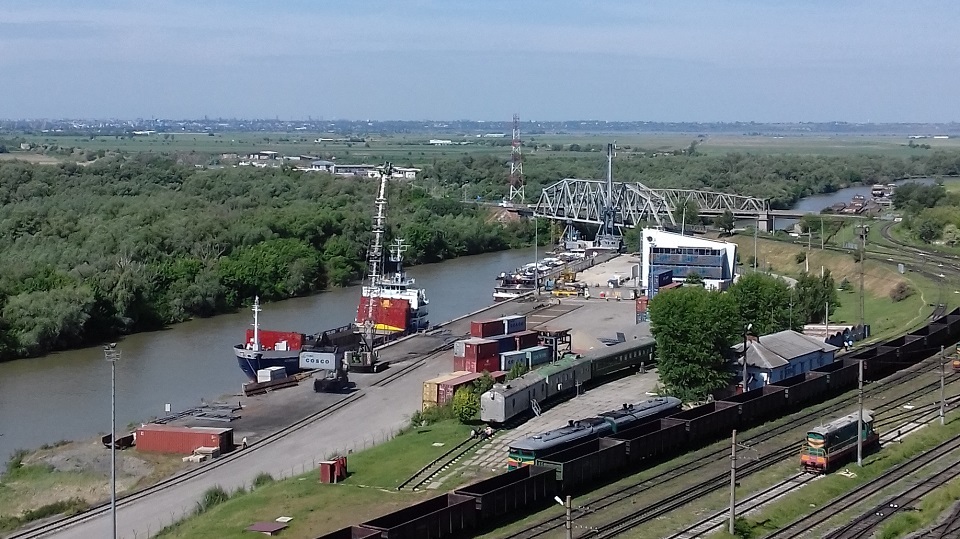
The European Bank for Reconstruction and Development (EBRD) announced the sale of the operator of the International Free Port of Giurgiulești — the company Danube Logistics — to the Romanian state port Constanța. The deal amount is $62 mln, and the new owner has committed to invest at least $28 mln in infrastructure modernization. According to the bank's press service, the deal will be completed shortly.
What exactly was purchased
This concerns the complex at the port of Giurgiulești — effectively two adjacent sites: a state-owned one (0.64 ha, one pier) and a private one (58 ha, four piers). By comparison, the Ukrainian port of Reni has about 27 piers, which gives an idea of the scale of infrastructure differences in the region.
"The deal will be completed shortly,"
— EBRD press service
Why this matters for Moldova
The port of Giurgiulești handles over 70% of Moldova's maritime imports and exports. Transferring the asset to a powerful Romanian operator means faster integration with the Constanța network, access to investments and technical management that were previously lacking. It's an opportunity to accelerate modernization and expand the range of logistics services for Moldovan exporters and importers.
Implications for Ukraine and the region
Given the war and economic challenges, Giurgiulești also has the potential to become a logistics hub for servicing Ukraine's reconstruction work — especially in the segment of handling materials and construction supplies. Integration into European transport corridors and the Constanța network could speed up cargo processing, but at the same time strengthens Romania's role in the regional supply chain.
Why this happened
The EBRD has owned the port since 2021 after previous concessionaires failed to meet their financial obligations. The sale is a rational step: to hand over an operating asset to a professional port operator capable of large-scale investments that the bank, as an investor-owner, cannot provide on its own over the long term.
Risks and issues to watch
Positive expectations are tied to investments and integration, but questions remain: how quickly modernization will be implemented, how tariff policy for Moldovan importers will change, and whether this will intensify competition with Ukrainian ports. For Ukraine, the key question is how much the new owner will take into account the needs of Ukrainian logistics during the infrastructure reconstruction.
Conclusion
The sale of Giurgiulești to Constanța is not just an economic transaction; it is a reconfiguration of local logistics in the Black Sea. For Moldova — a chance for investment and modern services; for the region — another point of consolidation for cargo transshipment. Ukraine should closely monitor the project: with a sensible partnership, this hub could become one of the tools for supporting reconstruction and exports.
"The port is well positioned to serve the future reconstruction of Ukraine and integration into European transport corridors,"
— EBRD press service



