EU approves Mercosur deal — what it means for European farmers and Ukraine
After 25 years of negotiations, the EU Council gave the green light to sign an agreement with Mercosur. The decision opens up large markets — but heightens political tensions and potential risks for the agricultural sector.

By Tetiana Suchkova-Ladik
January 10, 2026 · 3 min read
What was adopted in Brussels
On 9 January the EU Council approved two decisions enabling the signature of a partnership agreement between the EU and the Mercosur bloc (Argentina, Brazil, Paraguay, Uruguay) and a Temporary Trade Agreement (ITA). In its statement the Council called this a "historic step" after more than 25 years of negotiations.
"After more than 25 years, today's decisions represent a historic step forward in strengthening the EU's strategic partnership with Mercosur"
— Michael Damianos, Minister of Energy, Commerce and Industry of Cyprus
The decision was adopted by a qualified majority — at least 15 countries representing 65% of the EU population. France, Poland, Austria, Ireland and Hungary voted against; Belgium abstained. The agreement must still be voted on by the European Parliament and ratified by all national parliaments.
"The agreement will be mutually beneficial — it will give EU exporters the opportunity to obtain €50 billion by 2040"
— Ursula von der Leyen, President of the European Commission
Who it affects and why it matters
The agreement creates a free trade area with a population of over 700 million and significant raw-material resources. According to the European Commission's estimates, the agreement will reduce tariffs on EU exports by about €4 billion, and the long-term benefit for EU exporters could reach €50 billion by 2040. Brussels' support is driven by the logic of market diversification and access to strategic resources.
At the same time, the agreement is not only an economic decision: it has a geopolitical dimension. For the EU it is a chance to reduce part of its trade dependence on certain Asian markets and to strengthen ties with Latin America.
Risks for farmers and political tension
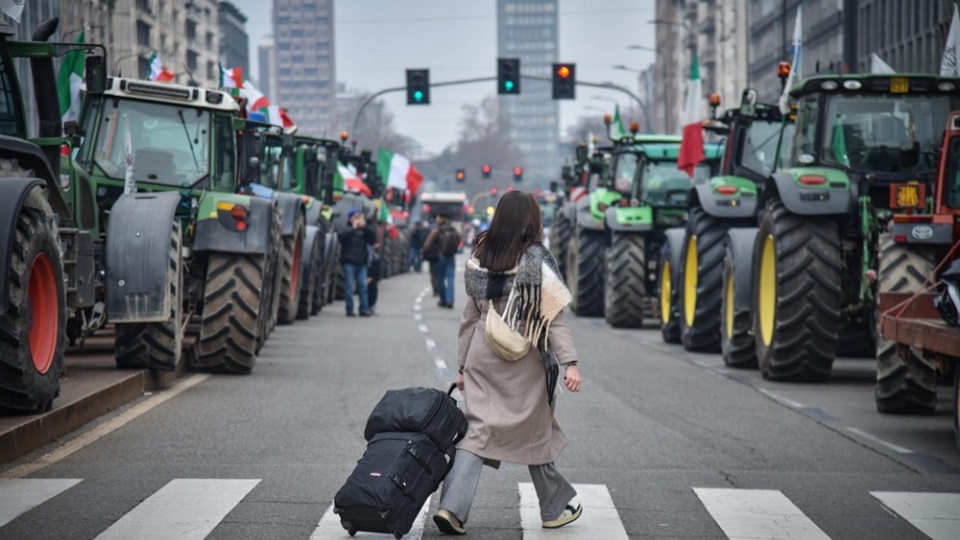
Farmers' protests in France, Belgium and other countries continued on the day the decision was adopted: road blockades and pickets underscore that the agreement could put pressure on local agriculture through imports of cheaper beef, poultry and sugar. France's agriculture minister has already announced an intention to block ratification in parliament.
"Regarding the agreement between the EU and Mercosur, we, as promised, voted against"
— Vladyslav Kosiniak-Kamysz, prime minister/leader of a political force in Poland (statement on the vote)
In Brussels authorities pledged to strengthen import controls to ensure compliance with EU food safety standards and to cut off illegal deforestation. But controls are political guarantees that require concrete mechanisms and trust.
What this means for Ukraine
The consequences for Ukraine will be multilayered. On one hand, the opening of new European and Latin American supply chains could change the competitive environment for Ukrainian agri-exports: prices for some categories of goods may fall under pressure from additional imports. On the other hand, the EU's strategic diversification and stronger ties with new suppliers mean a rethinking of supply chains where Ukraine may find niches based on quality, logistics and geographic proximity to the EU.
Thus, for Ukraine this is not only a risk but also an opportunity: active trade diplomacy, a focus on added value of products and standardization of production can help retain and expand market share in Europe.
What next?
The agreement still has to pass the European Parliament and national ratifications — a process that could be prolonged or accompanied by additional conditions and exemptions. Political protests and the positions of certain governments increase the likelihood that the text of the agreement will be supplemented with protection mechanisms for farmers and stricter import controls.
Bottom line: the decisions in Brussels open large opportunities for trade, but also sharpen internal European disputes. The ball is now in the parliaments' and governments' courts — whether political declarations can be turned into effective guarantees of security for farmers and stable rules of the game for traders, including Ukrainian ones.
Whether Ukraine will find a place in the new chains or instead face additional competition depends on the speed of diplomacy, adaptation of the agricultural sector and the positions of European partners.



