Europe supplies heat: six CHPs taken out of service and hundreds of millions of euros to restore Ukraine's power system
Agreements with Latvia, Austria, Finland, Croatia, France and Germany — what exactly will be delivered, when it could begin operating, and why this is important for the heating season.

By Tetiana Suchkova-Ladik
February 20, 2026 · 2 min read
Briefly
Ukraine agreed to receive decommissioned equipment from six CHPs/TPPs from several European countries and is simultaneously receiving funding to restore its energy sector. This decision was made at a meeting of the International Energy Agency — and it will have a direct impact on district heating in cities as soon as in the coming months.
Details of the agreements
The First Vice Prime Minister — Minister of Energy Denis Shmyhal reported that the equipment comes from Latvia, Austria, Finland, Croatia, France and Germany. This is mostly decommissioned CHP and TPP equipment that is planned to be rapidly delivered to Ukraine and assembled on-site.
"The equipment will be moved and quickly assembled. We are talking about at least six decommissioned TPPs and CHPs that will be transferred to Ukraine. This way we can quickly restore the operation of key stations destroyed by the enemy. They will provide Ukrainians with heat"
— Denis Shmyhal, First Vice Prime Minister — Minister of Energy
Why this matters now
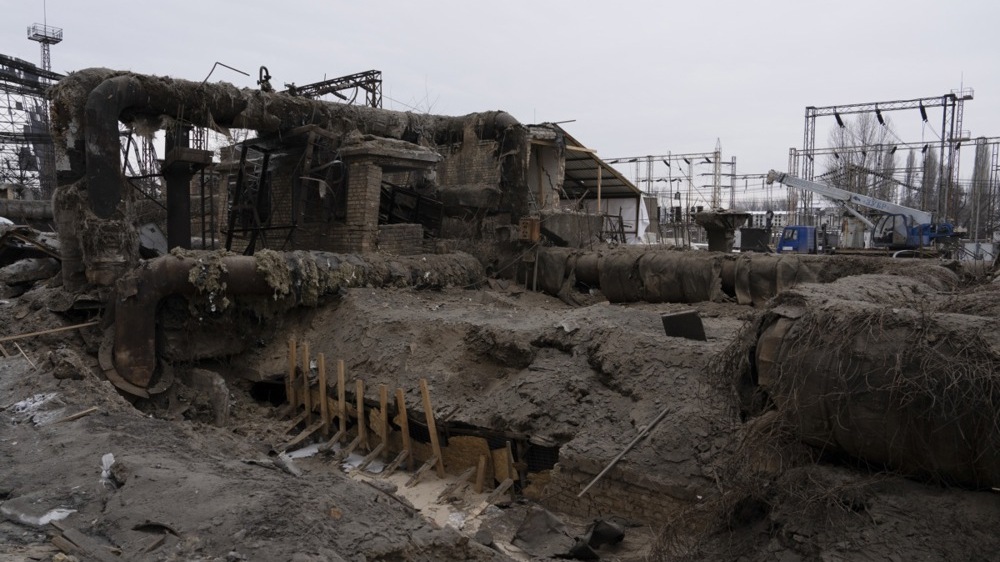
Ukraine has been under an emergency in the energy sector since 14 January due to massive shelling and severe frosts. Some critical capacities have been taken out of service: on 3 February Darnytska CHPP-4 sustained critical damage (restoration will require at least two months), and on 24 January CHPP-6 in Kyiv ceased operation. In these conditions, rapid reconfiguration to existing, even used, equipment is the most realistic way to partially restore heat supply.
Finance and international support
In addition to the equipment, the government reports significant contributions to the energy support fund — more than €250 million. Separately, the United States approved a program through the SPARK project for $276 million, and France pledged a grant of €71 million, which will be provided during 2026. Such financing packages cover logistics and installation as well as necessary upgrades and spare parts.
What’s next — a realistic forecast
Receiving decommissioned equipment gives a time advantage compared to building new capacities, but is not without challenges: specialists are needed for installation, certification and adaptation to the Ukrainian grid, as well as supply chains for spare parts. In an optimistic scenario, part of the capacities could start operating within a few weeks — other parts will require months.
Risks and conditions for success
The key is to turn agreements into logistics and contracts. Experts point out that declarations are useful only until issues of transport, adaptation and the safety of installation crews are resolved. Transparent mechanisms for monitoring the use of funds and coordination with local heat suppliers are also important.
Conclusion
This is not an instant "cure" for the energy system, but a concrete step that reduces the risk of cold outages this winter and increases the network's resilience in the medium term. Now it is important that European partners and Ukrainian authorities speed up logistics and turn words of support into working capacities — how quickly Ukrainians feel the result in their homes will depend on that.



