European Parliament suspends deal with U.S. over tariff threats — risk to trade predictability
The European Parliament has suspended work on a trade agreement after tariffs announced by the US. Why this matters for prices, supply chains and for security, including for Ukraine — briefly and to the point.

By Tetiana Suchkova-Ladik
January 21, 2026 · 2 min read
Summary of the decision
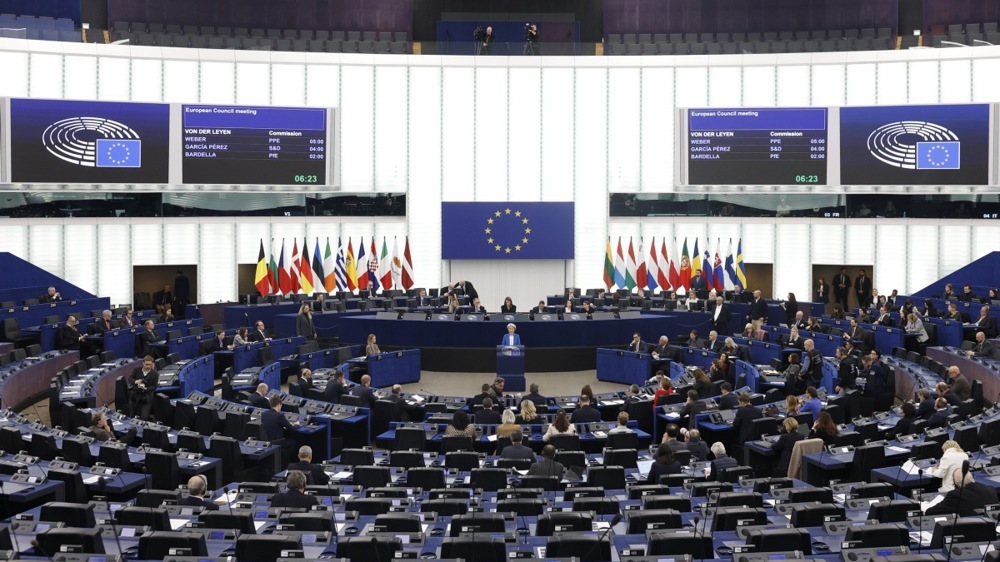
The European Parliament has frozen the process of adopting the trade agreement with the United States after threats were made in Washington to impose tariffs on European countries over the Greenland situation. The committee's decision means a postponement of the vote for an indefinite period — until the transatlantic side returns to a more predictable policy.
EP's position
Bernd Lange, chair of the European Parliament's trade committee, explained the decision with an argument of stability: if the United States uses tariffs as a tool to pressure an EU member state, it undermines trust and predictability in trade relations.
"However, by threatening the territorial integrity and sovereignty of an EU member state and using tariffs as a coercive instrument, the United States undermines the stability and predictability of trade relations between the EU and the US."
— Bernd Lange, chair of the European Parliament's trade committee
What was announced in the US
In Washington they announced retaliatory tariffs: from 1 February — 10% for a number of European countries, and from 1 June — 25% (the list of countries includes Denmark, Norway, Sweden, France, Germany, the United Kingdom, the Netherlands and Finland). This is the immediate cause of Brussels' concern.
"From 1 February Denmark, Norway, Sweden, France, Germany, the United Kingdom, the Netherlands and Finland will be subject to a 10% tariff, and from 1 June the tariff will rise to 25%."
— Donald Trump, President of the United States
Context: what has already been signed
On 21 August 2025 the US and the EU finally approved a framework trade agreement that foresees a fixed tariff of 15% on a wide range of goods. However, in October the EU warned that new American demands and measures risk undermining this accord. Thus the current escalation appears not as an isolated incident but as part of a broader series of trade disputes.
Why this matters for Ukraine
For Ukraine, stability in transatlantic trade is not just a question of supermarket prices. Predictable tariff regimes affect supply chains for parts, elements of defense infrastructure and investment. Analysts at the Financial Times and the Wall Street Journal have already noted that instability in US–EU relations raises risks for supplies of semiconductors, automotive components and pharmaceuticals — sectors important both for European and Ukrainian security and economies.
Possible consequences and scenarios
In the short term — delays in implementing agreements, increased uncertainty for business and a likely rise in import prices. In the medium term — pressure on the negotiating positions of both sides and the risk of spreading trade reprisals. The European Parliament has clearly chosen a tactic of holding firm: rather than quick concessions — a signal that trade mechanisms must not be used as an instrument of political blackmail.
Conclusion
The EP's decision is a test of the stability of the transatlantic partnership. For Ukraine the main question is simple: will partners be able to transform political disputes into negotiations that restore predictability in trade and supply chains? The answer will determine not only the economic climate in Europe but also the operational stability of supplies important for our defense and reconstruction.



