European Parliament resumes ratification of trade agreement with the US — implications for transatlantic markets and Ukraine
The European Parliament’s Trade Committee will put the agreement to a vote on March 19; the decision could help stabilize supply chains but leaves risks unresolved due to U.S. investigations and implementation conditions.

By Tetiana Suchkova-Ladik
March 17, 2026 · 2 min read
Why this matters right now
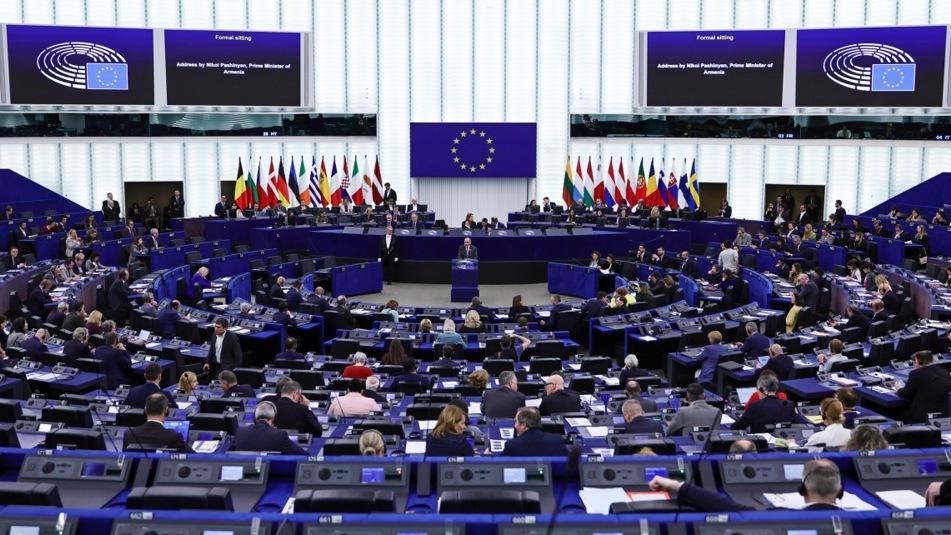
The European Parliament's Trade Committee is restarting the ratification process of the agreement with the United States — a vote is scheduled for 19 March, after which the text will be brought to the plenary session in March or April. This is not just a bureaucratic step: the outcome will determine how predictable transatlantic tariffs and supply chains will be in the coming years, and therefore the competitiveness of Ukrainian exports in the EU and US markets.
What was decided and under what conditions
According to Bloomberg, the head of the EP Trade Committee Bernd Lange said the committee supported a compromise package and is now ready to put the agreement to a plenary vote. A legally important detail: lawmakers added an amendment stipulating that the agreement will not enter into force until the United States has fulfilled its obligations under the text.
"My compromise package received the majority of votes. This is truly a European statement."
— Bernd Lange, chair of the European Parliament's Trade Committee
At the same time, the ratification process was unblocked despite the fact that on 12 March the Office of the United States Trade Representative opened an investigation into 60 partner countries to review measures countering imports of goods produced with forced labor. The EU is among those affected by the probe. This creates legal uncertainty that lawmakers are trying to address with the amendments.
Background: why the process was initially frozen
The European Parliament previously paused ratification: in January due to an escalation of trade threats from the then-US administration over tariffs (including statements by President Donald Trump about possible duties), and in February in response to the introduction of new US tariffs. Despite this, the parties on 21 August 2025 finally agreed on a framework deal that provides for a fixed tariff burden of 15% on a range of European goods (cars, pharmaceuticals, semiconductors, timber).
What it means for Ukraine
The resumption of ratification sends a twofold signal for our country. First, stabilization of transatlantic trade reduces the likelihood of sudden tariff shocks, which is important for Ukrainian suppliers of components, agricultural and metallurgical products integrated into European chains. Second, the forced labor investigation is a reminder that rules of origin and compliance with supply standards are becoming critically important — market access depends on them.
Analysts and officials in Brussels emphasize: the agreement is not an automatic "export bonus" for Ukraine, but it creates a more predictable environment for investment and cooperation between the EU and the US, which could help increase support for the Ukrainian economy and the restoration of industrial chains.
Conclusion
The process is not yet finished: the final decision will depend on the EP plenary vote and ratification by member states. For Ukraine the key is to closely monitor implementation mechanisms and the consequences of the US investigation into forced labor, since it will be on this legal and operational basis that the timing and form of the agreement's entry into force will be decided. Whether declarations will be turned into concrete rules of the game is a question for the coming weeks and months.



