European partners invest in Ukrainian drones: €800 million and extensive cooperation with Denmark, Finland and Latvia
Four Ukrainian manufacturers have signed framework agreements under the Build with Ukraine initiative — these are not isolated contracts, but a signal of a shift to serial production and a strengthened defense industry.

By Tetiana Suchkova-Ladik
February 25, 2026 · 2 min read
Quiet agreements with tangible consequences
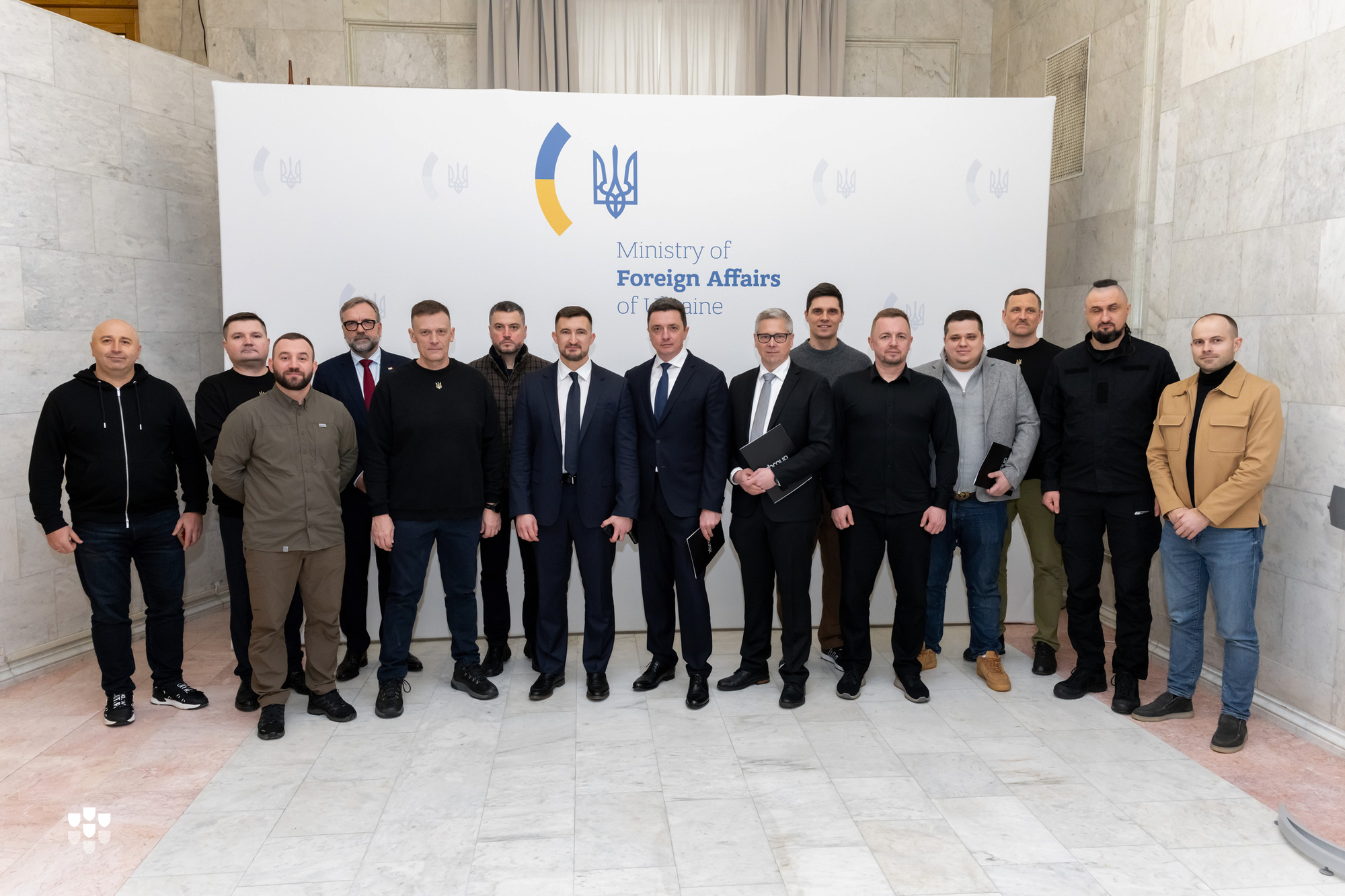
On 24 February Culver Aerospace, Tencore, Remtecnology and Terminal Autonomy Ukraine signed a package of partnership documents with companies from Denmark, Finland and Latvia under the Build with Ukraine model. This was officially reported by the Ukrainian Arms Council. It is important for the reader to understand: these documents are not just declarations of intent, but an instrument for moving from one-off projects to industrial-scale production.
"The agreements cover cooperation in the production of unmanned systems and ground robotics. Some of the documents record an initial level of interaction, others define the framework for further steps and plans for production programmes"
— Ukrainian Arms Council
What was signed
Culver Aerospace — Copenhagen Global (Denmark): production cooperation in the field of unmanned aerial vehicles within a five-year programme. The focus is on long-range strike UAVs (up to 2,500 km) and medium-range strike systems (up to 400 km).
Tencore — INSTA (Finland): cooperation on the TerMIT ground robotic platform and the production of ground robots for Ukraine.
Remtecnology — New Paakkola (Finland): plans to create a joint venture for serial production of the tactical multifunctional platform LEGIT — the benchmark is around 1,500 units in the near term.
Terminal Autonomy Ukraine — SIA Baltic Forces (Latvia): a framework agreement for cooperation on unmanned systems and missile solutions, including cruise missiles and air defence systems.
Why this matters for security and the economy
According to the Arms Council's estimate, the total value of the agreements is about €800 million. This is not just money — it is large-scale industrial cooperation that strengthens logistics, supply chains and jobs in Ukraine and in partner countries.
The emergence of such agreements became possible after Ukraine opened controlled exports of military goods: the State Commission received around 40 applications and approved most of them. In the context of global demand — SIPRI recorded that in 2023–2024 Ukraine was one of the largest importers of arms — these new production links help turn that demand into a domestic supply.
This is also a logical continuation of recent steps: on 13 February joint drone production with Germany began, and on 25 February the first Ukrainian defence factory was opened in the United Kingdom. All these steps together create conditions for large-scale industrialisation of defence production.
What’s next and what to watch for
Framework agreements are a start, not a finish. Investments are needed in certification, quality standards, logistics and guarantees of component supply. Transparent commercial contracts, organisation of after-sales service and personnel training are also important.
Analysts and industry representatives point out that success will depend on two factors: the speed of implementing technical programmes and the willingness of European partners to transform political support into long-term contracts.
Conclusion
These agreements are not a decorative illustration of cooperation, but a practical step toward restoring and modernising Ukraine’s defence industry. The ball is now in the partners' court: declarations must be turned into signed contracts and concrete serial deliveries that will strengthen both the country’s security and its economy.



