Plant protection products manufacturer bought a factory that failed to sell three times — for 58% of starting price
Ukravit Science Park acquired the Dniprovsk mineral fertilizer plant in Kamyansk for 77 million hryvnias—three times cheaper than the initial auction. The deal reveals the logic of vertical integration in a market where a shortage of complex fertilizers threatens to increase crop production costs for the 2026 harvest.

By Tetiana Suchkova-Ladik
June 10, 2026 · 3 min read
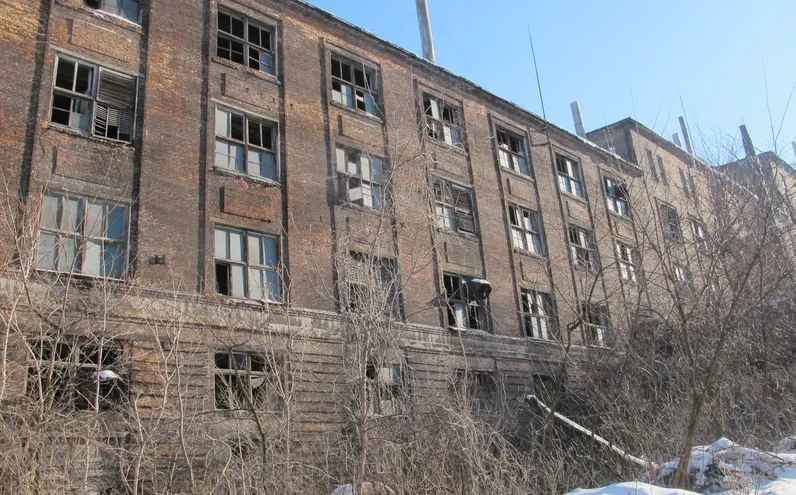
Plant protection products manufacturer Ukravit has acquired production facilities for complex mineral fertilizers — the asset complex of the bankrupt Dniprovsk Mineral Fertilizer Plant (DZMД) in the city of Kamyanske. The winner of the auction on Prozorro.Prodazhi on June 10 was LLC "Ukravit Science Park," in which company founder Vitaliy Ilchenko owns 92.28%.
Three attempts, one buyer
The sale of DZMД turned into a striking illustration of how wartime economics revalues industrial assets. Creditors initially listed the plant for 305 million hryvnias — the first auction did not take place due to lack of buyers. The second attempt — already at 183 million hryvnias — attracted two participants, and the hybrid Dutch auction (descending price bidding) ended in a deal for 77 million hryvnias.
That is, the final price turned out to be 75% lower than the creditors' initial valuation — and at the same time higher than the minimum threshold of 69.5 million hryvnias, below which creditors were willing to go in the third round.
The enterprise was formed in 2002 on the basis of the Soviet Prydniprovsk Chemical Plant — from the facilities of state enterprises "Agrofos" and "Amofos." Later it joined the corporation "Ukragrochemholding" of Sergiy Liskovskiy. The plant was associated with sanctioned Russian businessman Alexiy Fedorichev, but according to YouControl, the ultimate beneficiary before bankruptcy was Wolfgang Friese. The Commercial Court of Dnipropetrovsk Region recognized the enterprise as bankrupt in April 2025.
The sold asset complex includes 114 buildings and structures, 2,666 units of fixed assets, 1,726 units of movable property, and 22 vehicles.
Why this for Ukravit
Ukravit is the largest domestic manufacturer of plant protection products and micronutrient fertilizers. The acquisition of DZMД appears to be a step toward vertical integration: the company acquires production capacity for complex NPK fertilizers — those containing nitrogen, phosphorus, and potassium in a single granule.
"We will definitely have quality and price advantage, but farmers, until they try it, are unlikely to abandon their usual suppliers"
Vitaliy Ilchenko, founder of Ukravit — on the company's entry into the fertilizer market
The context of the deal is not just corporate. As Ilchenko himself predicted at the beginning of 2026, shortages of saltpeter, ammonia, and CAS together with expensive logistics will make the current year less profitable for farmers. Its own plant for complex fertilizers is a direct response to this challenge: reduced dependence on imports and the ability to offer package solutions to farmers with whom Ukravit already works directly, having abandoned distributors.
- DZMД's debts for wages, taxes, and utilities payments as of March 2025 exceeded 82 million hryvnias — more than the buyer paid for the entire complex.
- In 2025, bankruptcy proceedings were initiated in Ukraine against 780 companies — about 10% of all those ceasing operations.
- The plant is designed to produce nitrophoska NPK in various ratios — exactly those complex fertilizers, the shortage of which Ilchenko calls a risk to crop production costs.
What's next
The plant has been purchased, but the issue of production remains open: equipment after several years of downtime and over 2,600 units of worn-out fixed assets requires inventory and likely substantial investment in restoration. Ukravit acquired an asset for a pittance — now the logic of the deal will be tested by whether the plant can achieve real production before the 2027 sowing campaign, while imported fertilizers remain expensive and the agricultural market is hungry for domestic supply.