Tractors roll into Brussels: why European farmers are protesting a deal with Latin America
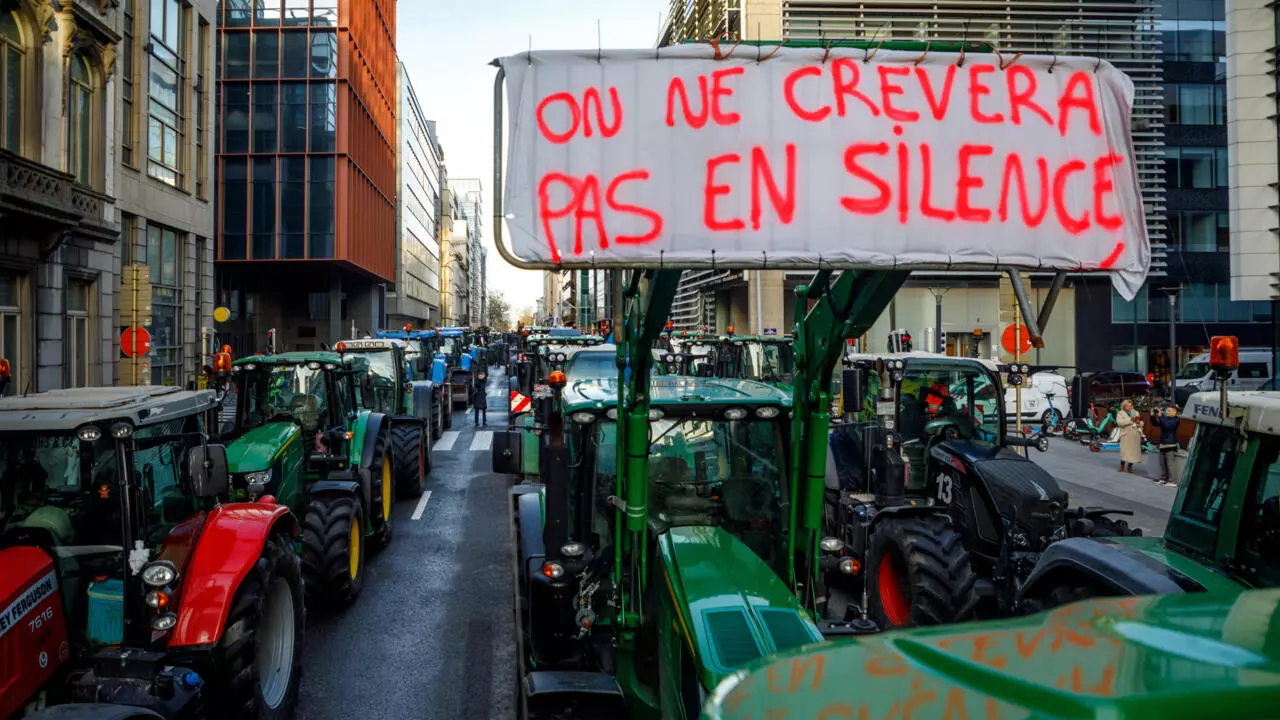
On December 18 Brussels was transformed into an arena of large-scale confrontation. Thousands of farmers on hundreds of tractors blocked the European Quarter, where EU leaders had gathered for a summit. The main target of the protest was the trade agreement with the Mercosur bloc (Brazil, Argentina, Uruguay, Paraguay), which, according to the farmers, would destroy European agriculture.

By Tetiana Suchkova-Ladik
December 18, 2025 · 1 min read
Cheap imports versus European standards
Farmers from more than 40 national associations, including France, Italy and Belgium, say the European Commission's policy is "totally unacceptable." The main concern is an influx of cheap beef, sugar and soy from Latin America. European farmers are convinced they will not be able to compete with products produced without the strict environmental and sanitary standards that apply in the EU.
The situation is exacerbated by Brussels' plans to cut agricultural subsidies by 20%. "Anger in the villages has reached an unprecedented level," union representatives say, while firecrackers explode outside the European Parliament.
An important lesson for Ukraine
These events are directly related to Ukraine's future in the EU. Special correspondent Oksana Melnychuk, reporting directly from Brussels, emphasizes: protests against Mercosur are only a "rehearsal" of the resistance Ukraine may face during European integration.
"European farmers are already worried about competitiveness from Ukraine. It is critically important for us to build communication so that Ukraine appears not as a threat, but as a solution for the European market. This is a challenge for our entire diplomacy."
— Oksana Melnychuk, special correspondent in France
Political split in the EU
Despite the European Commission's desire to finalize the agreement, Italy and France have already called for postponing the process, demanding tougher safety guarantees for their producers. For Ukraine this is a signal: the path to the European market will be accompanied by difficult negotiations and the need to prove its value as a reliable partner.