UAH 4.6 million for rebuilding Bucha: 12 accused of embezzling funds to face trial
The Kyiv Regional Prosecutor’s Office has sent to court a case alleging systemic overstatement of expenses during the restoration of housing in Bucha. We explain how the scheme worked, who is implicated, and why this matters for public trust in the reconstruction.

By Tetiana Suchkova-Ladik
March 20, 2026 · 2 min read
What happened
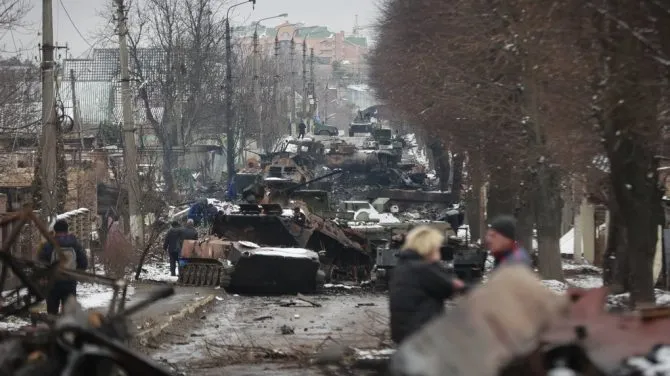
The Kyiv Regional Prosecutor's Office has sent an indictment to court against 12 people suspected of embezzling budget funds during the restoration of Bucha's housing stock. The case concerns work on Vokzalna Street under a contract signed in April 2023.
How the scheme worked
According to the investigation, an organized group with signs of a criminal organization operated during 2022–2024 — it included officials of the Bucha City Council and its executive bodies, representatives of contracting organizations, and material suppliers. The mechanism centered on artificially inflating the cost of used construction materials, which caused losses to the state and the community.
Amount of damage and evidence
A forensic economic examination found that the Bucha city territorial community suffered damages totaling UAH 4.6 million. The indictment was formed based on the results of the investigation and expert evaluations and will now be reviewed by the court.
"The country's reconstruction cannot be a source of illegal enrichment. Everyone who tries to profit from tragedy and appropriate budget funds will be held accountable under the law."
— Kyiv Regional Prosecutor's Office
Why this matters
This case is more than a criminal story. When reconstruction funds end up in pockets instead of restoring homes and infrastructure, the community suffers first: people are left without adequate living conditions, and international donors and state programs lose trust. Public finance analysts and lawyers note that war creates a high risk of abuse due to simplified procurement procedures and time pressure — and that is precisely why such investigations are critically important.
What’s next
The case will now await trial. What will matter is not only the punishment of the individuals involved but also systemic conclusions: whether controls over reconstruction tenders will be strengthened, or whether additional independent examinations will be introduced to prevent the recurrence of such schemes. For the community, it is also a signal — to monitor spending and demand transparency.
The court process will show whether this case will become an example of holding those who embezzle reconstruction funds accountable — and whether trust, necessary to build Ukraine free of corruption, can be restored.