Borodianka asks to include the emergency bypass on Polova Street in the reconstruction project — risk to the school and infrastructure
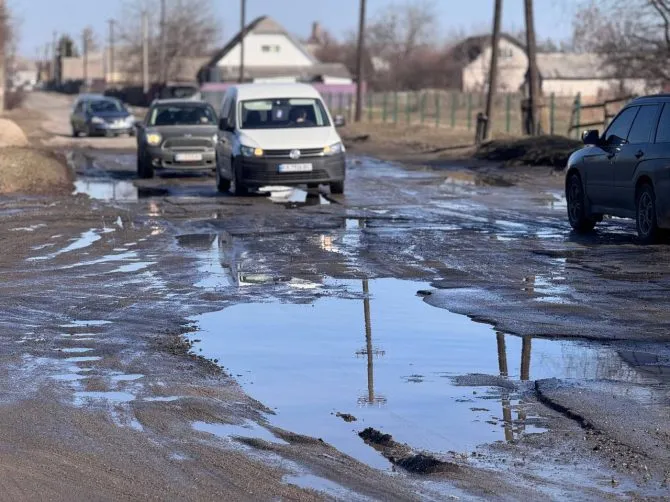
The Youth Parliament has appealed to Mykola Kalashnyk, head of the Kyiv Regional Military Administration, after reconstruction of Tsentralna Street altered traffic flows. The bypass along Polova Street lacks pedestrian infrastructure and a drainage system — putting the safety of children and residents at risk.

By Tetiana Suchkova-Ladik
March 11, 2026 · 2 min read
Why this matters
After the reconstruction of Central Street, the main traffic flow shifted to the bypass road along Polova Street. According to the appeal, the road surface on this stretch is in a hazardous condition, there are no sidewalks or drainage systems — after rain large puddles form. This is not only a matter of comfort but of safety: the bypass runs near a school where children move every day.
What they are asking to be done
In an appeal to the head of the Kyiv Regional Military Administration, Mykola Kalashnyk, the Borodianka Youth Parliament asks:
- to carry out a technical inspection of the road condition on Polova Street;
- to include this section in the comprehensive restoration project;
- to provide pedestrian infrastructure and a drainage system;
- to ensure safe traffic movement near the educational institution.
"What is particularly dangerous is that the bypass road runs past the school. Residents and children are forced every day to walk along the roadside or cross the road, while passenger cars and heavy machinery involved in the reconstruction constantly use it... This creates serious risks to the safety of children and community residents."
— Borodianka Youth Parliament
Context and consequences
Redirecting traffic to neighboring streets is a typical side effect of reconstruction works. If the problem is not addressed now, the increased load will continue to damage the pavement, and the lack of drainage and sidewalks will complicate movement and may lead to accidents or injuries. For the community this is not only an inconvenience but a real risk to children and the elderly.
What’s next
The initiative is now with the administration: the appeal is addressed to the head of the Kyiv Regional Military Administration, Mykola Kalashnyk. A technical inspection and including the section in recovery programs would be a logical continuation of repairs in the community and would eliminate not only cosmetic defects but systemic safety risks. If this does not happen, residents will continue to face deterioration of the road and safety threats — an issue that requires a swift but measured solution.
Now the ball is in the administration's court: whether the community’s appeals will turn into concrete steps — a technical inspection, inclusion in the project, and priority safety measures — depends on the priorities and resources allocated for restoring the infrastructure of the Borodianka community.