"I'll Be an Iron Man": The Love Story and Feat of Sniper Oleksandr Kosmina That Became a Manifesto of Resilience
While the enemy seeks to sow despair, the story of sniper Oleksandr Kosmina from Muzychi has become for Ukrainians a symbol that love and responsibility are stronger than death. This is not merely a story about the war but a testament to an "iron man" who, even under fire near Bakhmut, made sure his children would have a home.

By Tetiana Suchkova-Ladik
December 23, 2025 · 2 min read
"Your birthday will go down in history": the morning that changed everything
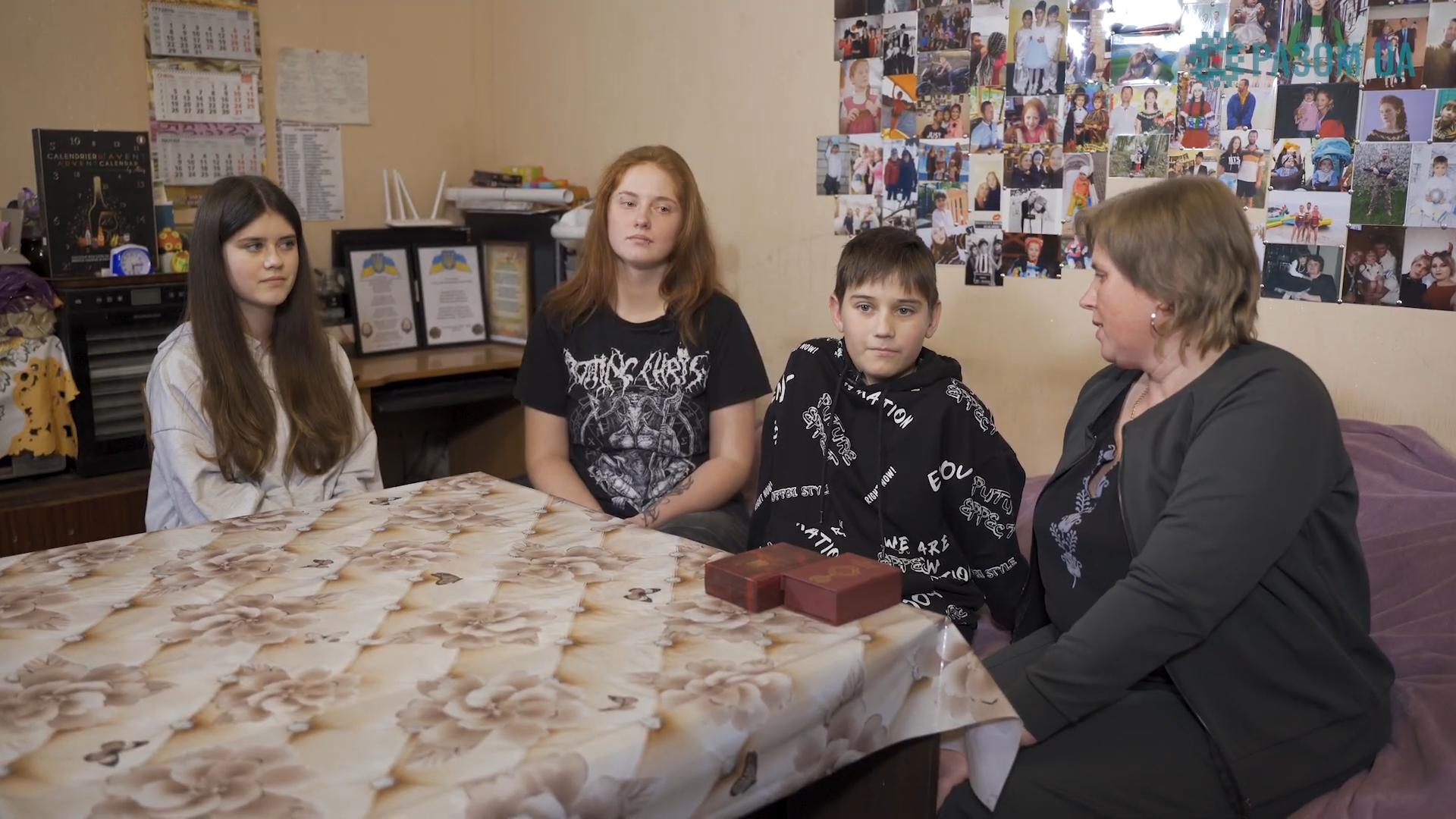
On February 24, 2022, the Kosmina family was preparing for a celebration — their younger daughter Ivanka was turning 15. Instead of gifts and guests, they received news of an invasion, and soon Oleksandr, a civilian with a higher education, went to the enlistment office without hesitation. Ms. Olena, a social educator with 20 years of experience, recalls that moment as the start of a new count, where personal pain dissolved into a shared struggle.
"Mom, I'm a lucky one. They picked three of us to see action... Don't worry, I won't be in touch. Think of good things, everything will be fine"
– Oleksandr Kosmina in a conversation with his wife before heading to positions near Bakhmut
"The 'Lucky One' near Bakhmut: humor as a weapon
Oleksandr became a sniper. In conversations with his wife he never complained. On the contrary — he called himself "the lucky one" because he had landed in the very hell where the fate of the country was being decided. Psychologists call this behavior the highest expression of emotional intelligence: he shielded his family from the horrors of war, remaining their support even from hundreds of kilometers away. Even after a severe wound on November 2, Oleksandr joked in the hospital, calling himself an "iron man" because of the large number of fragments in his body.
A testament in concrete: why it's important to build the future now
One of the most striking moments of the interview on the program "Learning to Live" is the story about building a house. While at the front, Oleksandr insisted that Olena continue the work. "Enough whining, switch to the house," he would say. It was his way of grounding the family, giving them faith that tomorrow would surely come.
Today Ms. Olena continues his work. She is not just building a house — she is building memory, showing the whole community an example of how not to give up in the face of bureaucracy or personal grief.
Context: Why this story matters for each of us
Analysts note that it is precisely these local stories that create the foundation of national resilience. Oleksandr Kosmina was awarded the Order "For Courage" III class and the church medal "Cross of Freedom" (posthumously). But his greatest prize is his three children, who know that their father was a hero not only on the battlefield, but also in his daily care for them.
This conversation with Volodymyr Panchenko on the program "Learning to Live" is a reminder: we have the right to grieve, but we do not have the right to capitulate. Every meter of Ms. Olena Kosmina's house that is built is a step toward our shared victory.