Irpin repairs roads after a severe winter: where potholes have already been filled and what's next
After frosts and sharp temperature swings, municipal crews are using cold-mix asphalt to quickly reduce risks on the roads until consistently warm weather arrives and major repairs can be carried out.

By Tetiana Suchkova-Ladik
March 12, 2026 · 2 min read
Why it matters
After a frosty winter and sharp temperature swings, the road surface in the Irpin community has suffered significant damage. Quickly filling potholes is not about aesthetics but about safety, lower vehicle repair costs, and reducing the risk of accidents at the community’s busiest points.
What they're doing now
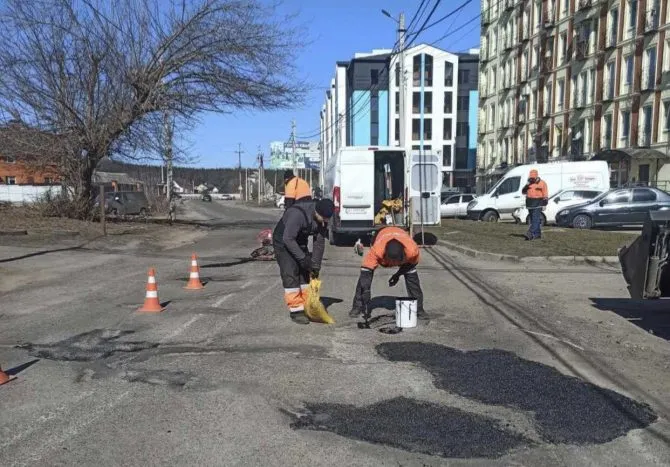
Municipal services are working with cold asphalt — a commonly used temporary technology that allows crews to promptly fill holes and keep roadways passable until consistently warm weather arrives and full-scale repairs can be performed.
The progress of the work was reported on his Telegram channel by Oleksandr Pashchynskyi, the first deputy mayor of Irpin. That communication channel allows the community to quickly receive information about work locations and equipment deployment schedules.
Where work has already been done
- Central Street (from Shevchenka Street to the "Novus" store)
- Pidgirna Street
- intersection of Poetry Street and Mykola Shudra Street
- intersection of Soborna Street and Poetry Street
- intersection of Liubomyr Huzar Street and Severynivska Street
- intersection of Pidgirna Street and Hutsala Street
Where they worked today
- intersection of Soborna Street and Mineralna Street
- Pavla Hlazovoho Street
- intersection of Soborna Street and Sadova Street
- intersection of Soborna Street and Matvii Dontsov Street
- intersection of Sadova Street and 8 March Street
"Work is ongoing; we will gradually restore the roads"
— Oleksandr Pashchynskyi, First Deputy Mayor of Irpin
What comes next
This operational solution reduces immediate risks but does not replace scheduled capital works. The next step is to coordinate resources and weather conditions to carry out higher-quality pavement repairs. The effect of the current work also depends on the coordination of municipal crews, the local budget, and community involvement in monitoring the execution of the works.
Summary: Irpin is choosing a pragmatic approach — a temporary fix today for the sake of safety and preparation for capital repairs in a more favorable season. Whether there will be enough resources and planning for a larger-scale road overhaul is a question that will be determined in the near future by budget decisions and the weather.