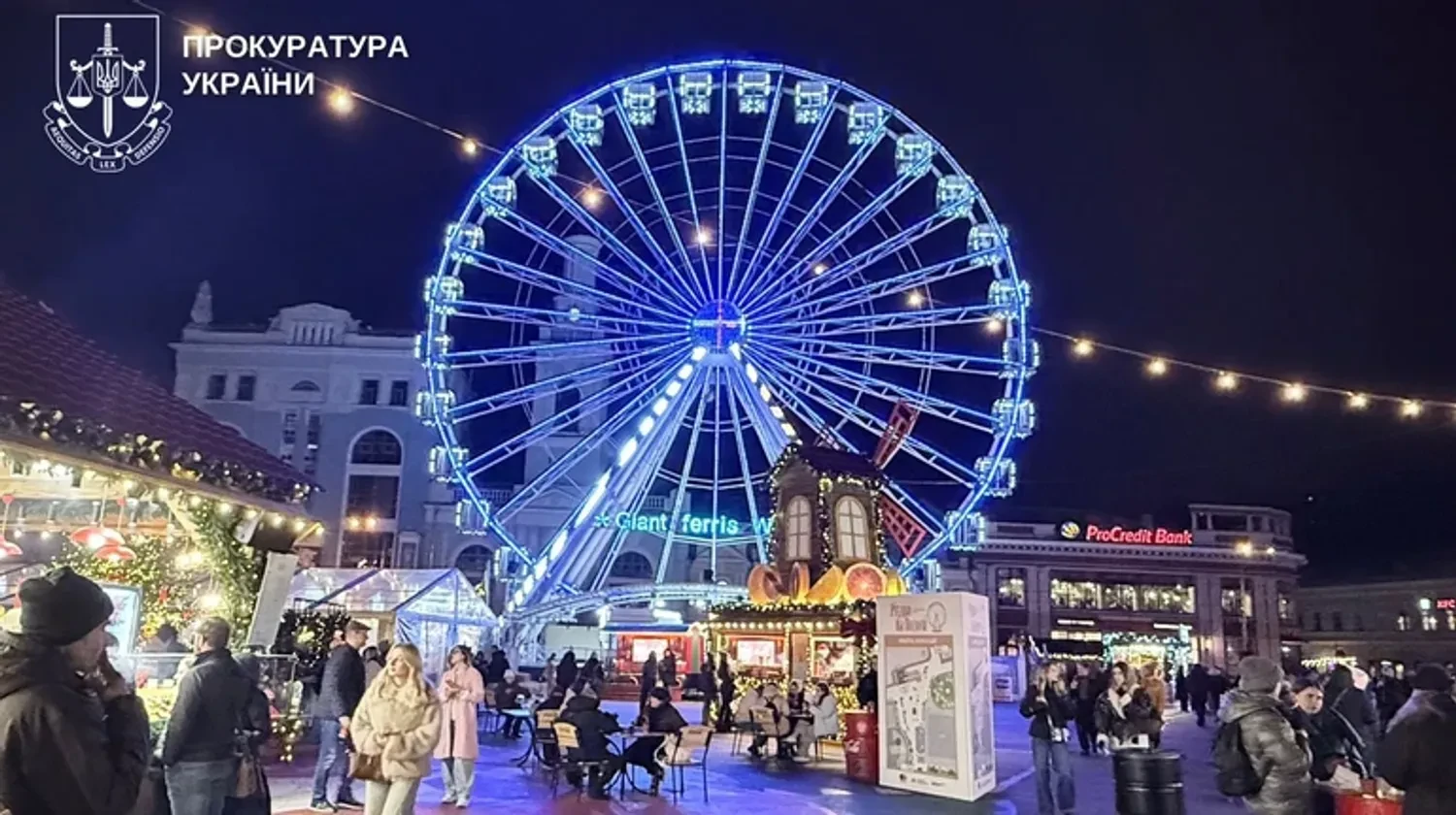
Ferris wheel in Podil to be dismantled despite positive expert assessment — what this means for Kyiv
After a series of orders from the municipal inspection and a petition from the prosecutor's office, the Ferris wheel's owner agreed to dismantle it. The decision affects not only the attraction but also trust in procedures and the management of urban space — we examine why this matters.

By Tetiana Suchkova-Ladik
December 26, 2025 · 2 min read
Briefly
On Podil, dismantling of the "Panoramic Ferris Wheel" has begun — the owner is complying with an inspection order following a prosecutor's decision. This happened despite a positive Periodic Technical Inspection Act dated 21 October 2025 and findings by the "Interregional Expert and Technical Center" that confirmed the structure's safety. The information was published by the Official Kyiv Portal and UNN.
What happened and why it matters
The Department of Territorial Control reported the closure of the attraction at the prosecutor's request; the owner received an official demand from the municipal improvement inspection and agreed to carry out the dismantling at his own expense. Earlier, the prosecutor's office had applied to the court requesting seizure and a ban on operating the wheel due to an alleged unsatisfactory condition.
"Specialists from the Department repeatedly issued an order to dismantle the attraction. In particular, the latest order was issued on 22 December this year. In addition, employees of the municipal improvement inspection drew up an administrative protocol against the owners of the attraction."
— Mykhailo Budilov, director of the Department of Territorial Control
Technical condition of the attraction
The wheel was installed in 2017. According to the most recent technical inspection act of 21.10.2025, the metal structures, components and mechanisms withstood the tests; no cracks or deformations were found — a conclusion provided by the "Interregional Expert and Technical Center." This creates a logical tension: when official technical expertise attests to safety, yet inspections and the prosecutor's office insist on dismantling.
Legal logic and consequences for the city
The decision to dismantle the attraction more reflects legal dominance over technical expertise: the prosecutor's office can initiate processes that compel the owner to act, even if the structure has passed inspections. For Kyiv residents this is a matter of trust — in the institutions that regulate public space, and in the transparency of decisions that affect business and leisure.
What's next
The city administration is negotiating the possible relocation of the attraction to another site. This will affect jobs and the accessibility of the city center for family recreation. Key issues will be the timelines for dismantling, the clarity of criteria for relocation, and a public explanation of the authorities' steps.
Conclusion
The situation in Podil is not simply a story about an attraction. It is a test for the city: can Kyiv combine legal responsibility and respect for professional expertise without losing public space and residents' trust? After dismantling, attention should turn to a transparent action plan regarding the location, safety, and compensation for businesses.
Sources: Official Kyiv Portal, UNN reports, Periodic Technical Inspection Act (21.10.2025), conclusions of the "Interregional Expert and Technical Center".