Kyiv Regional Military Administration to terminate contracts over reconstruction delays in Bucha district — who will be affected
The "Transparency and Accountability" working group identified slow progress on works and failure to meet obligations. The issues concern the return of advance payments, referrals to law enforcement agencies, and accelerating work at sites important to residents.

By Tetiana Suchkova-Ladik
March 27, 2026 · 2 min read
Decision and the community's interest
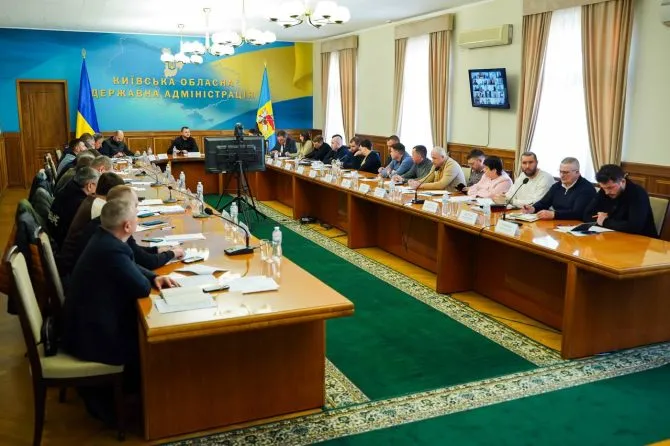
After the latest meeting of the "Transparency and Accountability" working group of the Kyiv Regional Military Administration, it was decided to terminate a number of contracts with contractors due to systemic work disruptions and critically low progress. This decision was confirmed by the head of the Kyiv Regional Military Administration, Mykola Kalashnyk. For residents the point is simple: when reconstruction stalls, the administration changes its approach so as not to waste time and budgetary funds.
What exactly is planned to be terminated
Among the sites is a multi-storey building on Hostomel Highway in Irpin, where the contractor failed to meet contractual requirements and did not provide the necessary intensity of work. A similar situation exists at the Kopyliv Lyceum, where part of the work was subcontracted without proper oversight. They also plan to terminate the contract for the construction of a kindergarten at 37a Ostromyrska Street in Hostomel — there are no workers at the site, and advance payments have not been earned; their return is envisaged.
Where work is accelerating
Alongside sanctions for unscrupulous contractors, the Kyiv Regional Military Administration is also noting positive examples. At the " Veselka " kindergarten in Hostomel, the contractor increased the number of workers and stepped up work. Similar positive momentum was noted at the site in Borodianka on 427-A Tsentralna Street. This confirms that the control system operates selectively — by results, not by declarations.
Why this matters
Restoring infrastructure during and after hostilities is not just about building walls, but also concerns safety, people returning to their homes, and the efficient use of funds. When contractors miss deadlines or subcontract work without oversight, residents suffer and the risk of corruption increases. The decision to terminate contracts is a mechanism to protect the public interest: recovering advance payments, re-evaluating contractors and, if necessary, referring matters to law enforcement agencies.
"Where there is result and responsibility — we continue to work. Where requirements are ignored and deadlines are missed — we make decisions without delay. For unscrupulous contractors, we are preparing appropriate appeals to law enforcement agencies regarding failure to fulfill contractual obligations."
— Mykola Kalashnyk, head of the Kyiv Regional Military Administration
The next stage is monitoring the return of funds, relaunching tenders to find reliable contractors, and accelerating work on critically important projects. The question for the authorities and the community is one: will there be enough systemic approach to replace irresponsible contractors with those who deliver real results?