Mykhailivka‑Rubezhivka: new septic system to protect wells — project to be presented at the city council session
During an on-site reception, the first deputy mayor of Irpin inspected the site of possible drinking-water contamination. The plan for a new septic tank is ready — now the decision rests with the deputies.

By Tetiana Suchkova-Ladik
March 11, 2026 · 2 min read
Drinking water problem and local action plan
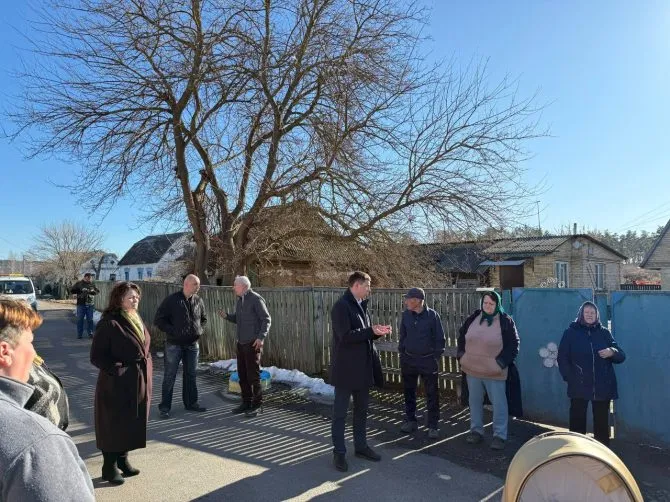
During an on-site reception of citizens in the village of Mykhailivka‑Rubezhivka, the first deputy mayor of Irpin, Oleksandr Pashchynskyi, together with the district elder Kateryna Pasyuk, discussed with residents the issue of possible contamination of drinking water. A project to build a new septic tank has already been developed; the issue now is its financing and the timeline for implementation.
What happened
The inspection concerned a private plot where its owner had brought construction materials and garbage. Neighbors link this to changes in the quality of well water. Separately, Pashchynskyi drew attention to the old septic tank serving two apartment buildings on Zhytomyrska Street, which, according to local authorities, may also be a source of the problems.
To clarify all the circumstances and study the situation in more detail, we will speak further with the landowner. But I want to point out that the problem of water contamination here is long-standing and is, among other things, connected to the old septic tank of the two apartment buildings on Zhytomyrska Street. So, to address this issue comprehensively, it is necessary to build a new septic tank with the subsequent conservation (mothballing) of the old one.
— Oleksandr Pashchynskyi, first deputy mayor of Irpin
Why it matters
Drinking water quality is a matter of safety and everyday comfort. A contaminated well can cause illnesses and additional expenses for families. Therefore, the decision on a comprehensive replacement and conservation of the existing system is a preventive step that will reduce long-term risks and costs for the community.
What’s next
The project is already ready and its financing is planned to be submitted to the next city council session. The next steps: official negotiations with the plot owner, approval of technical solutions, and a decision by deputies on the allocation of funds. The timeline for when residents can expect safe water in their wells depends on this.
Context for the community: residents’ attendance at the session and vigilant public oversight will speed up the work. This is an example of how local initiative and responsible authorities can cooperate to protect families and preserve community resources.