Man detained in Kyiv region for smashing a bus stop; witness and video confirmed his guilt
The incident in Vasylkiv shows how community vigilance and video surveillance cameras protect urban space — we examine what happened and what the consequences are for local infrastructure.

By Tetiana Suchkova-Ladik
March 18, 2026 · 1 min read
What happened
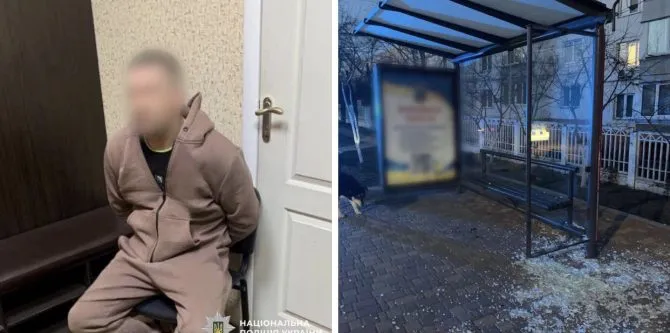
Law enforcement identified the man who intentionally damaged the glass structure of a public transport stop in Vasylkiv — reports the Kyiv Oblast Police. Information about the incident was provided to the Obukhiv District Police Department by a local resident; surveillance cameras recorded an unknown person striking the glass.
Evidence and police response
Thanks to recordings from cameras and the testimony of an eyewitness, law enforcement quickly identified a 34-year-old local resident. According to the police, the man was intoxicated, deliberately broke the glass with his hand, and behaved aggressively while communicating with officers. Administrative protocols were drawn up against the offender for petty hooliganism, willful disobedience of lawful police orders, and appearing in a public place while intoxicated.
"The man intentionally damaged the glass structure of the public transport stop; the relevant administrative documents have been drawn up in the case"
— Kyiv Oblast Police
Why this matters
At first glance — a mundane incident. However, damage to infrastructure always has a wider dimension: it means additional costs for the community and risks to citizens' safety, especially when it concerns transport infrastructure. The situation also underscores the role of surveillance and the active stance of residents in countering vandalism.
Conclusion
The witness and the video cameras did their job: the offender has been identified and held accountable. Nevertheless, a question remains for local authorities and the community — are isolated cases like this enough to systematically reduce risks to shared resources and preserve order in the city?