Action Comics No. 1 Sold for $15 Million: How Rarity, Film History and Theft Drove Up the Price
A rare copy of the first Superman issue that belonged to Nicolas Cage and was stolen in 2000 has been sold privately for a record $15 million. We explain why this is more than a celebrity-owned lot — and what it means for the market for cultural artifacts.

By Tetiana Suchkova-Ladik
January 10, 2026 · 2 min read
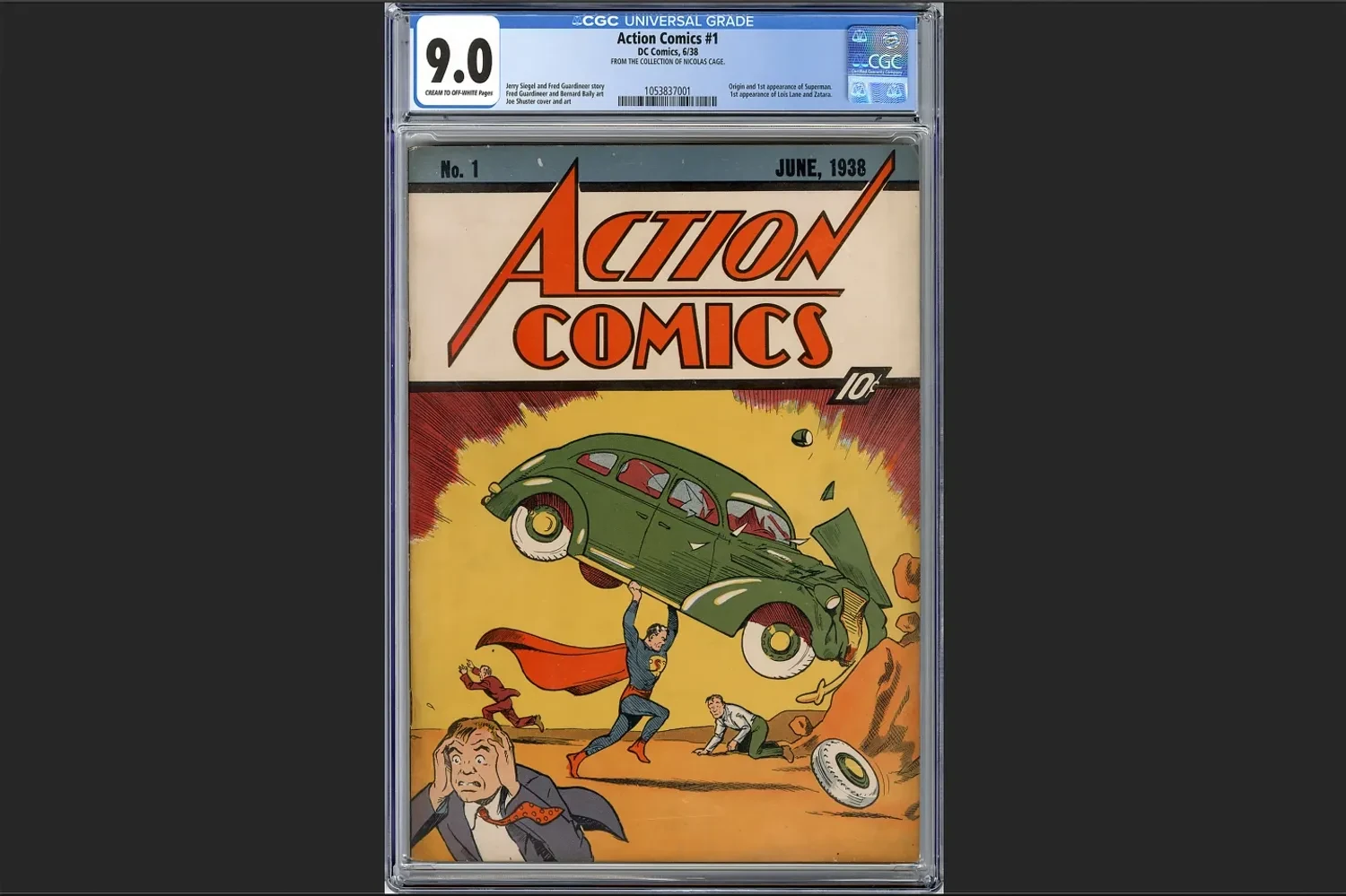
Private deal announced January 9, 2026: a rare copy of "Action Comics No. 1" sold for $15 million — a new all-time record for comics, AP reports, citing also UNN. This is a lot with a cinematic biography: from purchase by a Hollywood star to theft and an unexpected return.
"A rare copy of the comic 'Action Comics No. 1', in which the world first met Superman, was sold for an unprecedented $15 million."
— AP / UNN
Provenance of the lot: from $150,000 to $15 million
The lot, graded 9.0 on the CGC scale, was purchased in 1997 by actor Nicolas Cage for roughly $150,000. In 2000 the copy was stolen from his Los Angeles home and was considered lost for 11 years. In 2011 the artifact turned up among items bought from an abandoned storage unit, after which it was returned to Cage. A later public sale pushed the price to $2.16 million — and now a private deal has set a new milestone at $15 million. The sale was handled by Metropolis Collectibles; the names of the buyer and seller have not been disclosed.
Why does it cost so much?
Rarity. About 100 copies of the first issue of "Action Comics" are known to exist, but only a few are in high grade. A CGC grade of 9.0 places this copy among the top offerings on the market.
Provenance. The ownership story — celebrity owner (Cage), theft, return — makes the lot more attractive to collectors and investors. As journalists and experts note, such "stories" increase the emotional and investment value of an item.
Cultural significance. The 1938 issue launched the superhero genre — it is not just an artifact but a symbol of the entertainment industry with global influence.
Market dynamics. The sale nearly doubled the previous record — $9.12 million in November 2025 — indicating growing demand for top lots among private buyers and institutional collectors.
"The media narrative around the theft only added to the comic's investment appeal."
— AP / market expert assessments
Implications: market, investment, culture
The sale demonstrates that pop-culture items continue to function as alternative assets. For investors, it is a marker — even in periods of geopolitical instability capital seeks valuable and historically significant assets. For the cultural sphere, it is another argument in favor of preserving and documenting heritage: well-documented provenance and a public history increase both the cultural and market value of an artifact.
To a Ukrainian reader this may seem like a distant story, but the mechanisms are the same: ownership history, quality of preservation, and market transparency shape the price of cultural objects. Protecting and promoting our heritage is not only a matter of dignity but also of long-term economic significance.
Summary
The sale of "Action Comics No. 1" for $15 million — a combination of rarity, condition, star provenance, and a dramatic backstory. It is a market signal: the value of cultural artifacts is rising, and investors are increasingly converting cultural memory into financial instruments. The question is whether institutions and society are prepared to preserve and protect such objects as diligently as private collectors do.