Borodianka pays tribute to Shevchenko: a damaged monument as a marker of the community’s recovery
On the 165th anniversary of the Kobzar's death, residents and local authorities gathered at the monument that survived the 2022 shelling — the ritual was more about restoration than formality.

By Tetiana Suchkova-Ladik
March 10, 2026 · 1 min read
Memory at the Heart of the Community
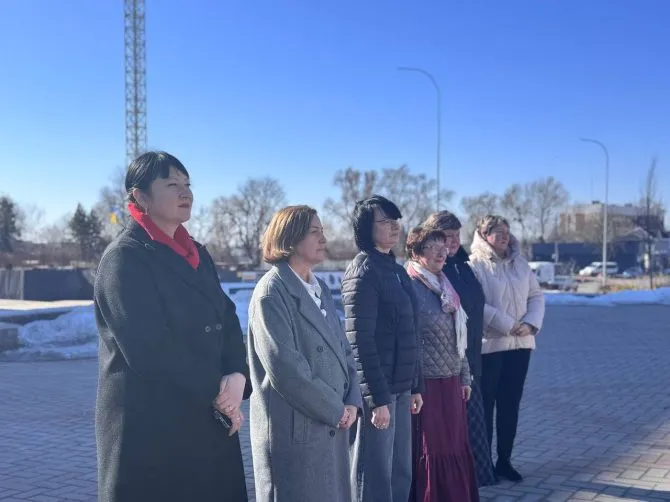
Events were held in Borodyanka to mark the 165th anniversary of the death of Taras Shevchenko. By the monument to the Kobzar, residents of the community and representatives of local authorities laid flowers and honored the poet’s memory — an event that combined an official component with genuine public participation.
The event was reported by Irina Zakharchenko, acting head of the Borodyanka settlement; her remarks emphasized that the commemoration carries both local and symbolic significance in the context of the community’s reconstruction after the fighting.
"For Borodyanka the figure of Shevchenko has a special meaning. His monument became a silent witness to the terrible events of February–March 2022. Damaged by bullets, leaning but not broken — it stood, as the people stood and as our land stood"
— Irina Zakharchenko, acting head of the Borodyanka settlement
The Monument as a Testament to Resistance
The monument, damaged during the shelling, has become an informal marker of what was endured: it recalls the destruction, but at the same time demonstrates that cultural memory weathers blows. It is through such images that recovery takes on a human, not just infrastructural, dimension.
Why This Matters
Shevchenko has long transcended the literary figure: his persona is used as a reference point for national dignity and the right to one’s own history. Historians and cultural institutions note that care for sites of memory is part of systematic reconstruction — it is a signal of security for residents and a marker for partners who help rebuild communities.
What’s Next
Borodyanka is gradually being revived after the losses it suffered. The event at the monument was not only a ritual of commemoration but also a reminder that recovery requires attention to symbols: restoration of monuments, preservation of memory, and investment in cultural infrastructure must become part of the recovery plan.
The question remains open: will this symbolic presence turn into concrete steps to restore the community’s cultural heritage?