Heart in an ice block on St. Sophia Square — an installation that preserves human warmth during the war
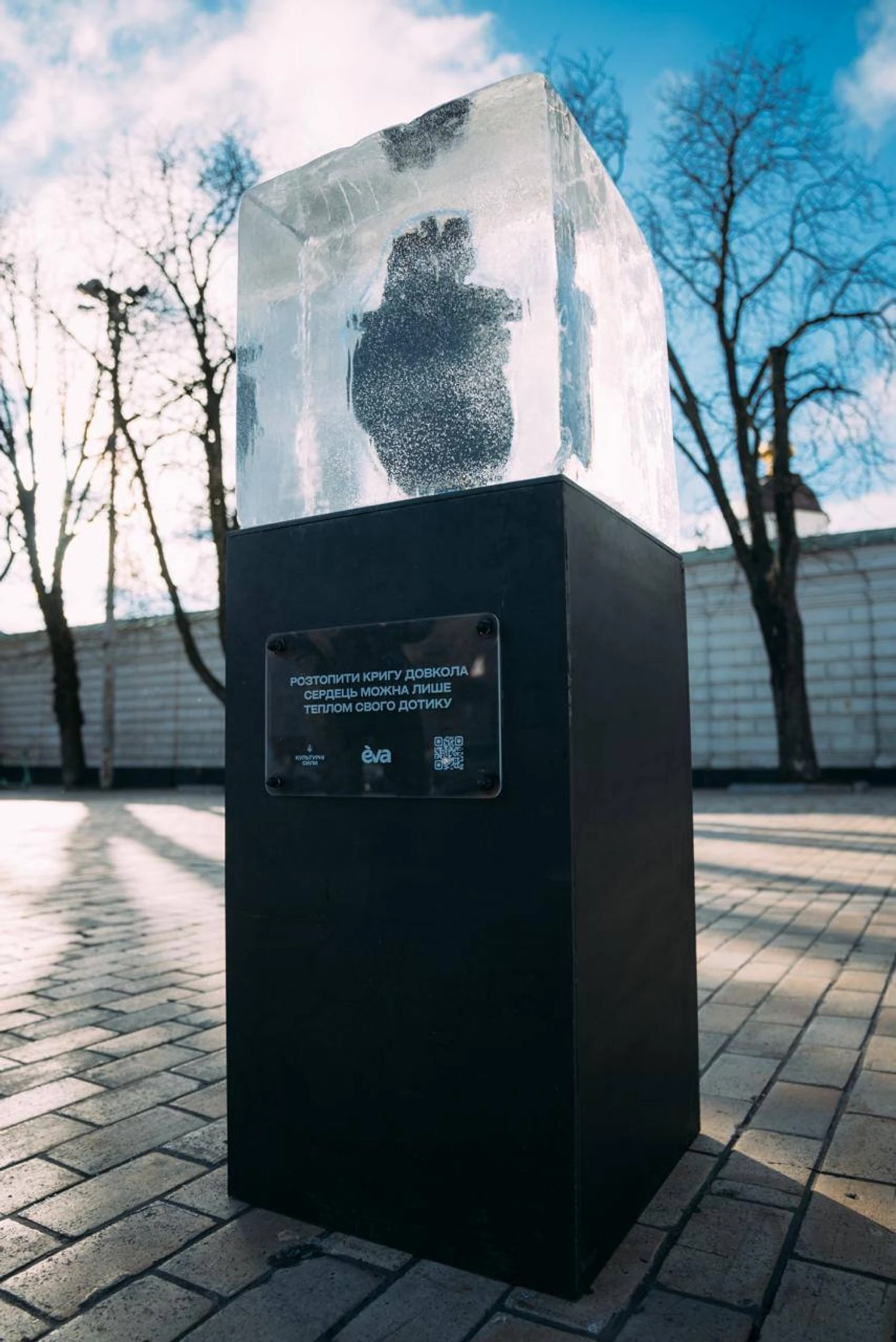
An interactive art installation has appeared on Saint Sophia Square in Kyiv that will be on display until January 6, 2026: an ice "heart" responds to touch — the ice melts and music about the defenders grows louder. We explain why this is more than holiday décor.

By Oleg Bazylewicz
December 29, 2025 · 2 min read
Public gesture in the center of the capital
On Saint Sophia Square, next to the main New Year’s tree, an interactive installation titled “Heart in an Ice Block” has been installed. According to the press service of the Kyiv City State Administration (KSCA) and UNN, the object will be on display throughout the Christmas and New Year holidays — until January 6, 2026. This is not just an art object: its purpose is to create a public space for emotional support during wartime.
How it works
A heart is hidden inside the ice block; the composition “God’s Shadow” — a Christmas song about Ukraine’s defenders — is playing from within. Each visitor can touch the ice: reading sensors react to warmth and attention, the ice gradually melts, and the melody grows louder. The composer is an officer of the Armed Forces of Ukraine and head of the civic initiative “Cultural Forces,” Mykola Sierha.
Why it matters
After several years of war, society needs not only material but also symbolic support. Public gestures of solidarity work on two levels: they raise morale at the home front and remind the military that their sacrifice is noticed. Cultural initiatives and volunteer projects consistently show that even simple symbols of mutual support reduce feelings of alienation and help maintain social cohesion.
“This ice can be melted by your touches, by your breath; it takes a great effort — just as it takes effort to thaw the hearts of each of us, which during this war have, in order to be less vulnerable, become covered in ice.”
— Mykola Sierha, officer of the Armed Forces of Ukraine, head of “Cultural Forces”
Practical effect and context
The installation functions as a mechanism for collective reflection: it provides an opportunity to speak about loss, about strength and about compassion in a visible, safe format. For the city administration and cultural initiators it is also a tool for supporting the psychological resilience of the community — an element of “soft infrastructure” that strengthens society’s durability in the long term.
What’s next
This does not solve concrete needs at the front, but it reinforces the social foundation on which volunteering, mobile support and public trust are built. If similar projects appear in other cities and become part of a more permanent network of cultural support, this will strengthen integration between civilian and military spheres at the level of emotional solidarity. For now — a simple call: to look, to touch, and to remind yourself that human warmth continues to matter even in times of great challenge.