Bust of Ivan Mazepa Installed at Kyiv Pechersk Lavra
On December 1, a bust of Hetman Ivan Mazepa was unveiled at the Kyiv Pechersk Lavra. The opening was attended by representatives of the Ukrainian Institute of National Remembrance, sculptors, and the management of the reserve.

By Tetiana Suchkova-Ladik
December 2, 2025 · 2 min read
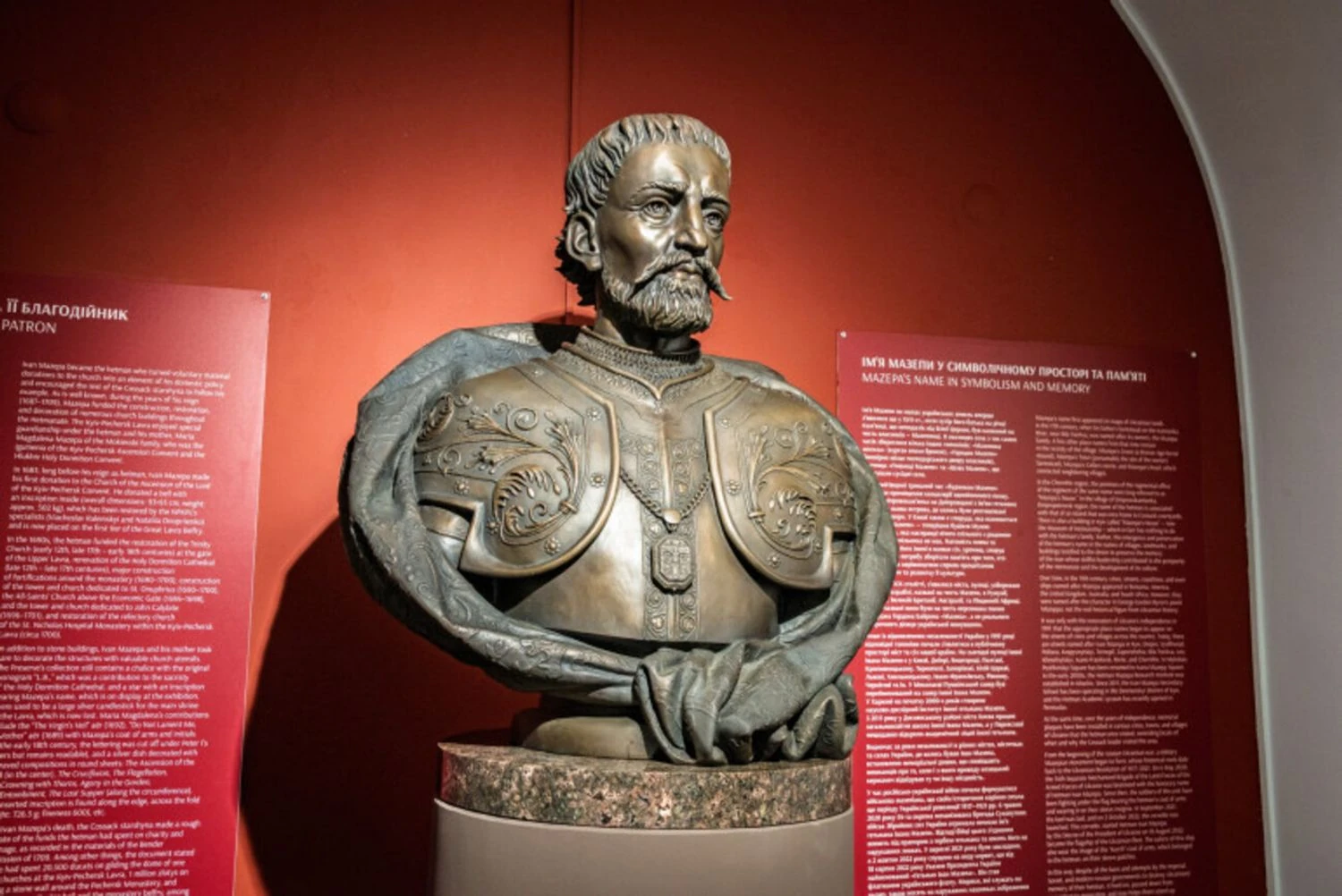
On December 1, within the grounds of the Kyiv Pechersk Lavra, a bust of Hetman Ivan Mazepa was unveiled.
Opening ceremony
The event was attended by the head of the Ukrainian Institute of National Remembrance, Oleksandr Alfiorov, the sculptors Oles Sidoruk and Borys Krylov, and the acting general director of the National Preserve "Kyiv Pechersk Lavra," Svitlana Kotliarevska.
The organizers thanked everyone who contributed to the installation of the bust and emphasized its symbolic significance for the historical memory of the struggle for Ukrainian independence.
Imagine: even the Moscow leaders (UOC-MP – ed.) found it easier to live on Bolshevik January Uprising Street than to accept that there would be a Mazepa Street here
– Oleksandr Alfiorov, head of the UINR
Alfiorov also drew attention to the fact that there is still resistance to initiatives honoring Mazepa’s figure and recalled that the Russian authorities and propaganda have used the term "mazepintsi" to label supporters of Ukrainian independence.
About Ivan Mazepa
Ivan Mazepa (1639–1709) led the Zaporizhian Host for almost 22 years. He sought the restoration of Ukrainian statehood and promoted the cultural and economic rise of Left-Bank Ukraine. For a long time he was an ally of the Russian tsar Peter I, but because of Moscow’s colonial policy he sided with Sweden in 1708 during the Great Northern War.
After the defeat of King Charles XII of Sweden, Mazepa fled to the Ottoman Empire; he died in exile near present-day Bender and was buried in the Romanian city of Galati.
Russian tradition’s view and museum display
In Russian historiography during the tsarist and Soviet eras Mazepa was declared a traitor, and the Russian Orthodox Church pronounced an anathema against him; similar assessments remain widespread today.
The National Museum of the History of Ukraine presented an exhibition that displayed a noble ceremonial saber from the late 17th — first half of the 18th century with a relief depiction of the Archangel Michael and a bust of the Polish king Stephen Báthory.