ILIT won 11 awards at the regional stage of the Junior Academy of Sciences — who will represent Kyiv region at the final
Eleven prize places — these are not merely isolated victories but a signal of a substantive trend in Irpin’s school science. We report who won the awards and why it matters for the region.

By Tetiana Suchkova-Ladik
March 6, 2026 · 2 min read
In brief
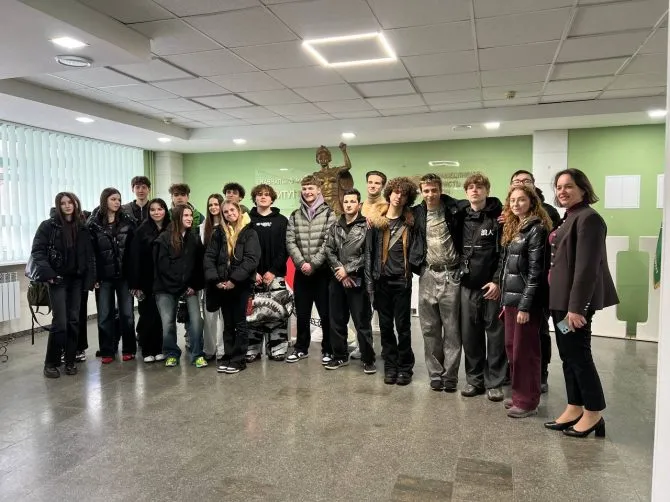
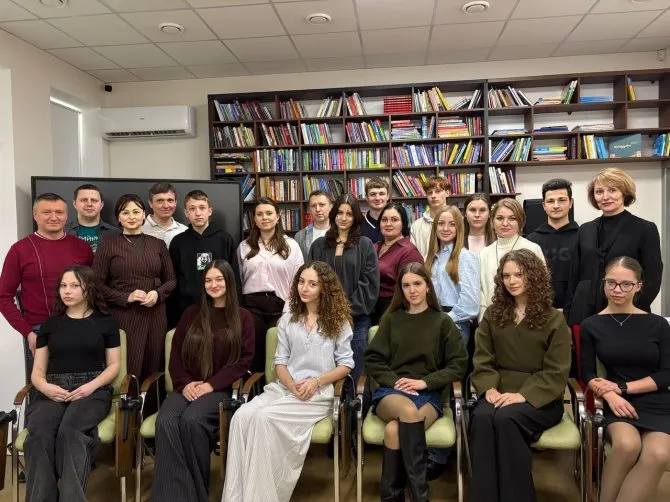
Irpin Lyceum of Innovative Technologies (ILIT) won 11 prize places at the regional stage of the research-project defense competition of the Minor Academy of Sciences (MAN). This result cements the lyceum’s leading position in the Irpin community and guarantees representation of Kyiv region at the national final.
Who received the awards and for what
The highest award — 1st place in the "Applied Mathematics" section — was won by Maksym Zhukov (9‑M) under the supervision of Raisa Konyk. He will represent Kyiv region at the All‑Ukrainian stage of the competition.
Seven lyceum students took 2nd places in various sections:
- Kyrylo Romanov — "Cybersecurity" (supervisor Ivan Kholod)
- Monika Sokolovska — "History of Ukraine" (supervisor Olena Kurakina)
- Nadiia Shpyrok — "Ecology" (supervisor Maryna Sokur)
- Dmytro Haidabas — "Jurisprudence" (supervisor Andriy Korchevnyuk)
- Kyrylo Matukhno — "Technical Sciences" (supervisor Ivan Nechyporuk)
- Darya Churkina — "Psychology" (supervisor Olena Pavliuk)
- Veronika Ilchuk — "English Language and English Literature" (supervisor Viktoriia Sokolovska)
Three more students took 3rd places in the natural sciences and physical‑mathematical fields: Sofiya Bondar ("Zoology"), Maria Zekunova ("Human Biology", supervisor Serhii Naumenko) and Maria Kovalenko ("Physics", supervisor Nataliia Dmytrenko).
"I congratulate the winners, their parents and their academic supervisors! I thank our teacher‑mentors who work at the edge of what is possible, turning children's curiosity into fundamental scientific projects. We compete with our own excellence, and each time we prevail. We do not stop at what has been achieved, because for ILIT the summit is only another step"
— Nataliya Tit, acting director of ILIT
Context and significance
The local educational successes of ILIT are not an isolated surge but part of systematic preparation: for the third year in a row the lyceum tops the ranking for olympiad preparation in the Irpin community, ranks among the top 5% of schools in Ukraine and is in the top 20 schools of Kyiv region. This is social proof that the team of teachers and mentors consistently produces competitive scientific projects.
Why this matters to the reader: investments in school science are investments in Ukraine’s future talent pool, especially in STEM and cybersecurity. Wins at the regional level open the door to the national stage, scholarships and educational opportunities abroad, and also strengthen the region’s image as a center of talented youth.
What’s next
The next stage is the All‑Ukrainian MAN finals, where ILIT will be represented by Maksym Zhukov and, possibly, other nominees from the region. The outcome of that final will affect not only the individual success of students but also arguments for further support of the lyceum from the community and partners.
The fact remains simple: 11 prize places are the result of systematic work by mentors and the curiosity of students. Next comes the question of resources and opportunities: will we turn these achievements into a sustainable educational infrastructure for the next generations of scientists?