Irpin budgeted nearly UAH 23 million for school lunches — how it will affect family budgets and meal quality
On World School Meals Day, the Irpin community reviewed spending and oversight mechanisms: who pays, what children eat, and how food waste is being reduced.

By Tetiana Suchkova-Ladik
March 12, 2026 · 2 min read
How much was allocated and for what
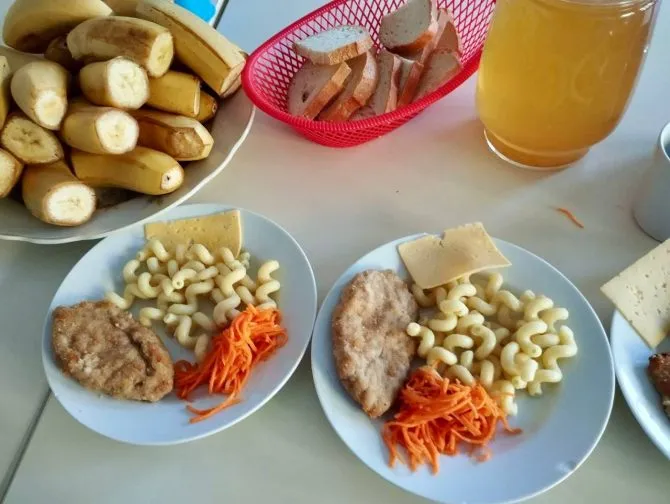
The Irpin community has budgeted nearly UAH 23 million for school meals this year. About 7,000 students receive hot lunches daily, making this expenditure an important element of the community's social stability.
The state provides a subsidy for free meals for grades 1–4, which covers about 70% of the necessary costs; the remaining 30% is covered by the community budget. Separately financed are meals for privileged categories of students in grades 5–11, cooks' wages, and the utility costs of the food service units.
Transparency and working with preferences
To control quality and respond promptly, the administration receives photo reports from all schools every day. This practice increases transparency and allows technical or organizational issues to be quickly resolved together with the municipal catering enterprise.
"To keep school meals under control, I receive photo reports of lunches from all the community's schools every day. If there are questions, we immediately resolve them with the caterer — the municipal catering enterprise."
— Yuliia Osinska, Deputy Mayor of Irpin
The community analyzes food preferences: children are more likely to choose pasta, meat dishes, pilaf and vegetable salads; porridges, fish patties and omelette casseroles are less popular. Menus are formed in accordance with the norms set out in the Resolution of the Cabinet of Ministers of Ukraine No. 305, which limits the amount of salt and sugar and sets daily product standards. The administration's task is to find a balance between the regulations and preferences in order to minimize the amount of uneaten food.
What this means for residents
This decision is not only a social gesture but also a practical mechanism for supporting families: when part of the costs is covered by the state and the community ensures quality and accessibility, household budgets receive real relief. At the same time, transparent procedures and daily control increase trust and minimize the risk of inefficient spending of funds.
In the context of World School Feeding Day, this looks like an investment in children's health and learning effectiveness — and, in a broader sense, in the future of the community.
We ask parents to share feedback and suggestions regarding the menu — the community takes families' opinions into account within the existing norms.