From a Graphene Experiment to the "Iron Shift": How ILIT Turns Science into Practical Resilience
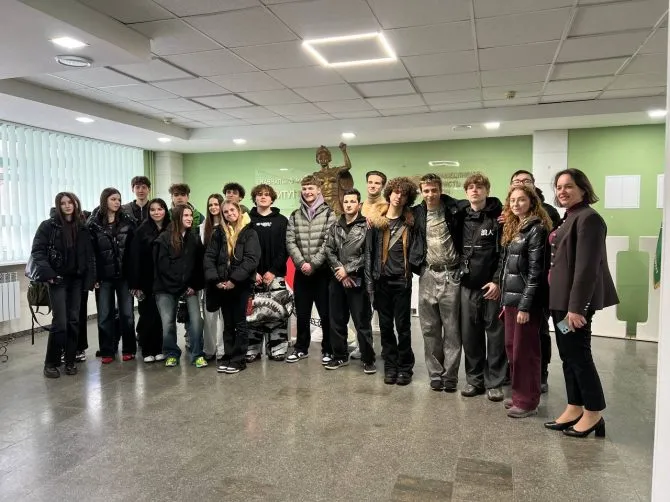
Maria Kovalenko, a student at the Irpin Lyceum of Innovative Technologies, has been selected for the nationwide project "Iron Shift." This is an example of how scientific achievements and civic commitment are being transformed into the skills the country needs today.

By Tetiana Suchkova-Ladik
March 6, 2026 · 2 min read
Why it matters
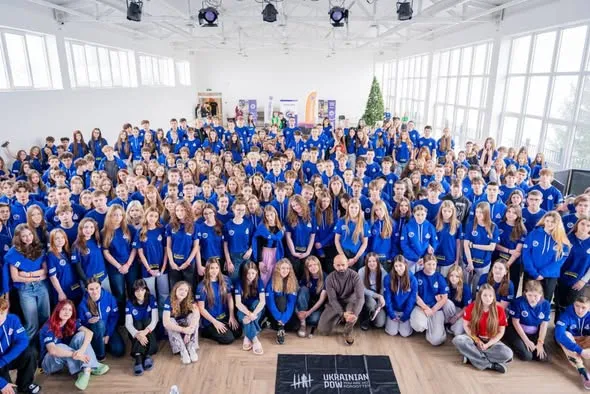
Student of the Irpin Lyceum of Innovative Technologies Maria Kovalenko became a participant in the nationwide project "Zalizna Zmina" ("Iron Shift"), implemented with the support of JSC "Ukrzaliznytsia", the Ministry of Internal Affairs, and the Howard G. Buffett Foundation. This is not just an educational initiative — it combines science, practical skills, and civic responsibility, with direct resonance for reconstruction and security.
Maria joined the program thanks to her scientific achievements and active civic position: she took third place in the regional stage of the MAN competition-defense in the physics section with a study of the effect of graphene on the mechanical properties of concrete. This is an example of how STEM research can have practical applications in enhancing the structural strength of buildings during infrastructure restoration.
"I received my invitation because I won third place in the regional stage of the MAN competition-defense in the physics section. My research dealt with the effect of graphene on the mechanical properties of concrete. I studied how nanomaterials can increase the strength of structures. It was this research and my civic stance that gave me the opportunity to become part of 'Zalizna Zmina.'"
— Maria Kovalenko, student of the Irpin Lyceum of Innovative Technologies
What participants do
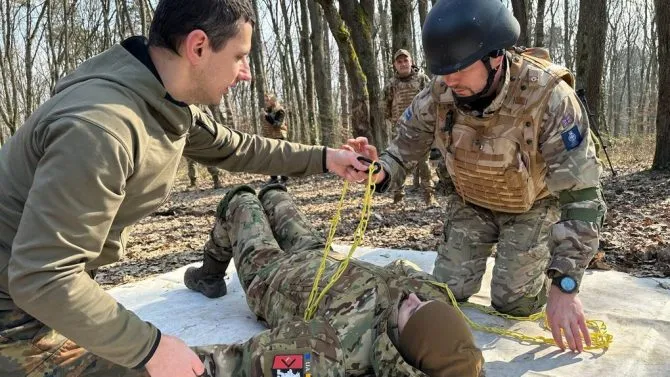
Within the program, participants undergo training in teamwork and public speaking, lessons in tactical medicine, sports and military training, and take part in practical quests. This set of skills is useful both in peacetime and in conditions of crisis.
"'Zalizna Zmina' was created so that young people gain practical experience in teamwork and make new connections."
— Project organizers
Context and implications
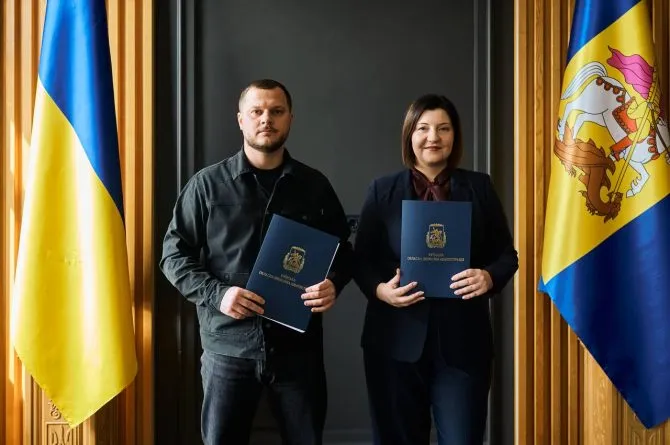
Support from state and corporate institutions — JSC "Ukrzaliznytsia", the Ministry of Internal Affairs, and the Howard G. Buffett Foundation — serves as a mark of confidence in the format. Such initiatives create a channel for transforming scientific potential into applied solutions and the human capital needed for reconstruction and security.
In practice, this means that young people receive not only training but also a network of contacts, skills for volunteer and professional activity, and opportunities to implement scientific ideas in reconstruction projects. Whether the state and its partners are making full use of this potential is a question for education and infrastructure policy that should be addressed now.