Shelter for Mriya Lyceum: UAH 103 million and first tenders — what it means for Irpin
Constructing a shelter is not a cosmetic renovation but an investment in children's safety and the community's recovery. We break down the figures, timelines, and next steps.

By Tetiana Suchkova-Ladik
March 9, 2026 · 2 min read
About the project and financing
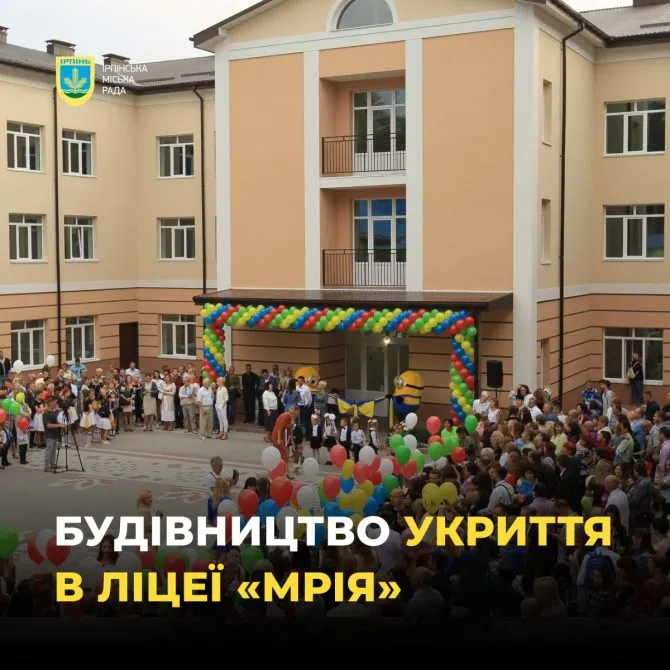
According to the project and cost documentation, the construction of a shelter at Irpin Lyceum "Mriya" requires UAH 103 million. Last year the local budget allocated the first UAH 9.8 million — about 9.5% of the total amount, so the funding shortfall is approximately UAH 93.2 million.
Launching tenders: what it means
Acting mayor of Irpin Anzhela Makeieva reported that the first tenders are being prepared and launched — this is the formal start of the procurement procedure intended to lead to contract signing and the actual start of works. The construction period for the shelter in the project is 2 years.
"We are preparing the first tenders for the construction of the shelter at Lyceum 'Mriya'."
— Anzhela Makeieva, acting mayor of Irpin
Why it matters
In the context of the ongoing threat to civilian infrastructure — especially educational institutions — building protected spaces becomes a priority. This is not just a technical task: a shelter is an element of parents' trust in the school, a signal that the community is recovering and is ready to invest resources in protecting children.
Where funds will be sought and who will work
The start of the tenders opens several avenues: seeking additional funds in the state budget, compensation from partners or donors, and participation by private or local contractors in open procurements. For the community, it is a chance to secure a transparent procedure and attract quality contractors.
What’s next
Launching tenders is an important step, but not a guarantee of rapid completion. The financial gap must be closed, transparent competitions held, and quality control of the work ensured. If these elements come together, within two years the lyceum will receive a genuinely protected space for classes and civil protection.
Conclusion
The launch of tenders at Lyceum "Mriya" is more than news about construction. It is an indicator of how the community and its leadership are turning declarations about security into concrete steps. Whether there will be enough resources and political will to complete the project is a question we will soon be awaiting an answer to.