Demobilization by Queue: Gnatov Explained Why Military Discharge Depends on How Many People Join the Armed Forces
# Translation The Chief of the General Staff refused to make specific promises regarding demobilization — not out of unwillingness, but due to mathematics: as many people as arrive as replacements will be able to leave. New contracts with a guaranteed end date represent the first attempt to break this vicious cycle.

By Tetiana Suchkova-Ladik
June 10, 2026 · 2 min read
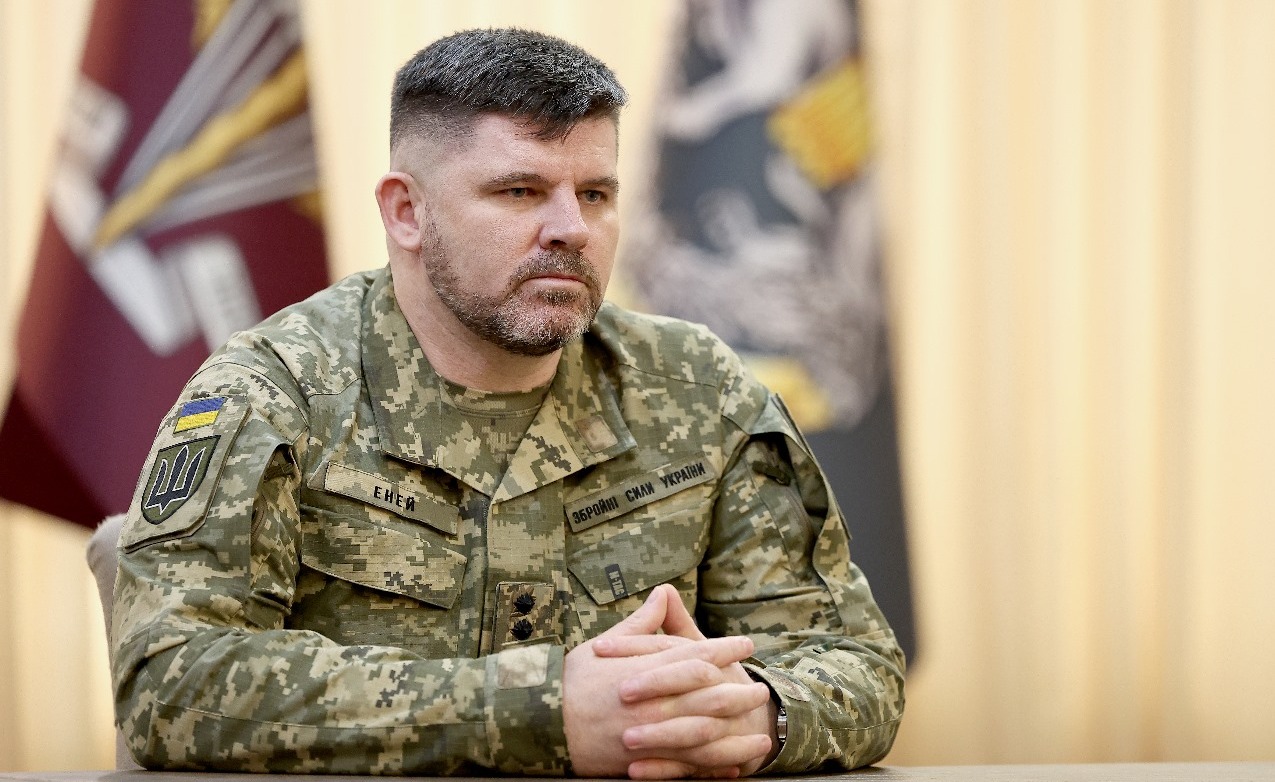
Andriy Hnatyev, Chief of the General Staff of the Armed Forces of Ukraine, gave a detailed interview to LIGA.net, in which he for the first time so openly outlined the logic of demobilization: it is not blocked politically — it is blocked arithmetically.
"It's not worth talking about demobilization in detail right now, so as not to mislead people and not to create false expectations."
Andriy Hnatyev, Chief of the General Staff of the Armed Forces of Ukraine
The essence of the position is simple: as long as recruitment rates do not allow replacing those already serving, mass dismissal would mean either leaving positions undefended or collapsing the combat core. The General Staff does not deny the need for demobilization — it claims it cannot honestly name timelines.
What is already being prepared as a solution
In parallel, the Ministry of Defense and the General Staff are finalizing new contracts for military personnel. According to Ukrainska Pravda, contracts will be of three types with clearly specified terms of service — 10 months for current soldiers in combat positions and 14 months for recruits. Fundamentally new: the document has built-in guaranteed demobilization and deferment until the next draft after the contract expires.
This is not the same as demobilization for those serving since 2022 without a contract, but it is the first institutional attempt to make the end of service legally predictable, rather than dependent on a commander's decision or the state of the front.
Why "after a ceasefire" is also not an answer
General Oleksandr Pivnenko from the National Guard previously warned: do not count on demobilization immediately after the end of hostilities. The logic is the same — the army cannot release a large number of people at once without a trained reserve to replace them. Hnatyev, according to NV, emphasized in previous interviews that rotation at the front is "too early" to discuss while the initiative is on the enemy's side.
That is, even a hypothetical ceasefire does not automatically trigger the dismissal mechanism — it only removes one of the blocking factors.
- What is needed for demobilization: a sufficient recruitment rate to replace soldiers in positions
- What exists now: ideas and several solution options — without public details
- What emerges through new contracts: a legally fixed end date, but only for those who sign a new agreement
The open question here is not about the General Staff's good intentions, but about a specific number: if the monthly recruitment rate reaches a level sufficient for rotation of combat units, will a public demobilization schedule appear — or will it turn out again that there is another "difficult" factor that was not mentioned before?