Hole 50×50 in the hull and two missing sailors: what is known about the death of "Ursa Major" with nuclear cargo
A Spanish investigation has established that a Russian vessel was transporting reactor housings for submarines to North Korea. It has not been officially confirmed who damaged the hull — the United States, NATO, or whether it was a technical malfunction.

By Tetiana Suchkova-Ladik
May 12, 2026 · 3 min read
On December 23, 2024, the Russian dry cargo ship Ursa Major sank 100 km off the coast of Spain. Two crew members went missing. What was officially supposed to look like a technical accident on a route from St. Petersburg to Vladivostok turned out, according to Spanish investigators' conclusions, to be a probable deliberate attack — with motivation, scale, and geopolitical consequences.
What the vessel was carrying
The captain of Ursa Major told Spanish investigators that on board were "components of two nuclear reactors similar to those used on submarines," and that he was uncertain whether the reactors contained nuclear fuel. The Spanish investigation, reported by CNN and Spanish newspaper La Verdad, identified the cargo more precisely: two reactor housings of type VM-4SG — a type installed on Russian nuclear submarines of Project 667.
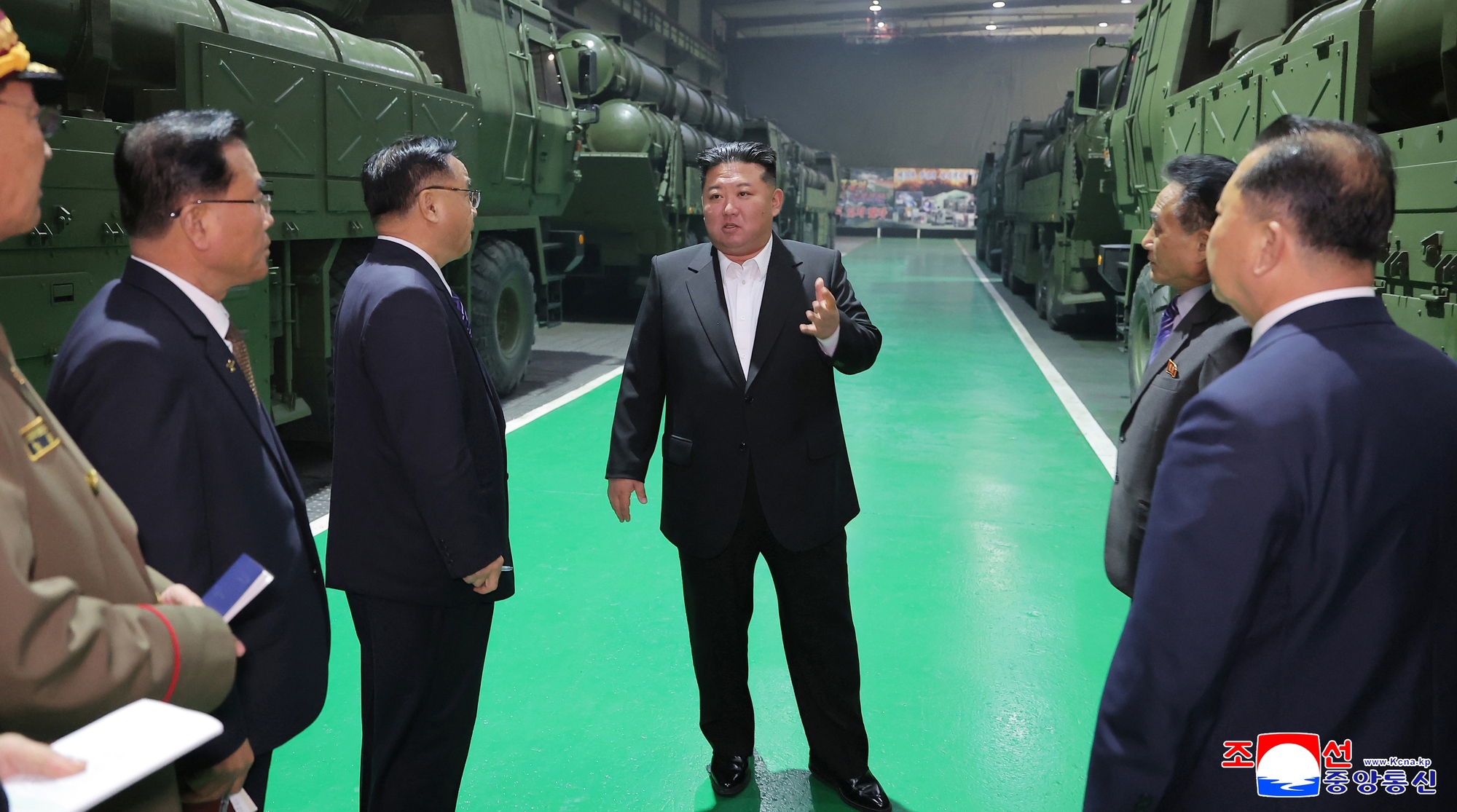
The vessel put to sea just two months after Kim Jong Un sent North Korean troops to fight for Russia. The route — from the Baltic through the Mediterranean to Vladivostok — is atypical for a cargo voyage and inconsistent with the declared contents: the captain officially reported "empty containers" to customs. Satellite images prior to the sinking, according to Spanish investigators, confirmed the presence of reactor structures on board.
How it happened
On December 22, the vessel suddenly slowed down — the captain could not explain the reason. The next day, the crew heard three consecutive explosions in the engine room. Ursa Major developed a starboard list of up to 25 degrees and sank to the bottom at a depth of approximately 2,500 meters. Fourteen sailors were evacuated to the rescue boat Salvamar Draco and delivered to Cartagena, where they were questioned by Spanish police and investigators. Two crew members disappeared without a trace.
"The investigation suggests that a 50 by 50 centimeter hole in the hull of Ursa Major was likely created by a supercavitating Barracuda torpedo"
— conclusion of Spanish investigation, cited by CNN
Supercavitating torpedoes create an air bubble ahead of themselves that reduces water resistance, allows for extremely high speeds, and pierces the hull without an explosive charge — almost silently. According to analysts' estimates, only the USA, several NATO countries, Russia, and Iran possess such weapons. Janes analyst Plunkett, quoted by CNN, proposed an alternative version: the size and location of the hole better correspond to a magnetic limpet mine than to a torpedo.
Who could have done it — and what happened after
Spanish investigators do not rule out that the attack was intentional — to prevent the transfer of nuclear technology to Kim's regime. The incident occurred in the final weeks of Biden's presidency, when, according to CNN's assessment, there was a strong desire in Washington to stop North Korea's nuclear strengthening, but without direct escalation with Moscow.
- A week after the sinking, a Russian intelligence ship arrived at the disaster site, which, according to Spanish investigation data, provoked four more explosions at the accident site — probably to destroy evidence or retrieve the cargo.
- The Russian landing ship "Ivan Gren" demanded that Spanish vessels leave the accident area, using signal rockets and radio-electronic warfare measures.
- According to aviation trackers, American reconnaissance aircraft circled the site of the vessel's loss twice over the following year.
The Russian Ministry of Defense subsidiary "Oboronlogistika," which owned Ursa Major, officially declared a "deliberate terrorist attack." The Spanish government, under opposition pressure in February 2025, issued a brief comment — without specifics. No state has taken responsibility. None has officially denied involvement.
If the Spanish investigation is completed and handed over to court — will Madrid dare to publicly name the state perpetrator of the attack in neutral waters, risking direct diplomatic conflict with a NATO ally?



