Klimkin: China is not colonizing Russia — it's simply keeping it at the right distance
Former Foreign Minister Explains Why Beijing-Moscow Relations Are Not Dependence, but Calculated Symbiosis. And Why This Is More Dangerous Than It Appears.

By Tetiana Suchkova-Ladik
May 25, 2026 · 2 min read
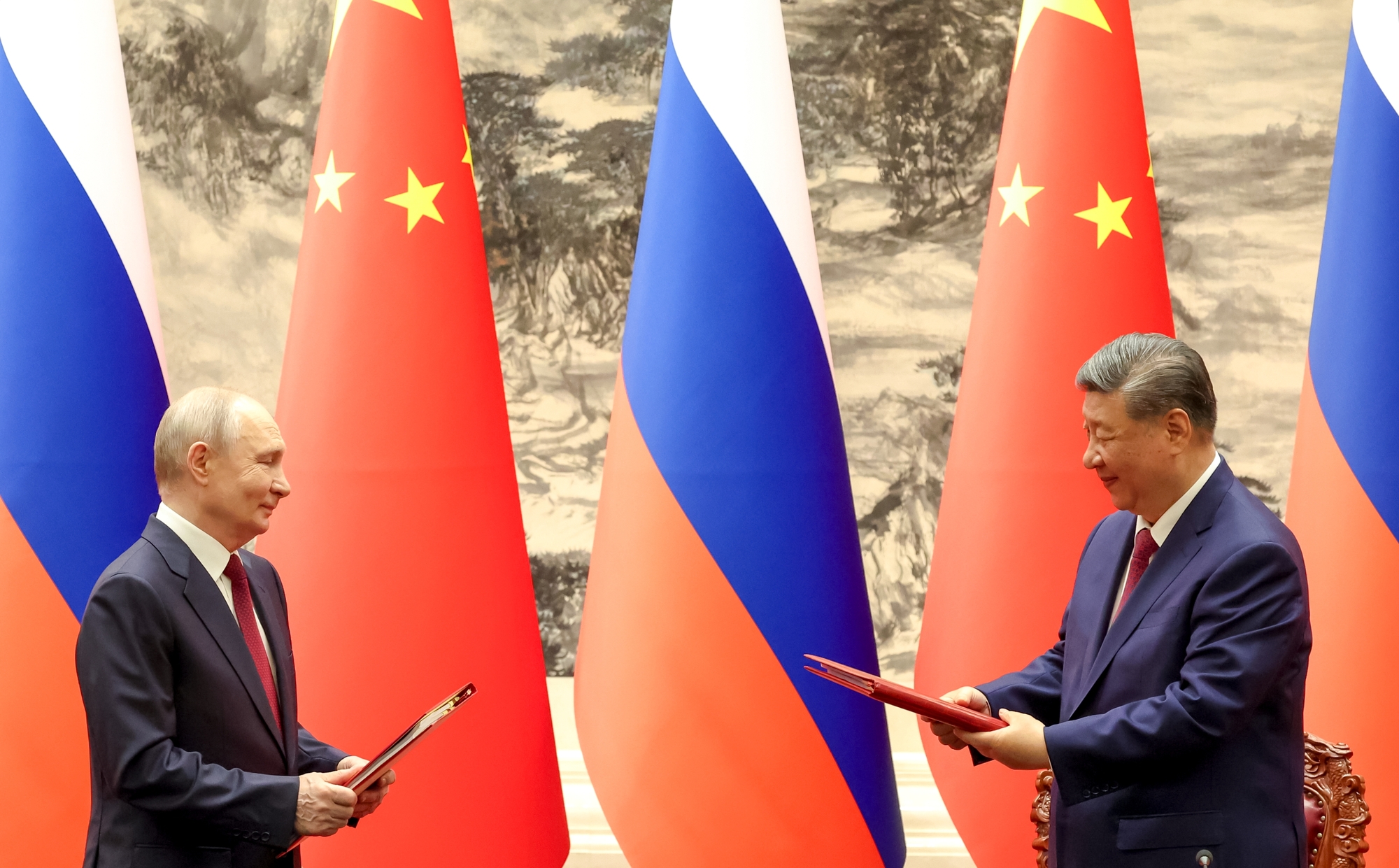
Pavlo Klimkin, Ukraine's former Foreign Minister, refutes a popular thesis among some analysts: China has not turned Russia into its colony and does not intend to do so. Instead, Beijing has built far more nuanced relations — ones where Moscow remains strong enough to be useful, but not strong enough to be equal.
Not a colony, but not a partner either
Colonial dependence presupposes control — over territory, resources, decisions. Between China and Russia, there is none of this, Klimkin emphasizes. There is something else: asymmetrical symbiosis, where each side gets what it needs, but the price for each is different.
Russia receives dual-use technologies, components for its military industry, yuan as an alternative to the cut-off dollar, and — critically — political cover in international institutions. China, for its part, receives cheap energy resources, a market for its own goods, and a geopolitical buffer in the west that diverts the West's attention.
"Without China, the model doesn't work"
This formulation by Klimkin is key. It is not about Russia collapsing tomorrow without Beijing — it is about the systemic dependence of Russia's military economy on Chinese imports. Microelectronics, CNC machines, chemical precursors — all of this flows through Chinese or Chinese-controlled supply chains, often via third countries.
The West understands this. That is precisely why sanctions pressure on Beijing through secondary sanctions is one of the most painful pressure points in negotiations between the US, EU and China over the past two years.
Why the "colonial" framework harms analysis
If Russia is perceived as a Chinese colony, there is a temptation: just press China hard enough — and Russia will stop. Klimkin warns against this oversimplification. Beijing does not control Moscow — it creates conditions in which Moscow itself chooses behavior advantageous to China. The difference is fundamental: in the first case there is a lever, in the second — only a complex system of incentives.
This means that even maximum pressure on China will not produce automatic results on the battlefield in Ukraine. It may change Beijing's calculations — but not immediately and not linearly.
What this means for Ukraine
For Kyiv, this analytical framework has practical significance. If China is not a controller but an architect of conditions, then diplomacy toward Beijing must not be about ultimatums, but about changing its calculations: make support for Russia more costly than neutrality or even rapprochement with the West.
So far, the West has not offered China a sufficiently weighty alternative — neither economic nor security-related. Which means Beijing's incentives remain unchanged.
The question that remains open: Are the US and EU willing to offer China a real price for neutrality — or will they continue to limit themselves to rhetoric about "responsibility," which Beijing has long learned to ignore?



