Trump Wants Oil — Rodríguez Defends Sovereignty. Venezuela Again at the Center of American Expansion
While Venezuelan acting president Delcy Rodriguez was defending her country's territorial sovereignty at the UN International Court of Justice in The Hague, Donald Trump told Fox News in an interview that he is "seriously considering" turning Venezuela into the 51st U.S. state — and cited the main argument: oil worth $40 trillion.

By Tetiana Suchkova-Ladik
May 12, 2026 · 2 min read
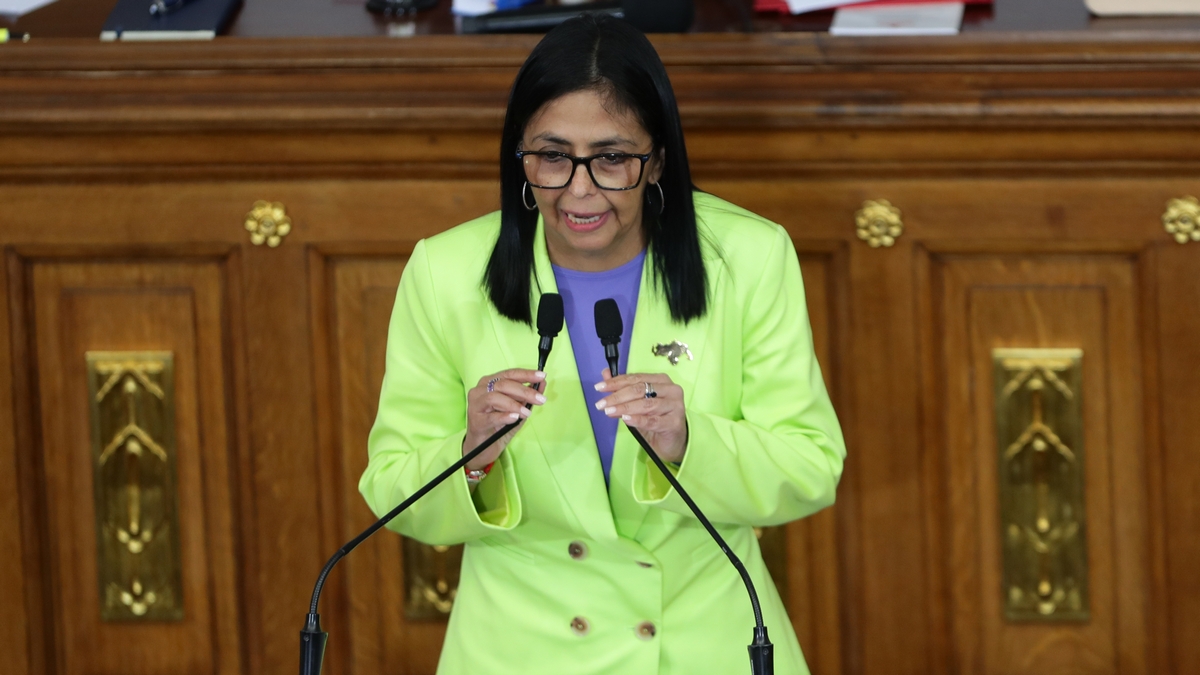
Monday, May 12, 2026. Delcy Rodríguez stands before judges at the UN International Court of Justice in The Hague — at final hearings in the Essequibo case, an oil-rich region that Venezuela has disputed with Guyana for over a hundred years. At that same moment in Washington, Donald Trump calls Fox News and says he is "seriously considering" annexing Venezuela as the 51st U.S. state.
The timing is no coincidence. It reveals the essence of American policy toward Caracas following an operation in January 2026, when the U.S. military captured former president Nicolás Maduro and brought him to New York to face trial on charges of narco-terrorism.
Oil as an argument
Trump did not hide his motives. According to Fox News, the president cited Venezuela's hydrocarbon reserves — estimated at $40 trillion — as the direct reason for his interest, adding that Venezuelans "love Trump." Meanwhile, Chevron has already signed a deal to expand oil extraction in the country.
The Venezuelan precedent is not Trump's first foray into annexation rhetoric. He previously offered statehood to Canada and repeatedly claimed the "need" to acquire Greenland on national security grounds. But Venezuela is different: a country where the U.S. military has already conducted a military operation and where American companies are now being drawn into oil extraction.
"We are not a colony"
Rodríguez responded directly, speaking to journalists in The Hague:
"This has never been foreseen and will never be foreseen, because if we Venezuelans have anything — it is love for our process of independence, love for our heroes and heroines."
Delcy Rodríguez, Acting President of Venezuela — AFP
"We will continue to defend our integrity, sovereignty, independence, our history," she added, emphasizing that Venezuela is a "free country, not a colony."
Constitutional wall
Legal reality is colder than headlines. According to Article IV of the U.S. Constitution, only Congress can admit a new state to the Union — and only with the consent of the candidate state itself. That is, even if Trump wanted to do this, no executive mechanism exists to do so. Moreover, Chavista radicals within Venezuela have already accused Rodríguez of "treason" for opening the oil market to American companies — and this is before any talk of annexation.
The Hague: sovereignty on two fronts simultaneously
Rodríguez's appearance at the UN International Court of Justice carried its own weight, unrelated to Trump. Venezuela claims Essequibo — a region comprising over 70% of Guyana's territory and containing significant oil reserves. Guyana filed suit at the ICJ in 2018 demanding confirmation of the validity of an 1899 arbitration ruling. In May 2025, the court already ordered Venezuela not to hold elections in the disputed territory — Caracas ignored this. A ruling on the merits of the case is expected in several months.
So on one day, Rodríguez defended Venezuelan claims to foreign land in The Hague — and repelled American claims to Venezuelan land in Washington.
If the ICJ confirms the 1899 border and Washington intensifies pressure over oil control, Rodríguez will find herself facing two choices: legitimize American presence for economic stabilization — or move toward open confrontation, risking loss of both oil revenues and domestic support.



