Flag in Exchange for Four Doping Tests: How International Federations Are Bringing Russia Back into Sports
World Aquatics, the International Wrestling Federation and several other organizations have lifted restrictions on athletes from Russia and Belarus — they will now compete under their own flags. Ukraine's Ministry of Youth and Sports qualifies this as a betrayal of the Olympic Charter; the Ukrainian water polo team has already received a technical loss for refusing to play against Russians.

By Tetiana Suchkova-Ladik
May 25, 2026 · 3 min read
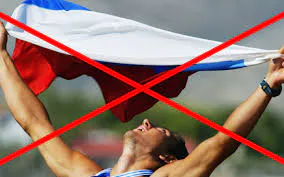
On April 13, 2025, the World Aquatics Federation officially lifted sanctions against athletes from Russia and Belarus. They will now compete under national flags in swimming, diving, artistic swimming, high diving, and water polo. Following suit, the International Federation of Associated Wrestling Styles (UWW) did the same — removing restrictions across all age categories. In parallel, judo, sambo, and muay-thai reinstated Russians and Belarusians without significant reservations.
Conditions that look like formality
World Aquatics set two requirements for admission under a national flag: passing at least four consecutive anti-doping tests from the International Testing Agency (ITA) and biography verification by the federation's Integrity Unit (AQIU). Beyond sports eligibility, Russia and Belarus are restoring full membership in the organization according to its charter.
World Aquatics President Husain Al-Musallam called this a logical step:
"Over the past three years, we have successfully ensured that conflicts remain outside sports arenas."
Husain Al-Musallam, President of World Aquatics
What this logic means in practice was demonstrated by the World Cup water polo tournament in Malta, which took place after sanctions were lifted. Ukraine's national team refused to compete against Russia's team — and World Aquatics recorded a technical loss for Ukrainians 0:5. This could have been the first match between the two countries since the full-scale invasion began.
"We cannot shake hands with those whose country tries every day to destroy ours. A moral defeat before our own people is the only loss we truly fear."
Oleksandr Svishchov, President of the Ukrainian Water Polo Federation
What Kyiv says
Ukraine's Ministry of Youth and Sports published an official statement qualifying the federations' decisions as a direct betrayal of the Olympic Charter. The ministry's head Matvii Bidnyi noted:
"Sport should unite around honest rules and respect for life. The return of the flag of a country that despises these rules and systematically destroys them is an alarming signal for the entire sports community."
Matvii Bidnyi, Minister of Youth and Sports of Ukraine
At the same time, the Ministry of Youth and Sports confirmed: Ukraine will not completely boycott international competitions. According to Bidnyi, the presence of Ukrainian athletes on the arenas is a tool to counter Russian propaganda, not an endorsement of the federations' decisions.
Scale of the return
The lifting of restrictions is not an isolated case — it is part of a broader trend following the Paris Olympics. Among federations that have already restored or eased sanctions:
- World Aquatics — complete lifting of restrictions in all aquatic disciplines at the senior level;
- UWW (wrestling) — admission under a national flag in all age categories;
- IJF (judo) — at the end of 2025, the federation announced Russia's return under its own flag and anthem;
- IFMA (muay-thai) — lifting of all restrictions, including junior tournaments;
- Volleyball, fencing — partial easing at the youth level.
The Paralympic Committee admitted six Russians and four Belarusians under national flags to the 2026 Paralympics. FIFA and the IOC are also among organizations that have softened their positions.
The IOC itself recommended admitting young athletes from Russia and Belarus without restrictions — this recommendation became the legal basis for decisions by UWW and several other federations.
The price of refusal
The water polo situation in Malta puts Ukraine before a choice that has no painless solution: boycotting matches against Russians means receiving technical losses and potential sanctions; taking the field means legitimizing the presence of athletes from an aggressor country. Neither World Aquatics nor other federations have yet announced any additional consequences for Ukraine beyond the recorded loss.
The question is not abstract: if by the 2025–2026 world championships the number of federations with fully lifted sanctions exceeds a dozen — will the Ministry of Youth and Sports be able to maintain its current participation strategy without a formal boycott, without exposing Ukrainian athletes to disciplinary consequences?