Repeated illegal peat extraction in Bucha district: a threat to communal land and the environment
The State Environmental Inspection of the Capital District has recorded a repeat instance of peat extraction near Andriivka — involving heavy machinery and conducted without permits. We explain why this matters for the community, the environment, and public safety.

By Tetiana Suchkova-Ladik
March 5, 2026 · 2 min read
What inspectors found
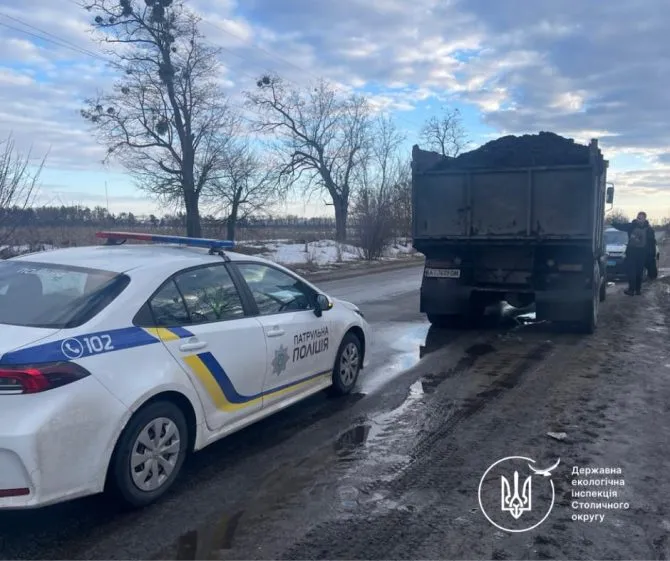
The State Environmental Inspectorate of the Capital District documented illegal peat extraction near the village of Andriivka in Bucha district once again. The work was carried out using specialized machinery: an excavator was loading peat into a dump truck in the complete absence of permits and other legal title documents.
“The extraction was carried out using specialized machinery. In particular, loading of peat with an excavator into a dump truck was recorded in the complete absence of special permits, as well as other legal title documents, which is a direct violation of current law.”
— State Environmental Inspectorate of the Capital District
According to the inspection, the work took place on municipal land. A vehicle loaded with peat was stopped by police within the village of Andriivka in the Makariv community.
“Unidentified persons continue to extract peat, ignoring established legal norms and the legal regime governing the use of natural resources.”
— State Environmental Inspectorate of the Capital District
Why this matters
Peat deposits are not just a resource: they store carbon, regulate soil hydrology, and affect fire risk. Illegal extraction leads to land degradation, increases fire risk, and causes greenhouse gas emissions. For the local community, it is also a direct loss of control over property and potential income.
Reaction and concrete steps
The police stopped the load of peat, the inspection documented the offense and reports repeated incidents in this area. The repeated discovery indicates not so much an isolated theft as a systemic problem — weak control over subsoil resources and a lack of adequate monitoring.
What’s next
Coordinated action is needed: from prompt investigation and holding those responsible accountable to strengthening monitoring and cooperation between local authorities and environmental services. The effectiveness of the response will show whether the recorded violations will translate into real changes that benefit the community and the environment.
The remaining question is whether there are sufficient resources and political will to ensure that repeated detections do not become the norm, but instead serve as a signal for a systematic fight against illegal extraction of subsoil resources?