Bundestag president Julia Klöckner called the country "Europe's brothel" and demands a ban on buying sex
At the Heldinnen-Awards ceremony in Berlin, President of the Bundestag Julia Klöckner (CDU) called for the introduction of the "Nordic model," criminalizing the clients of prostitutes.

By Oleg Bazylewicz
December 3, 2025 · 1 min read
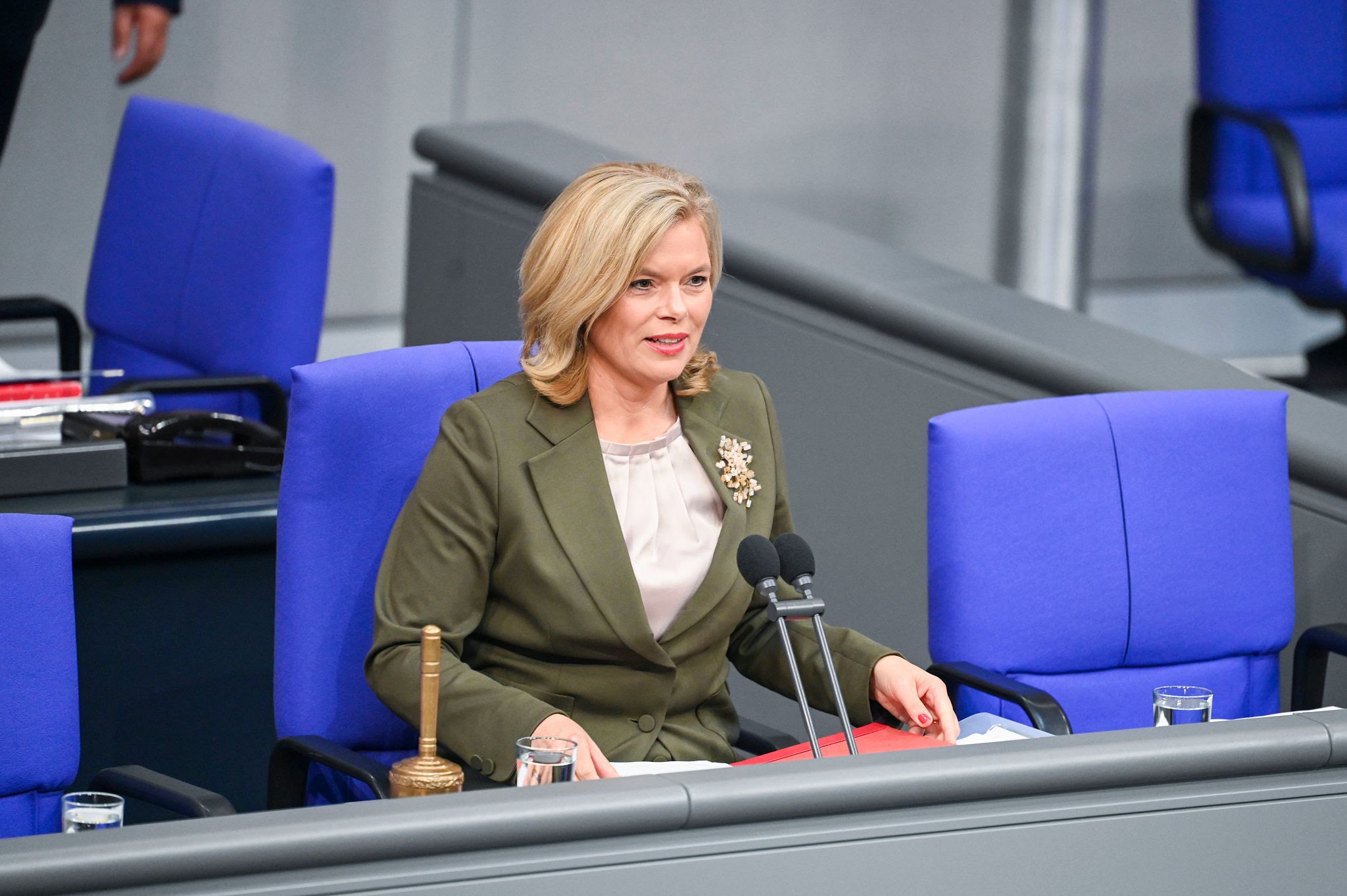
President of the Bundestag Julia Klöckner (CDU) delivered sharp criticism of Germany’s current prostitution model during the Heldinnen-Awards ceremony in Berlin. She said that liberal legislation has turned Germany into "the brothel of Europe" and no longer protects women.
Klöckner: "Germany has become the brothel of Europe"
In her speech the politician stressed that the 2002 and 2017 laws, which legalized and formalized prostitution, have contributed not to freedom but to increased exploitation.
"When we talk about women's rights but call prostitution the same job as any other, it is not only ridiculous but an act of disrespect toward women."
— Julia Klöckner
She emphasized that the current rules do not guarantee safety, but rather foster violence, dependency and forced prostitution.
Call to switch to the "Scandinavian model"
Klöckner proposed changing the approach to prostitution by introducing the so‑called Scandinavian model: criminal liability for clients and pimps, as well as state support for those who want to leave the industry.
"To claim that prostitution is an ordinary profession is absurd. It is a humiliation of women. There are no school internships for this 'profession'."
— Julia Klöckner
The initiative was supported by Health Minister Nina Warken, who also advocates for tougher restrictions in the field of prostitution.
Position of human rights activist Huschke Mau
"The legalization of prostitution in Germany has led to an increase in human trafficking and corruption. Three out of four men paid for sex, violence became the norm. Services to exit the industry are lacking, the state profits but invests almost nothing in assistance for victims."
— Huschke Mau, former sex worker, TrystHub expert
Context
The 2002 law legalized prostitution in Germany, and the 2017 reform introduced mandatory registration for sex workers. This year the Heldinnen-Awards prize of €10,000 was awarded to Sabina Konstabel and Katrin Schauer-Kelpin for their work combating the exploitation of women.