115 inches for 1.3 million hrn: first two Samsung Micro RGB displays in Ukraine already found buyers
While most Ukrainians buy TVs up to 55 inches, two people found reason to spend 1.3 million on technology that for the first time surpasses OLED in color coverage.

By Tetiana Suchkova-Ladik
May 19, 2026 · 2 min read
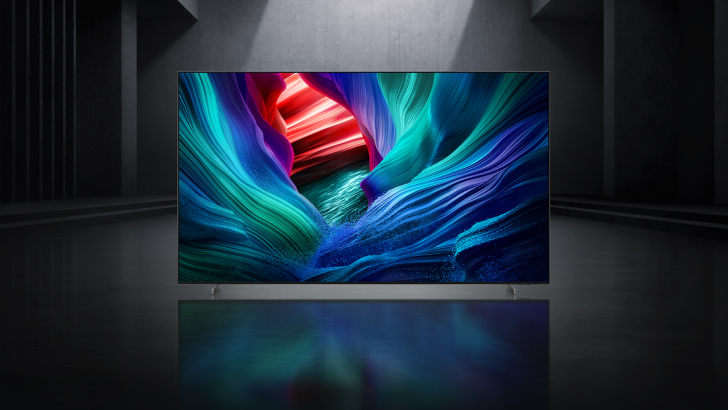
In Lviv and Kyiv, the first two Samsung Micro RGB R95H televisions with a 115-inch diagonal were sold. The price of each is 1,299,999 hryvnias. One was purchased at Foxtrot in King Cross Leopolis shopping center, the other at Comfy in Lavina Mall shopping center.
What is Micro RGB and why it's not just a "big TV"
Conventional LCD backlighting uses white LEDs with color filters that "consume" brightness and accuracy. Micro RGB replaces them with millions of tiny red, green, and blue diodes — each controlled separately and synchronized with specific pixels. Result: full coverage of the BT.2020 color space. By this metric, the R95H, according to Mezha.ua's review, surpasses even OLED.
Samsung presented the technology at CES 2025. At the same time, the first commercial version appeared on the American market for $29,999 — meaning the Ukrainian price roughly corresponds to the American price at the current exchange rate.
What the buyer gets for this money
- Diagonal: 115 inches — approximately 2.9 meters horizontally
- Resolution: 4K with Motion Xcelerator 144 Hz support
- AI features: Samsung Vision AI with Real Depth Enhancer and AI Motion Enhancer Pro
- Local dimming: per-pixel, without "halo" around bright objects
- Smart TV: Tizen with access to Art Store
"Micro RGB TV sets a new standard for color and realism that was previously impossible in television technology"
Samsung Electronics America, 2025 lineup announcement
Who buys this — and why
A television the size of a small wall is not a purchase for a standard apartment living room. The minimum recommended viewing distance for 4K at 115 inches is approximately 2.5 meters, realistically comfortable — from 3.5 meters. That is, the buyer is either the owner of a large private house or a company setting up a conference room or showroom.
In the United States, a similar segment — "ultra-premium home theaters" — grew in 2024 despite the overall cooling of the electronics market. In Ukraine, two sold units are more of a marketing signal from Samsung than evidence of mass demand. But the signal is important: even during wartime, the luxury market hasn't stopped.
If Samsung fulfills its promise in 2026 and releases Micro RGB from 55 inches at a significantly lower price — the technology could become a real alternative to OLED for the middle affluent audience. The question is whether logistics and Samsung's official support in Ukraine will be maintained at the current level by then.
```